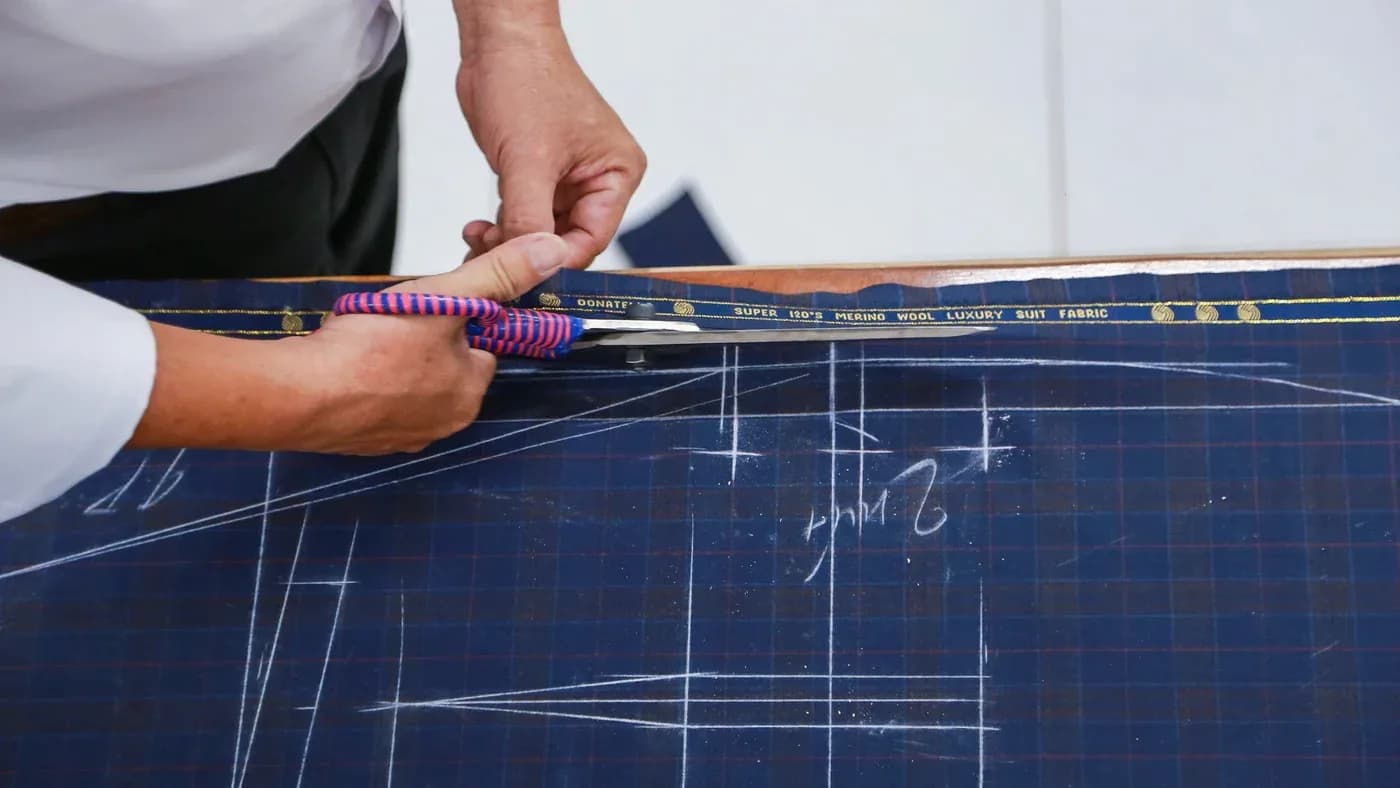
Cloth decides most of a uniform's cost, durability and how it feels to wear every day. In a hot, humid climate the question is not "which cloth looks good" but "which cloth still looks good after eight hours and hundreds of washes".
Start with the working environment
- Do staff sit in air conditioning all day, or move between cold offices and the sun?
- Does the job involve bending, lifting, constant movement?
- Is the uniform washed at home or industrially, and how often?
Suiting: wool content is everything
Wool content drives shape retention, press and breathability. 40–70% wool blends are the most common uniform choice, balancing line and cost. Pure wool — including Italian and English cloths — is best for leadership and key client-facing roles. In this climate, favour lightweight, open weaves. Be wary of shiny, stiff cloth that "looks expensive" on the shelf: it is usually airless and turns shiny within months.
Shirting: non-iron cotton blends
Shirts are worn and washed most. Treated cotton blends stay flat all day while still breathing. White and pale blue coordinate most easily; with strong brand colours, test colour-fastness after washing.
Operational cloth: built for industrial laundering
Kitchen, medical, housekeeping and workwear garments are hot-washed and disinfected daily. The requirement: no shrinkage, fading or pilling after hundreds of cycles.
Knits: by season and activity
Cotton for comfort, piqué for a smarter look, performance knits for outdoor work.
How to test cloth
- Crush it in your hand for ten seconds — good cloth recovers.
- View it under office light and daylight — colour can shift noticeably.
- Ask for the composition in percentages, not just a trade name.
- Feel the reverse side — a rough back is uncomfortable over a full day.
Real swatches beat photographs: our consultant brings swatch books to the first visit. Browse the codes in our Cloth library.