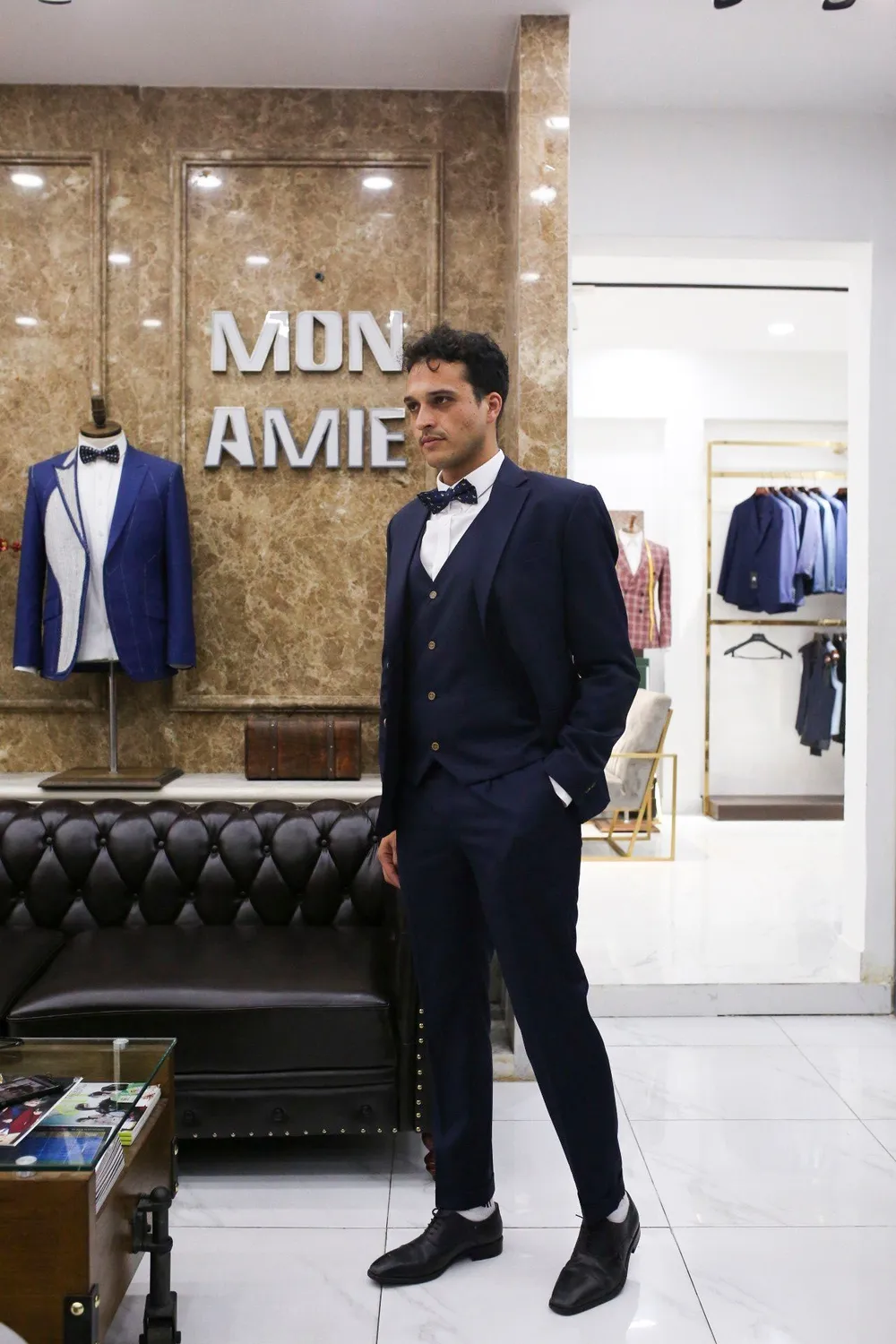
Many companies start by choosing one attractive design and making it for everyone. It is simple, but it misses the main job of a service uniform: helping clients recognise who is looking after them. So the first question should be who wears what.
Three uniform models
Model one — Everyone identical. One outfit for all. The strongest team feeling at the lowest cost, but visitors cannot tell who does what. Suits events, support crews, factories and company days.
Model two — One palette, distinguished by role. One brand palette, but managers in jackets, service staff in waistcoats, reception in its own set. This is what we recommend for most service businesses.
Model three — Tiered by seniority. The same design with cloth and tailoring stepping up by level: office staff to a size chart, managers measured, leadership fully bespoke. The budget goes where it makes the strongest impression.
By industry
| Industry | Common role split |
|---|---|
| Banking & finance | Managers: suits · Tellers: suits or waistcoats in the same palette · Security: own set |
| Hotels & restaurants | Reception: suits or dresses · Service: waistcoats · Housekeeping, kitchen: operational wear |
| Real estate | Sales team: matching suits · Back office: shirts and trousers |
| Corporate offices | Leadership: bespoke · Managers: made-to-measure · Staff: shirts to a size chart |
| Healthcare & pharma | Doctors, pharmacists: coats · Medical reps: shirts or suits · Warehouse: operational wear |
Each industry has its own page with a detailed role table — see Uniforms by industry.
Men and women: coordinated, not identical
Same colours, cloth and brand details, but cut separately for men and women. Women can choose skirt or trousers by role while the team still looks as one.
Indoors, outdoors and the hot season
Staff who spend time outside should have a lighter option — short-sleeved shirts, waistcoats instead of jackets, more breathable cloth — within the same palette and brand details.