How to press a suit at home without making it shiny
How to press a suit at home without shine: use a press cloth, steam and moderate heat, press from the inside, and never flatten the lapel roll.

To press a suit at home without shine, put a thin press cloth between the iron and the fabric, set the heat to the wool setting or low to medium, press section by section and lift rather than slide, and prefer steam to hard pressure. Shine appears when heat and pressure flatten the fibres on the surface, and it shows most on dark cloth.
Why a suit goes shiny
The surface of a wool or blended cloth has tiny fibre ends standing slightly proud, which gives that matt, soft look. When a hot iron presses down and drags, those ends are crushed flat; light bounces back more evenly and you see a glossy patch. On dark cloth the patch stands out because nothing disguises it.
A familiar scene: the night before a meeting you open your suitcase and find the trousers creased across the thigh. You turn the iron up high for speed and glide it over a few times. The crease is gone, but along the seams and across the seat there are new, lighter patches. The usual trouble spots are lapels, seams, elbows, pockets and the seat of the trousers.
Preparing before you press
Preparation does half the work:
- Read the care label inside the side seam, which gives the maximum heat and method.
- Prepare a press cloth: a thin, clean cotton cloth in white or a pale colour so no dye transfers; dampen it lightly if the fabric resists.
- Test on a hidden area, such as the inner hem, before pressing a visible one.
- Have a broad-shouldered hanger and somewhere to hang the jacket until it is cool and completely dry before wearing.
- Relax creases with steam first: hanging the jacket in a bathroom after a hot shower often loosens light creases, depending on the cloth.
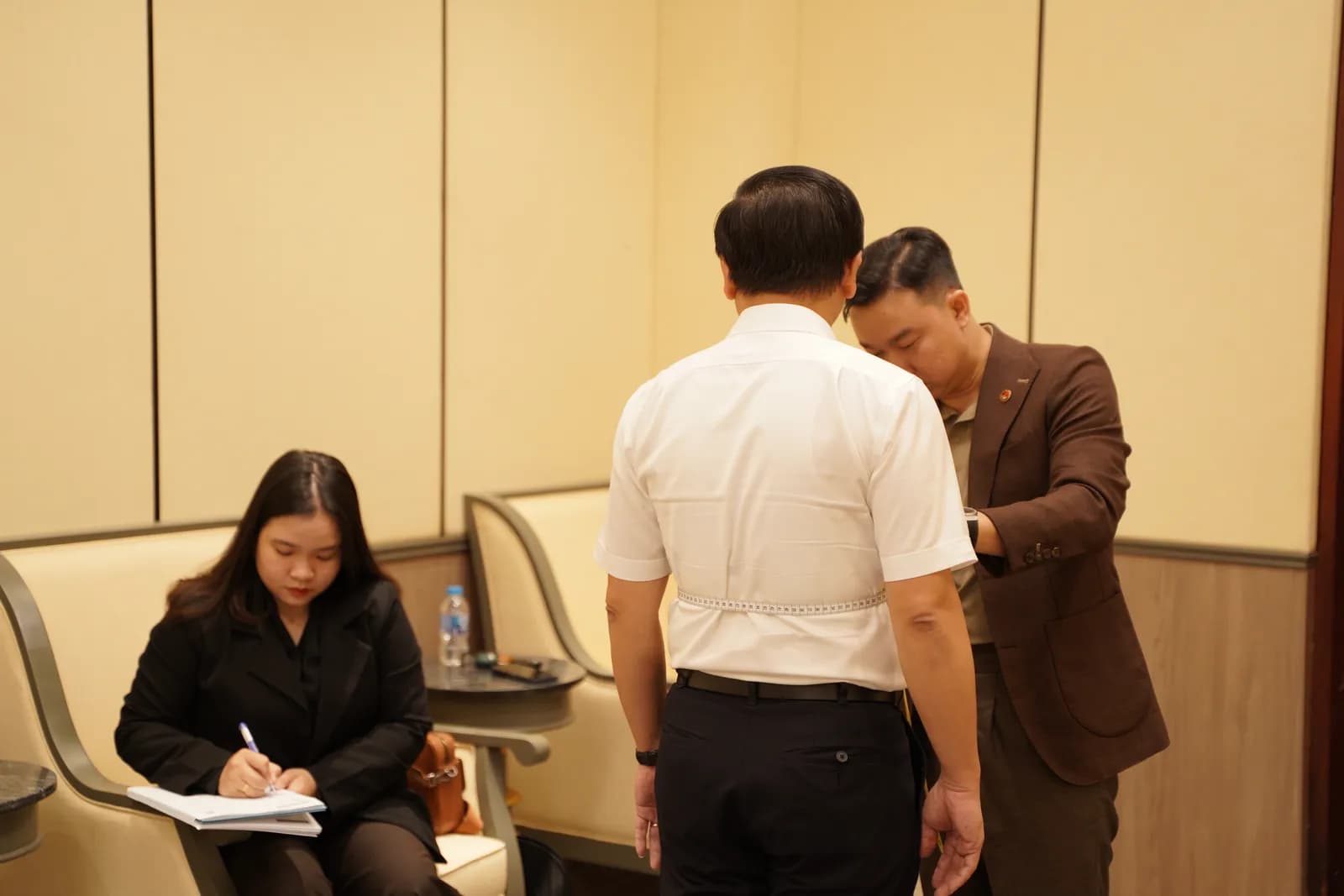
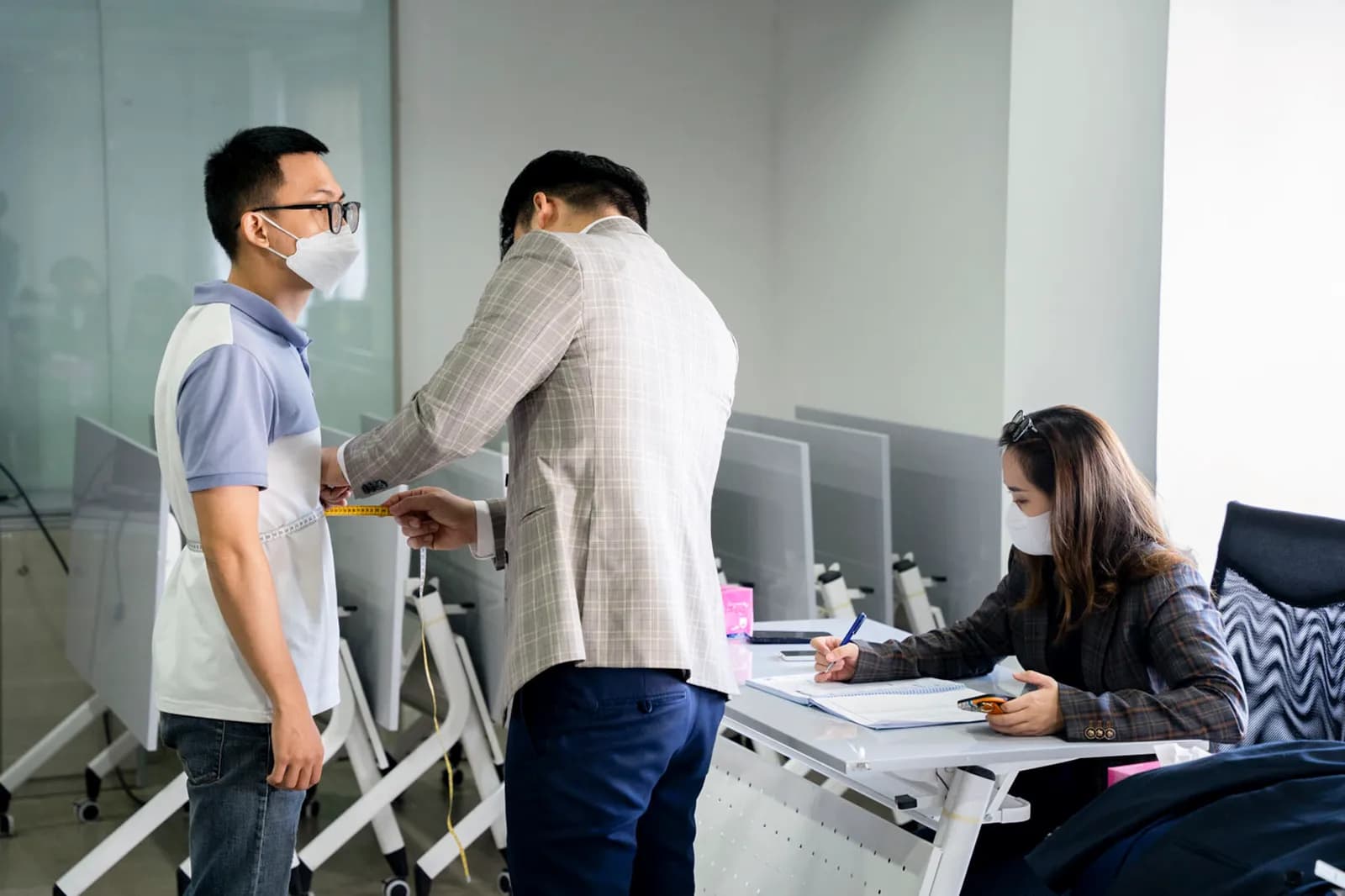
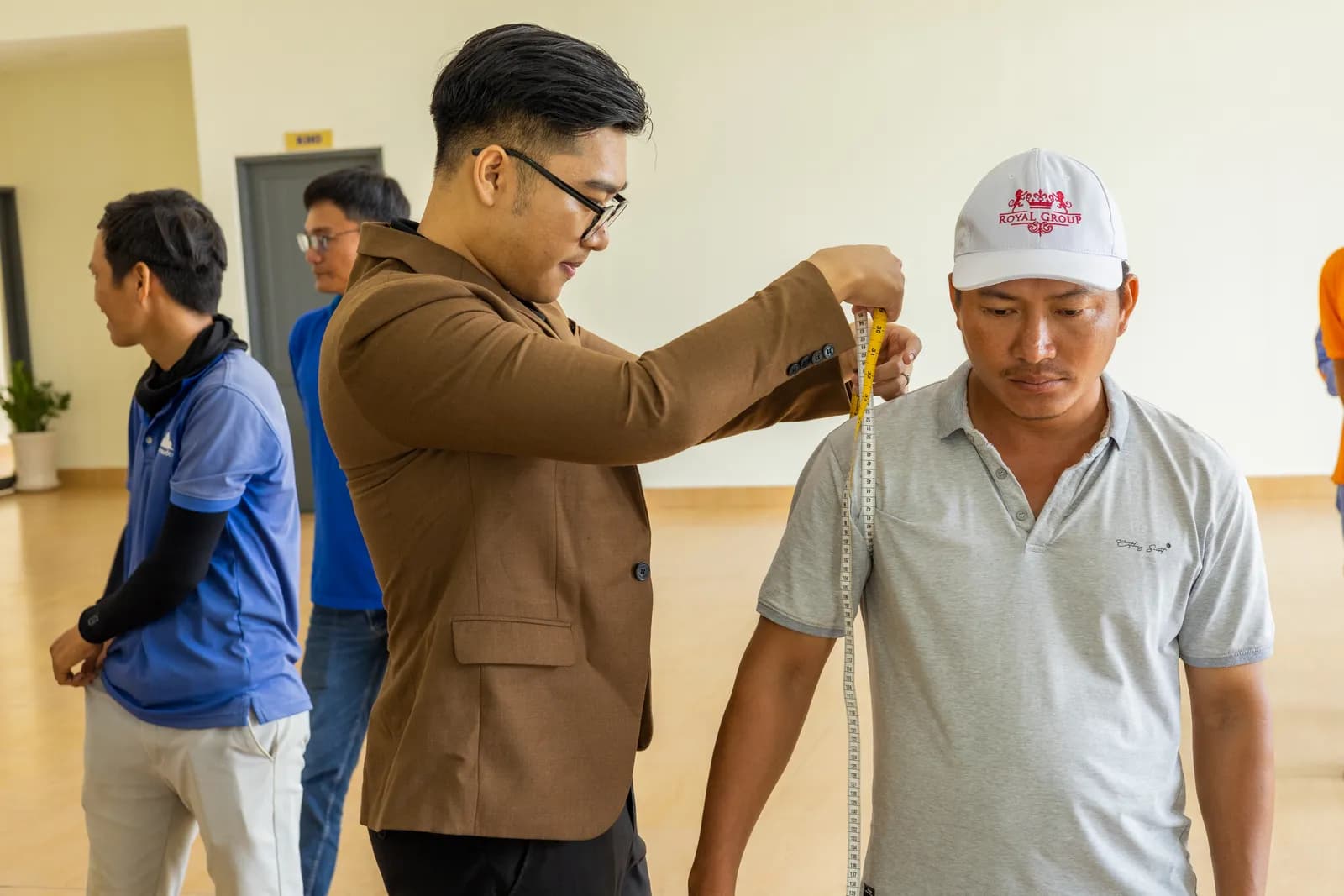
Pictured below is a Mon Amie uniform project.

Pressing step by step, from the inside out
- Turn the jacket inside out and press the inner side first. The lining and the inside of the body hide marks, so rough smoothing happens there.
- Add the press cloth on the right side when needed. Slightly damp, set the iron down, then lift and move on in sections.
- Do the sleeves first, then the back and front. Use the iron's tip for narrow corners and never lean on the seams.
- Leave the collar and lapels until last. Use only light steam and smooth by hand; do not press the lapel flat, because it has a natural roll at the fold and flattening ruins the shape.
- Let the jacket cool on the hanger for several minutes before wearing.
- Trousers: fold along the existing crease, place the cloth over it and press section by section; do not glide along the leg.
Quick table: which cloth needs a light hand
| Cloth | What goes wrong | What to do |
|---|---|---|
| Wool and wool blends | Shine at lapels and seams, especially in dark colours | Damp press cloth, steam, wool setting |
| Polyester blends | High heat can shine the cloth or be hard to reverse | Low heat, press cloth, quick passes |
| Lining | Puckers under high heat | Press from the reverse on low heat |
| Linen, cotton | Creases heavily but tolerates more heat | Steam, reverse side or a cloth |
Behaviour varies by fibre and finish, so the care label is the first reference.
When pressing is not the answer
If shine has already formed, steam and a gentle brush along the grain sometimes restore part of it, though not always. If a suit keeps creasing deeply in the same place, such as the elbow or waistband, the cause may be a fit that does not match the body, not your pressing.
For uniforms, that is worth solving at the start. Mon Amie Uniform offers on-site measuring and tailoring: each employee is measured individually at the office, measurements are stored under the employee ID, garments are tried again and adjusted on site at delivery, and alterations carry a free 3-year warranty at every showroom. When choosing cloth, you can also ask how each real swatch should be cared for. The steps are summarised on the process page.
If you want uniforms cut to each person's shape from the start, ask for a quote on the quote page or call 0888.111.118 (the same number on Zalo).
Frequently asked questions
Should I press directly onto the suit fabric?
Avoid it where you can, especially on dark cloth. Use a thin press cloth or press from the inside, and lift the iron and set it down in a new place rather than dragging.
Is steam or a dry iron better for suits?
Steam is usually gentler because less pressure is needed to relax a crease. With a dry iron, keep the heat low to medium and use a lightly damp press cloth.
Can a shiny patch be repaired?
A light patch may fade with steam and a gentle brush along the grain, depending on the fibre. A deeply flattened patch is often hard to reverse fully, so bring the jacket to a showroom to be looked at.
Are deep creases at the elbow or knee a fabric fault?
Not necessarily. They can come from the cloth, from how the garment is worn, or from a fit that does not match. Bring the garment to a showroom; alterations carry a free 3-year warranty at every showroom, and the specific cause will be assessed when we see it.