Sustainable uniforms: make fewer, wear them longer
Sustainable uniforms mean making fewer pieces and wearing them longer: measure properly, pick durable cloth, alter rather than replace. Mon Amie shows how.
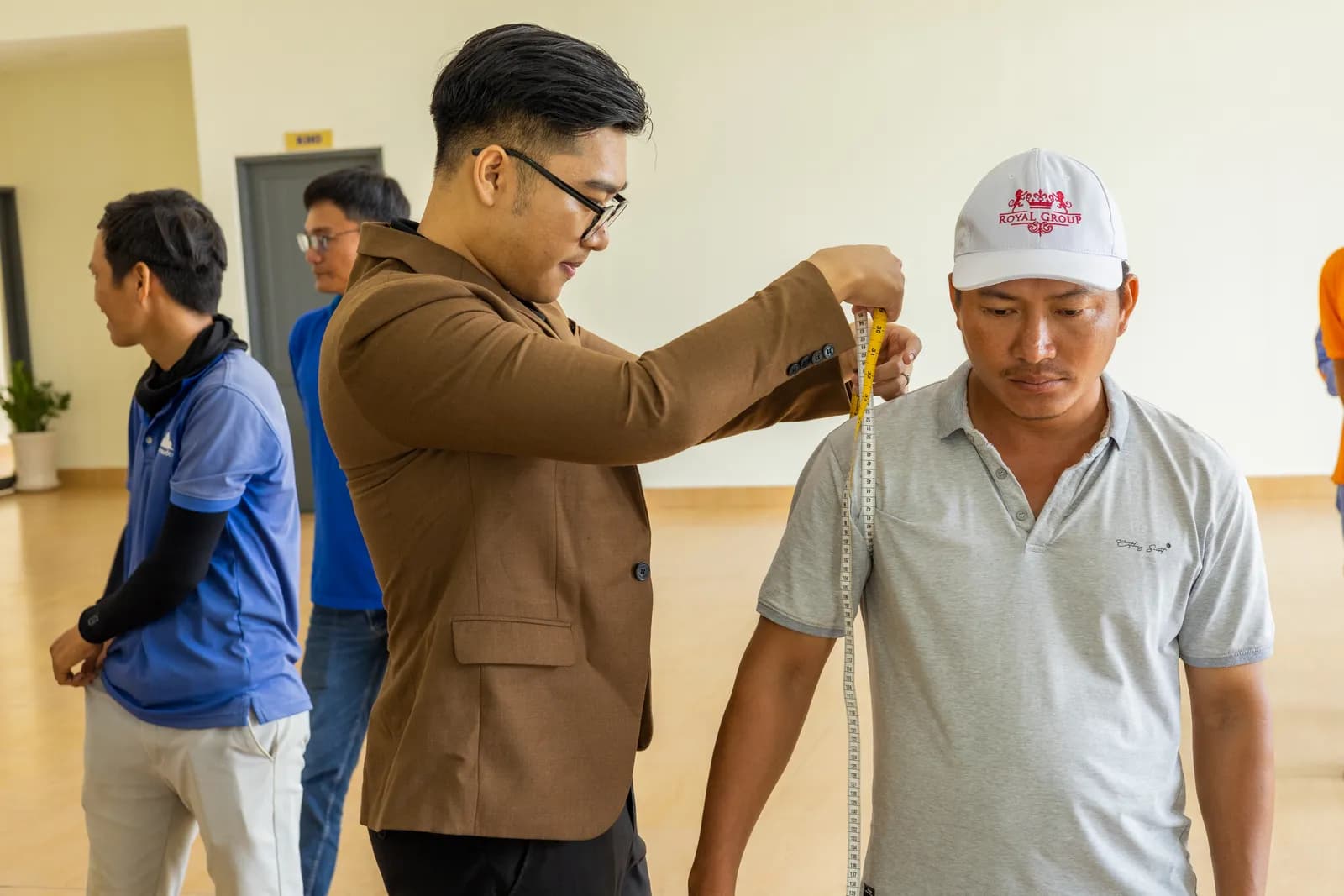
Sustainable uniforms start with making fewer pieces and wearing them longer: measuring correctly the first time so nothing is remade, choosing cloth and cuts that last, and altering rather than replacing when bodies change. The focus is the decisions that let a uniform serve for years. There are five, in the order they arise, from the first order to the arrival of new colleagues.
Decision 1: measure each person, make it once
Imagine two companies ordering uniforms. Company A settles sizes from an S, M, L chart and receives shirts that are tight across the shoulders and long in the sleeve. Part of the order stays in a cupboard because no one fits it, and a second order follows. Company B measures every employee at the start, so each garment has a wearer. A garment nobody wears is the most wasteful item in an order, however good the cloth.
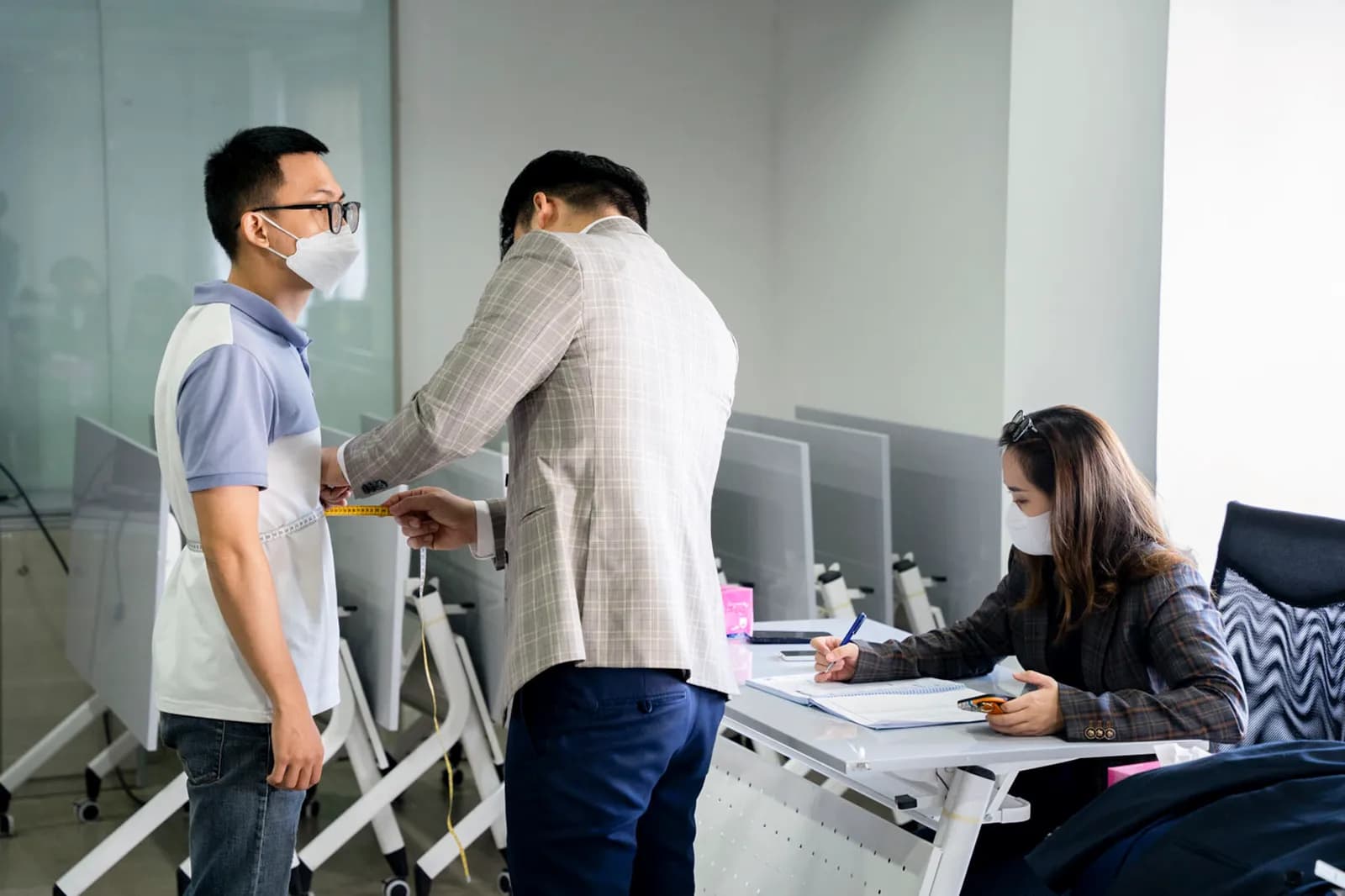
That is why Mon Amie Uniform measures each employee at your office with a mobile measuring team, on your schedule. Measurements are stored under employee IDs, and people already measured do not need measuring again in later orders.
Decision 2: choose cloth and cut for the long run
Uniforms tend to wear out early for a few familiar reasons. The table suggests how to extend their life at the selection stage:
| What wears a uniform out | How to extend it |
|---|---|
| Pilling and a worn surface after repeated washing | Choose a firmly woven face; ask how the cloth copes with frequent laundering |
| Frayed collars and cuffs | Check the lining and seams at friction points when trying the sample |
| Fading | Read the dyeing and care label; avoid harsh sun |
| A style that dates quickly | Keep a classic cut and let colour and accessories carry the identity |
| Creased, worn waists and elbows | Pick fabric that recovers well; test it seated |
Some fabrics are described as colourfast or pill-resistant; those properties depend on the fibre and its treatment, so look at real swatches. Our fabric library and design library are useful before a consultation.
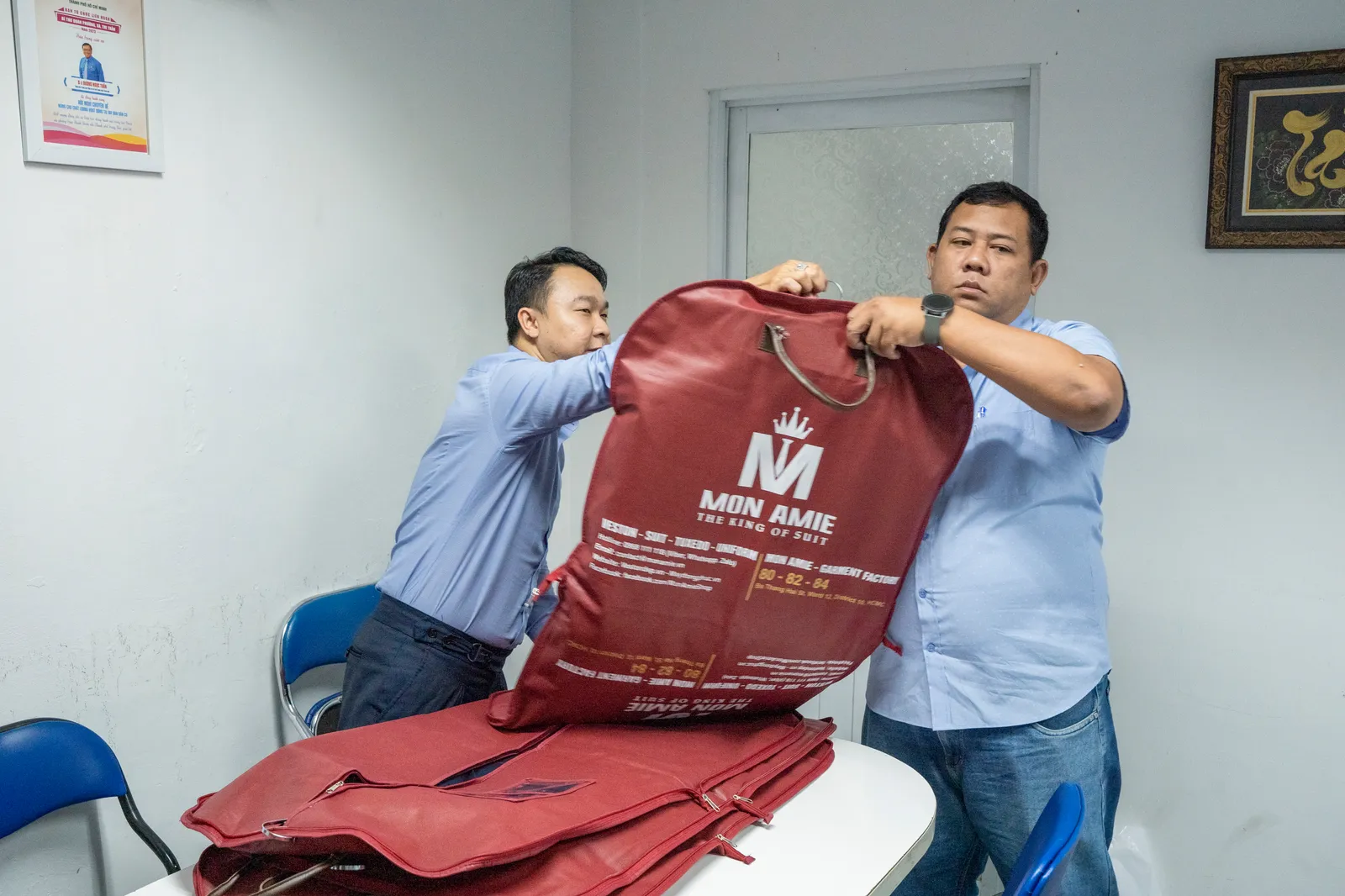
Here is one of Mon Amie Uniform's projects.
Decision 3: wear it well and keep it well
Good cloth still deteriorates quickly if it is looked after badly. A few simple habits extend life:
- Rotate: give each person more than one set, so garments rest and recover between wears.
- Use a shaped hanger: especially for jackets and waistcoats, so shoulders keep their form.
- Wash by the label: temperature, wringing and drying differ with the fibre blend.
- Fix small things early: a loose thread, a loose button or a lifting seam repaired promptly never becomes a big repair.
Decision 4: alter rather than replace
Body shape changing over a few years is normal. Instead of ordering a new set, many cases only need an adjustment. At delivery, Mon Amie Uniform lets staff try on and adjusts on the spot; afterwards alterations are covered by the free 3-year warranty at every showroom. For a company, that keeps one shared uniform without replacing the whole team because a few people changed shape.
Decision 5: plan for new colleagues
One reason uniforms get remade for a whole team is that there is no plan for people who join later, and each recruitment round brings a new style. Mon Amie Uniform fixes the pattern at the start: production begins only after your company signs off the sample. New staff are then measured individually and ordered from the approved pattern, so they match the current team without a change of style.
Real prices depend on fabric, style and quantity; for reference, men's shirts start from 600,000 VND and women's shirts from 480,000 VND, with a minimum of 20 per item. To request a quotation for a uniform built to last, use our quote page or call 0888.111.118 (the same number on Zalo).
Frequently asked questions
Does a sustainable uniform have to use recycled fabric?
Not necessarily. Here "sustainable" means measured correctly, worn for years and rarely remade. If your company is interested in a particular fabric, ask Mon Amie about that fabric's details during consultation.
How many sets should each employee have?
More than one lets garments rest and recover between wears. The exact number depends on the job, how often uniforms are laundered and your budget, and Mon Amie will discuss it during consultation.
What happens when an employee gains or loses weight?
For small changes, many cases can be adjusted. Alterations are covered by the free 3-year warranty at every Mon Amie showroom; how much can be altered depends on the individual garment.
How do we avoid changing styles whenever someone new joins?
Fix the pattern at the start with a sample your company has signed off. New staff are measured individually and made to that pattern, while the measurements of existing staff stay stored under their employee IDs.