White uniforms: spotless to look at, demanding to keep
White looks clean on a uniform but shows stains, yellowing and underwear. How to pick the tone, test opacity, wash well and know when to switch colour.
White gives a clean, professional impression at first glance, but it is also the colour that shows stains, sweat and creases most plainly. Keeping white shirts looking good for months takes fabric that is opaque enough, the right shade of white and a laundering routine the whole team follows. These are the points to check before you sign off a white uniform.
Why white fades so quickly
Look at a white shirt after a working week. The collar and cuffs begin to darken, the underarms yellow slightly, and the body picks up flecks of dust from chair backs and handrails. White hides nothing, so every mark shows. The usual causes:
- Sweat and skin oils soak into the collar and underarm areas and leave a yellowish tint if the shirt is not washed promptly.
- Washing with coloured laundry, which can leave white shirts grey or faintly tinted.
- Repeated strong sun can turn some white fabrics yellow.
- Careless washing or leaving damp clothes in a bag before laundering.
- Friction with seats, desks and bags, which leaves dust marks on shoulders and back.
Choosing the white
"White" is not one colour but a range. Three common tones for uniforms:
| Tone | Impression | How soon it shows dirt | Suits |
|---|---|---|---|
| Bright white | Crisp, very clean | Quickly | Reception, advisory roles, low-soil areas |
| Ivory (soft cream) | Warm, gentle on the eye | Slightly slower | Offices, hotels, restaurants |
| White with a faint blue cast | Cool, sharp | Yellowing shows clearly | Healthcare, clean-room settings, places that need a sterile look |
Ivory is often considered for service settings because it is less harsh and usually shows yellowing a little less than bright white, though the difference depends on the fabric. Place swatches side by side under your workplace lighting before deciding, and browse the fabric library beforehand.
Test opacity before approving the sample
The most common problem with white shirts is not stains but fabric that is too thin and shows underwear in strong light. Imagine a receptionist standing by a glass door in daylight: the sun passes through and reveals the outline of what is underneath, which is awkward for the wearer and the visitor. A simple test:
- Place a hand behind the cloth and look under strong light; if you can see the lines of the palm clearly, the fabric is thin.
- Try the sample on and stand near a window in daytime.
- If a lightweight cloth is needed for hot weather, consider a lining or choose an ivory tone, which usually shows less.
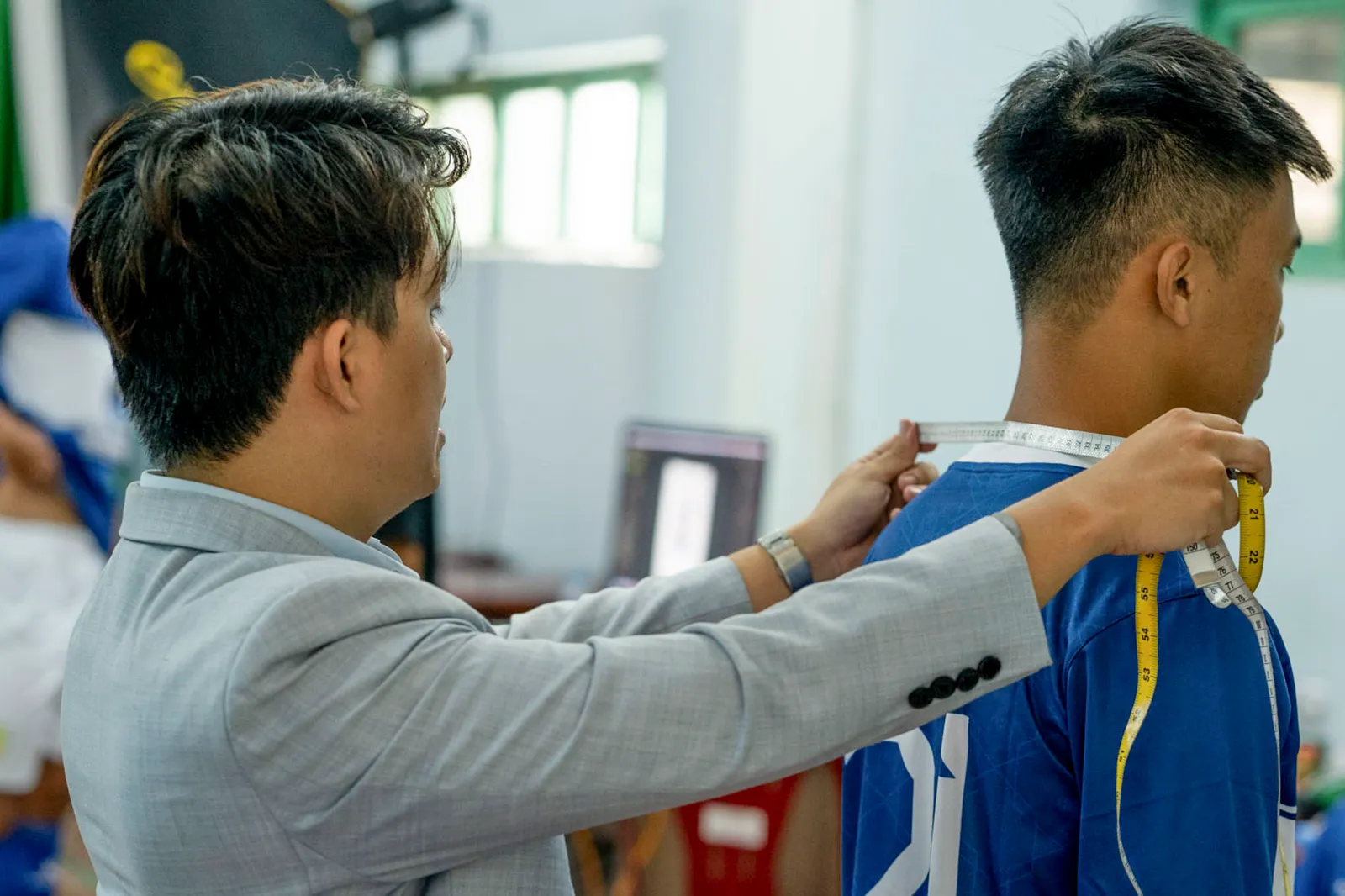
The next photo is from a Mon Amie Uniform corporate uniform project.
Washing to keep white: a suggested routine
To keep white shirts looking good across a whole team, agree on one way of washing. A suggested routine:
- Separate whites from coloured laundry as soon as they go in the basket.
- Treat sweat and soil marks on the collar and underarms early by soaking or gently rubbing before the wash.
- Use a detergent or bleach suited to the fabric; strong products used constantly can roughen fibres and dull the colour, so follow the care label.
- Dry in a ventilated spot and avoid long exposure to harsh sun.
- Iron at a medium setting as the label directs.
None of this is difficult, but if everyone washes in their own way, shirts in the same team will fade unevenly and the difference is obvious when people stand side by side.
When to choose another colour
White suits some roles and not others. If the work involves grease, dust, ink or food, consider a mid-tone for the body of the garment and use white for details such as the collar, placket or scarf. Another approach is a coloured shirt with a white scarf or tie for guest-facing positions. Mon Amie presents three options built on your brand colours so you can compare them on real fabric.
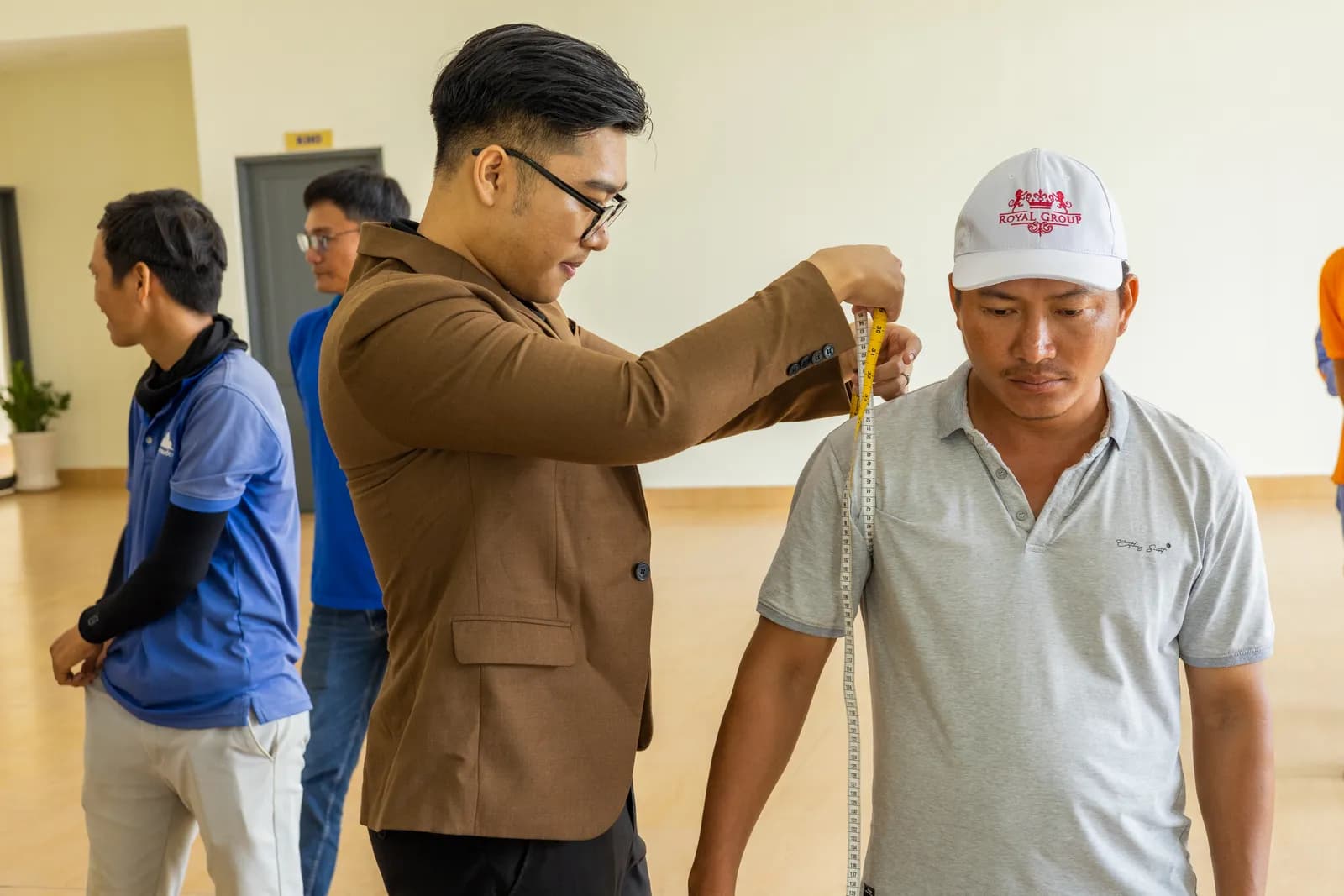
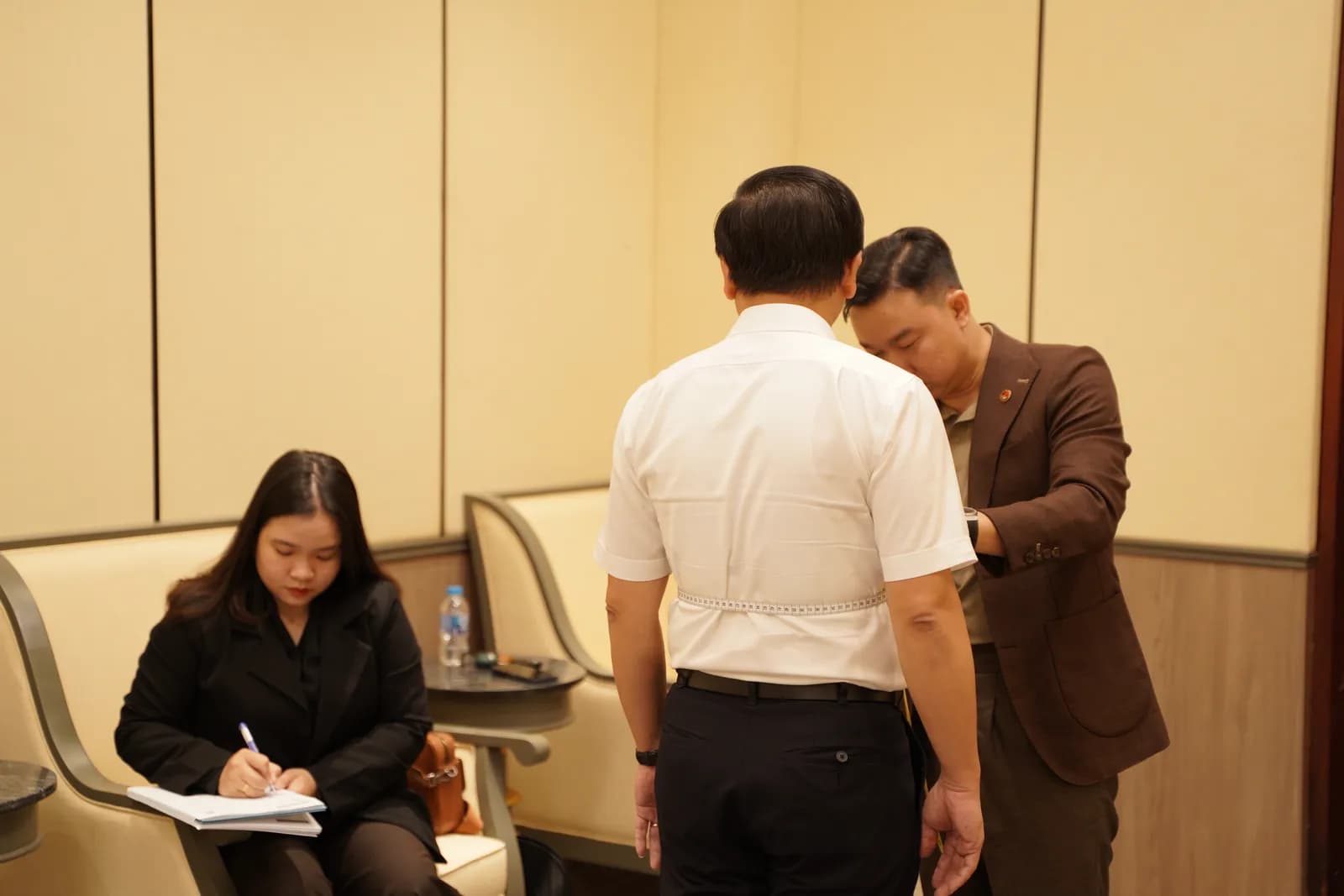
White also reveals creases and body shape, so fit matters a great deal: a tight shirt pulls at the front, a loose one wrinkles. That is why each employee is measured individually at the office through our on-site tailoring service, and new employees are measured individually and made to the approved pattern. You can leave your details on the quote page or call 0888.111.118, and Mon Amie will arrange a survey.
Frequently asked questions
Will a white uniform show underwear?
It can, if the fabric is too thin or a bright white meets strong light. Test the sample by placing a hand behind the cloth and standing by a window in daylight. Opaque fabric, an ivory tone or a lining are common ways to reduce the problem.
How do we wash white uniforms so they do not yellow?
Separate whites from coloured laundry, treat sweat marks on the collar and underarms early, use a product suited to the fabric and dry in a ventilated place. Avoid long exposure to harsh sun. How much yellowing occurs also depends on the fabric and how it is used.
Should kitchen or technical staff wear white?
Work involving grease, dust or ink tends to soil white quickly. A mid-tone for the body with white at the collar, placket or scarf is an option. Test the sample under real working conditions before sign-off.
Will white match when we reorder later?
White can drift slightly between fabric lots, so keep the approved sample to compare at every reorder. New employees are measured individually and made to the approved pattern, and the measurements of people already measured are stored under employee IDs.