Jacket pockets: how a welt pocket is made, and what goes wrong
A welt pocket has a lip or flap, a stabilised opening and a pocket bag. This guide covers pocket types, how they are sewn, and why they gape or ripple.

A welt pocket on a suit jacket is a pocket cut straight into the body of the jacket, with a narrow lip or a flap at the opening and a pocket bag behind it. Four things decide whether it looks good: the cloth is reinforced before cutting, the cut is accurate, both ends of the opening are tacked securely, and the pocket bag lies flat inside. Miss any one and the pocket will ripple, gape or sit crooked, and even a well-fitted jacket looks careless.
Common pocket types on a jacket
Each type gives a different look, and the choice depends on how formal the jacket is.
| Pocket type | What it looks like | Usually suits |
|---|---|---|
| Double-welt (jetted) pocket | Opening framed by two narrow lips, no flap | Formal jackets with a clean line |
| Flap pocket | A flap covers the opening and can be tucked in when needed | Everyday business jackets |
| Slanted pocket | Opening angled slightly forward | Sportier, more relaxed cuts |
| Patch pocket | A piece of cloth sewn on the outside | Casual jackets |
| Chest pocket | Horizontal welt on the wearer's left chest | Most men's jackets |
Hip pockets are mostly flap pockets, while the chest pocket is usually a single welt. Some jackets add a small extra pocket above the hip pocket, which tailors call a ticket pocket.
How a welt pocket is sewn
This is the usual order for a double-welt pocket; a flap pocket differs mainly at the stage where the flap is attached.
- Mark the position on the body once it has been stabilised, and check that both sides are symmetrical.
- Fuse interfacing around the area to be cut so the cloth cannot stretch.
- Stitch two welt strips to the upper and lower edges of the opening in parallel lines of equal length.
- Cut the opening from the centre outward to the corners, leaving two small triangles at the ends.
- Turn the welts through to the inside, smooth and press so they sit tight to the opening.
- Attach the pocket bag, sew down the triangles at both ends and add a bar tack for strength.
- Press to shape so the opening lies flat against the body.
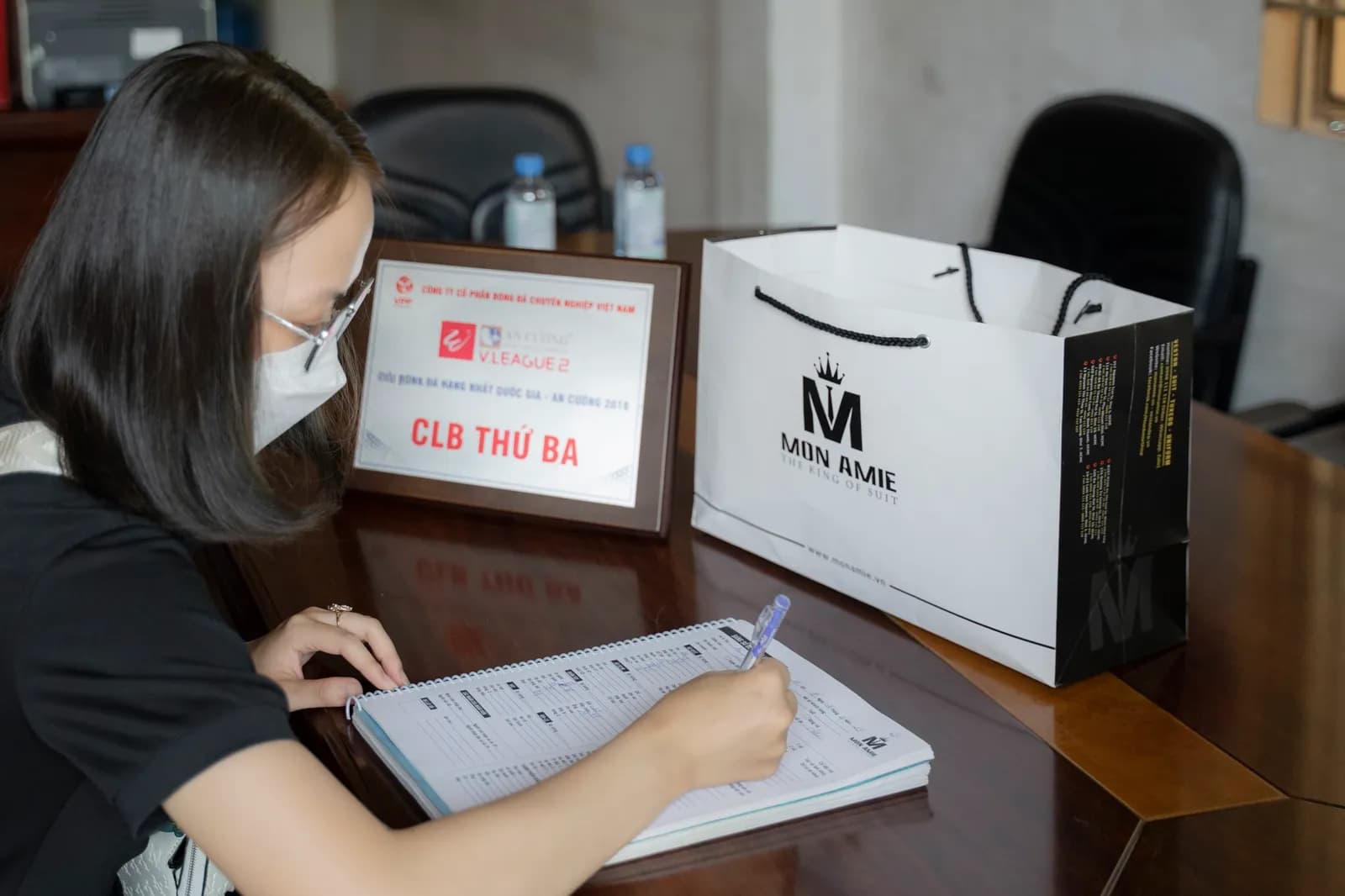
Below, a working session from a Mon Amie Uniform project.

What goes wrong, and why
- Rippling: usually the area around the opening was not stabilised enough, or the pocket bag pulls the body cloth off line. The jacket looks wavy at both hips.
- Gaping: the welts fall open when the wearer stands or walks. Common causes are loose welt stitching, weak end tacking, or a pocket overloaded with items.
- Corners that are not square: the ends sag or pucker, often because the cut was off line or the triangles were not pulled taut.
- Curved flaps, uneven sides: the flap was fused unevenly, or marking on the two sides did not match.
- Pockets set too low or too high: the hand cannot enter comfortably and the jacket loses balance. A good position is where the hand rests naturally at hip height.
In wear: keeping the pocket's shape
A pocket opening is sized for a hand, not for bulky objects. A phone, thick wallet or a bunch of keys will drag the opening down and crease the hips. Carry essentials in an inside pocket or a bag.
New jackets sometimes arrive with the pocket openings basted shut, and the thread is simply cut away with care before first wear. If you are unsure, ask your tailor first, since cutting a real seam by mistake is hard to repair.
When the jacket is a team uniform
For uniforms, pockets deserve a close look on the approved sample: staff need somewhere for badges, phones or business cards, and placement must be even across the team. Mon Amie Uniform makes a sample first, produces only after your company signs it off, and then measures each person on site, so you get a chance to check the pockets on a real garment. The six steps are on our process page, and on-site tailoring follows your company's schedule.
Men's business suits start from 3,000,000 VND with a minimum of 5 sets; actual prices depend on fabric, style and quantity. To discuss a specific jacket and pocket layout, contact us through the quote page or on 0888.111.118 (the same number on Zalo).
Frequently asked questions
What is the difference between a flap pocket and a jetted pocket?
A flap pocket has a flap over the opening, which gives an everyday look and can be tucked in to keep the line clean. A double-welt pocket has no flap and lies flatter, which suits formal jackets. The choice is about style, not about quality.
Why do jacket pockets ripple or gape?
Usually the area around the opening was not stabilised enough, the welt stitching is loose, or the end tacking is weak. Overloading a pocket also pulls the opening apart. When checking a sample, look at the pocket while standing, walking and sitting, not only on the hanger.
Is it fine to put things in a jacket pocket?
Only light, flat items such as business cards or a single key. Heavy objects drag the opening down and crease the hips. Keep other essentials in an inside pocket or a bag.
Does a uniform jacket need a chest pocket?
It depends on the look your company wants. A chest pocket is often decorative or for a pocket square, and can be left out for a cleaner body. The detail is settled on the approved sample before bulk production.