Embroidery or printed logo: durability and cost compared
Embroidery or printed logo on uniforms? Embroidery is raised and lasts; printing is light and suits multi-colour art. Durability, cost and choice by garment.
Embroidery is usually more durable and gives a raised, polished finish, so it suits polos, shirts and jackets. Printing is lighter and softer, so it suits T-shirts and artwork with many colours or fine detail. On cost, neither wins outright: embroidery generally rises with area and stitch count, printing with the number of colours and the method, and printing falls as quantity grows. The right choice follows the garment, the structure of the logo and how often it will be washed.
A quick comparison
The table is a general trade description; real results depend on fabric, technique and workmanship.
| Criterion | Embroidery | Printing |
|---|---|---|
| Durability through many washes | Usually holds well, rarely peels | Depends on the method; a thick layer can crack or peel over time |
| Feel when worn | Raised; the reverse can feel stiff without a soft backing | Thin and soft when done well |
| Fine detail, many colours | Struggles with very small lettering and gradients | Better with complex artwork |
| Suitable fabrics | Woven cloth, polos, shirts, jackets | Jersey, cotton, T-shirts |
| Cost tendency | Rises with area and stitch count | Rises with colours and method; falls with quantity |
Embroidery: when it works and when it does not
Picture a reception team in white shirts with a deep-blue logo on the chest. The stitched logo keeps its outline wash after wash and looks composed to anyone approaching the desk. That is where embroidery shines.
It has limits, though:
- Tiny lettering and fine lines: thread has a physical thickness, so very small text can blur or merge.
- Gradients and shading: a logo with graduated colour is usually simplified into a few flat areas when stitched.
- Thin or stretchy cloth: the stitched area can pucker and crease the shirt around the logo without suitable backing.
- The reverse side: backing behind the logo may rub against skin, so choose carefully for close-fitting garments.
Printing: the common methods
"Printing" covers several different techniques, and durability differs between them. The ones you will hear about most are:
- Screen printing: ink pushed through a stencil; suits logos with few colours and large quantities.
- Heat transfer: artwork pressed onto the cloth with heat, able to carry many colours.
- Vinyl or decal: a cut film pressed onto the garment; solid colour, but the printed area may breathe less.
- Digital printing: suits complex, multi-colour artwork.
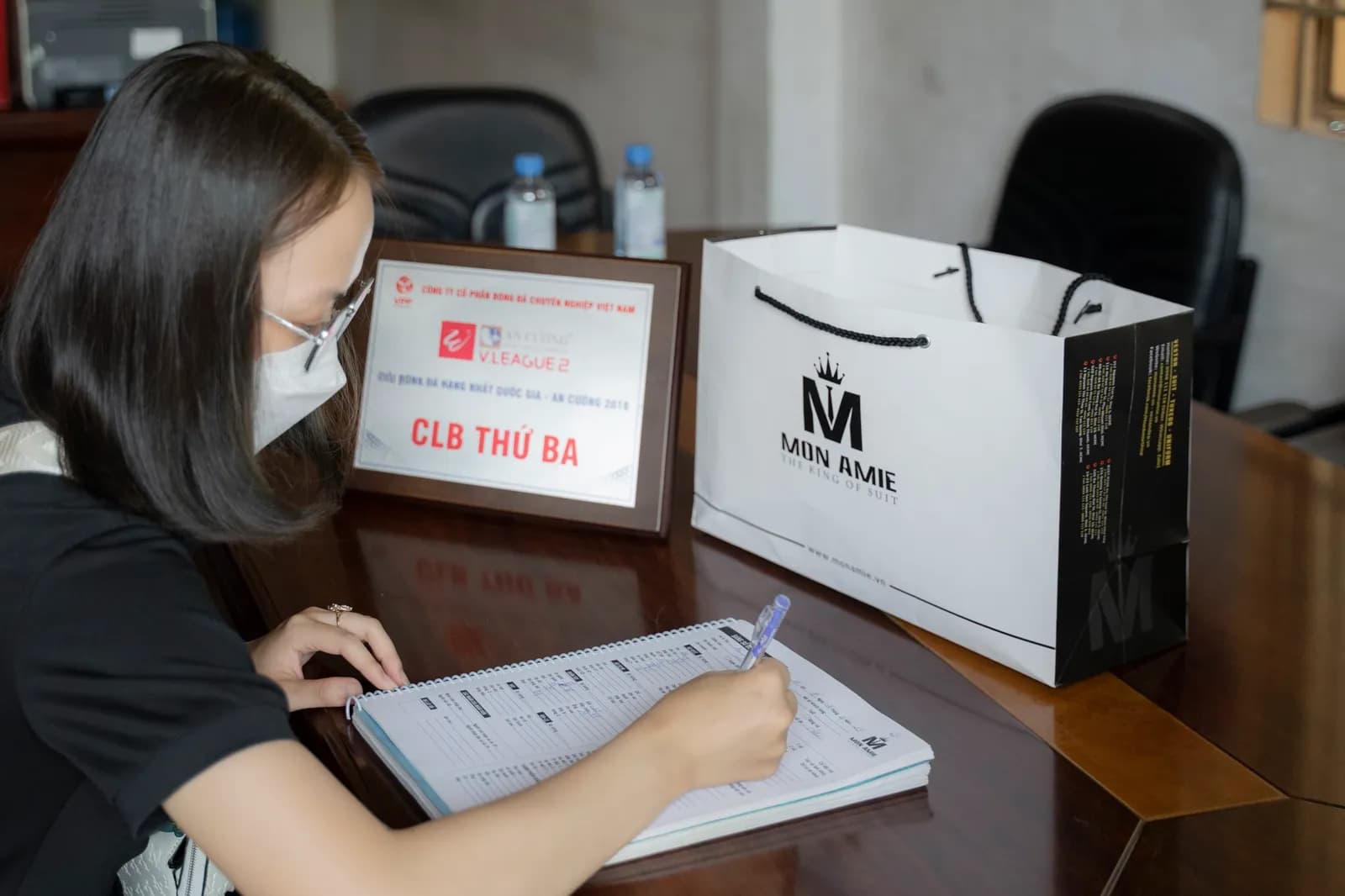
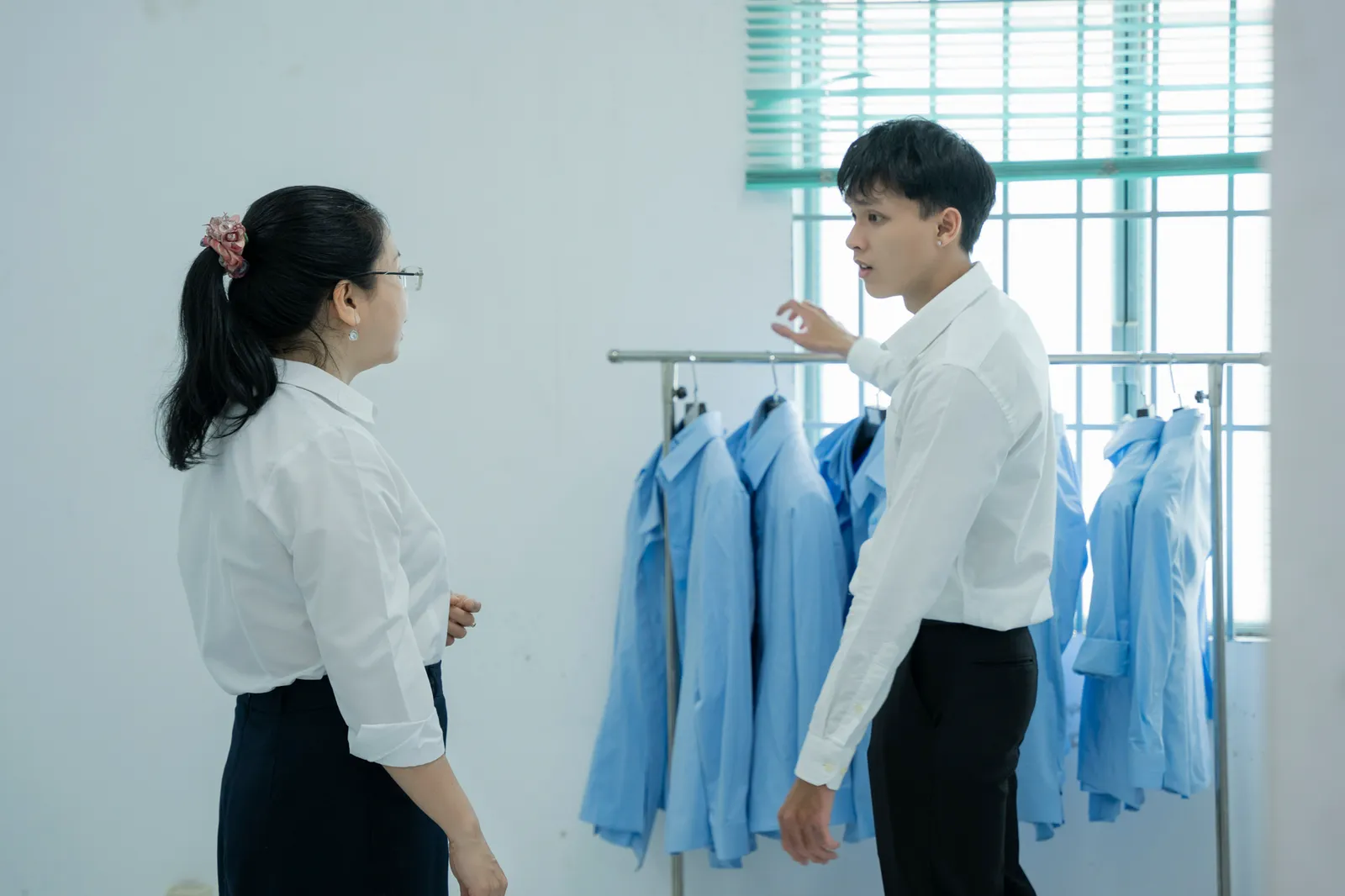
One thing they share: do not iron directly over the print, and wash garments inside out to help them last. The image below comes from a Mon Amie uniform project.
Common logo mistakes
Most problems come from sloppy preparation rather than the choice itself:
- A low-resolution logo file: sending a screenshot rather than a vector file leaves jagged stitching or print edges.
- Approving the position on paper: a chest logo should be judged on a real body. A position that looks right on a flat pattern can drift once the shirt is worn.
- A logo across a seam: it puckers the garment and distorts the mark.
- Choosing on price alone: a print unsuited to industrial laundering may need redoing, so think of the garment's whole life.
- Skipping a wash test: launder one sample before committing to a full run.
Matching the method to the garment
A starting point, with the final decision resting on a real sample:
- Polo: usually embroidered on the left chest; a light print can work if the logo has many colours.
- Shirt: embroidery generally suits woven cloth and a formal tone.
- Event or team T-shirt: printing generally suits better, especially large artwork on the chest or back.
- Jacket and waistcoat: a small embroidered name or emblem somewhere discreet; avoid printing.
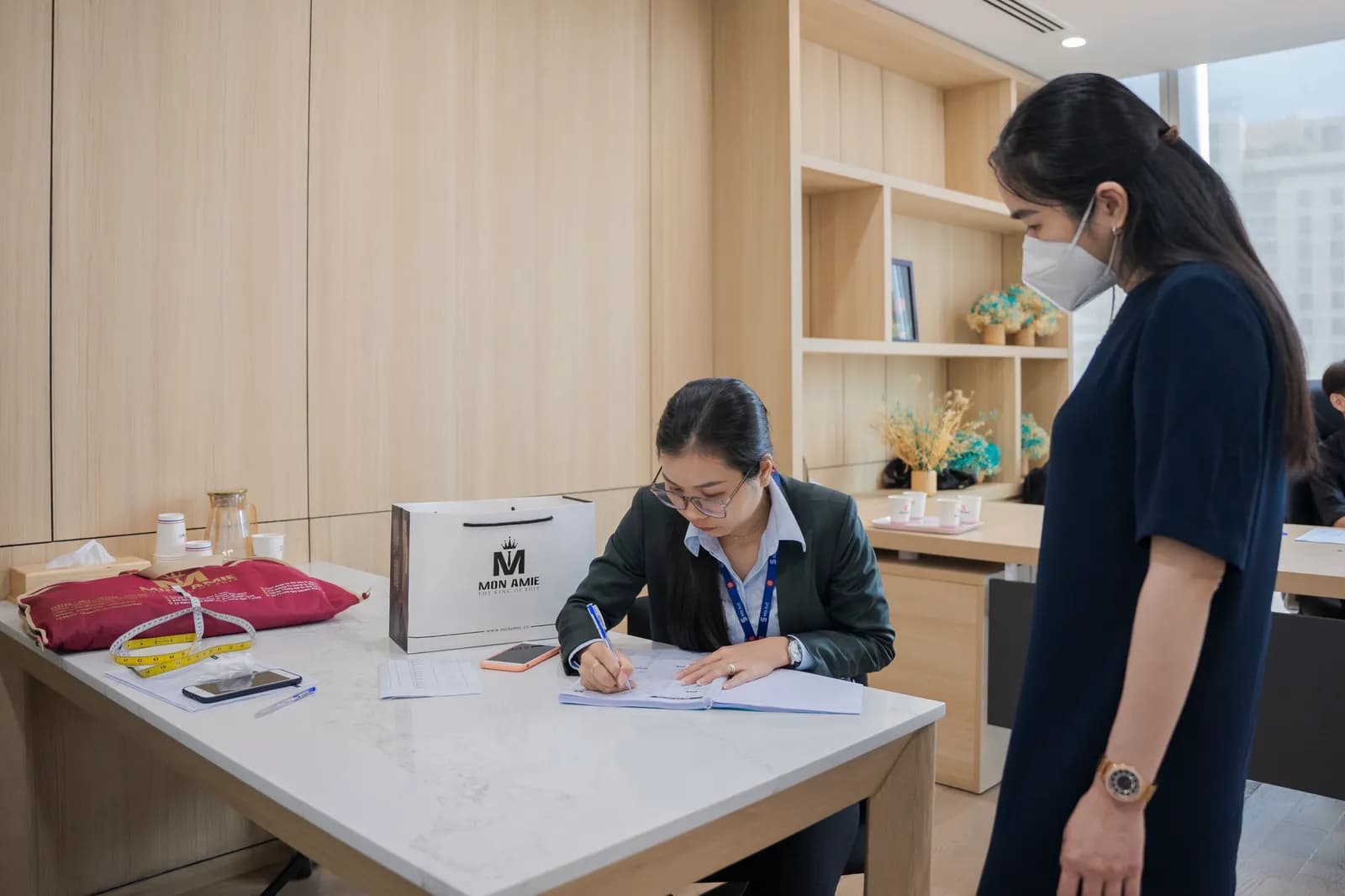
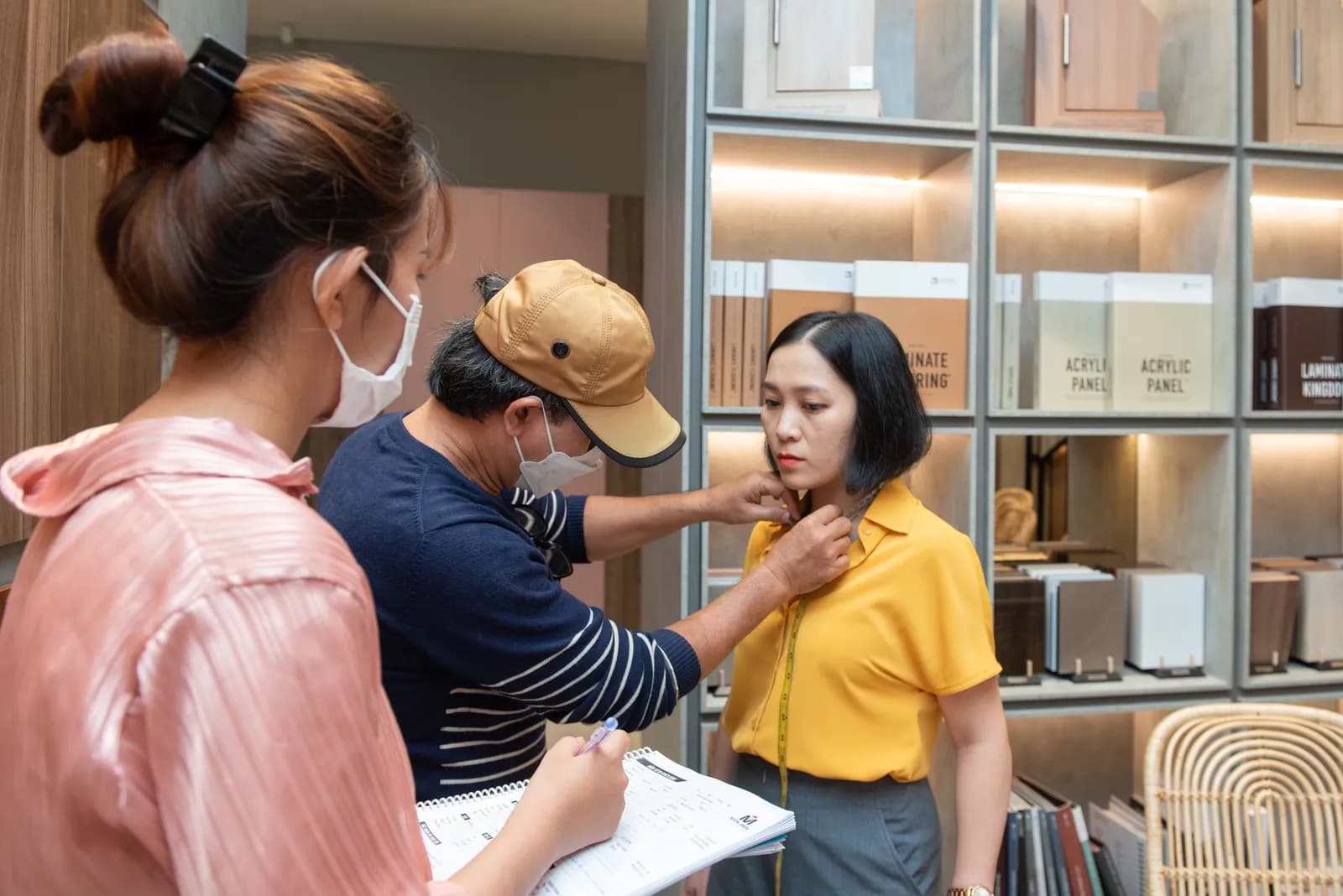
For corporate uniforms the logo is only one part of the whole. Mon Amie works through a six-step process in which your company approves a sample before production, which is the moment to check logo position and method. Each employee is measured at your office through our on-site tailoring service, and at delivery staff try the garments on, which gives you a chance to see the logo on a real wearer.
Mon Amie publishes starting prices by category, for example T-shirts and polos from 150,000 VND, minimum 30; the cost and method for your logo are quoted during consultation. To request a quotation for uniforms carrying your logo, use the quote page or call 0888.111.118.
Frequently asked questions
Which lasts longer through many washes?
Embroidery usually lasts longer because the thread is attached to the cloth, whereas a printed layer can crack or peel if the method is unsuitable or the garment is ironed directly over the print. Real durability depends on fabric, technique and laundering, so wash-test a sample first.
Should a multi-colour or gradient logo be embroidered or printed?
Printing usually handles many colours and gradients better. If you still want the raised look of embroidery, the logo may need to be simplified into a few flat colours. Review a sample before deciding.
How are embroidery and printing costs worked out?
Embroidery generally depends on area and stitch density, printing on the number of colours, the method and the quantity. Mon Amie quotes the exact cost during consultation, based on your logo and garment.
Where should the logo go on a polo?
The left chest is the common position. Fix it on a person rather than a drawing, because body shape affects where a logo looks balanced.