Common mistakes when ordering oil and gas company uniforms
Oil and gas uniform pitfalls: batch-wide sizing errors, stuffy fabric, off-brand colours. Mon Amie shows how to avoid each, from fitting to sign-off.
Three mistakes recur when ordering uniforms for oil and gas teams: sizing that is wrong across the whole batch, fabric that turns stuffy once people step into the sun, and colours that drift from the organisation's identity. All three can be avoided by measuring each person individually, handling and trying on real fabric, and checking colour against actual cloth before signing off the sample. This article covers office and meeting uniforms for engineers and officers, part of our corporate and office uniforms. For protective clothing in operating areas, discuss the required standards directly when requesting a quote.
Mistake one: wrong sizes across the batch
This is the costliest error for an HR office. The usual cause is a generic size chart, or sizes guessed from the height and weight listed on a spreadsheet. Engineering teams vary a great deal: broad shoulders, long arms, waistlines changed by years at a desk. A generic chart nearly always leaves one group tight across the shoulders and another with too much room in the body.
The way out is to measure people, not guess:
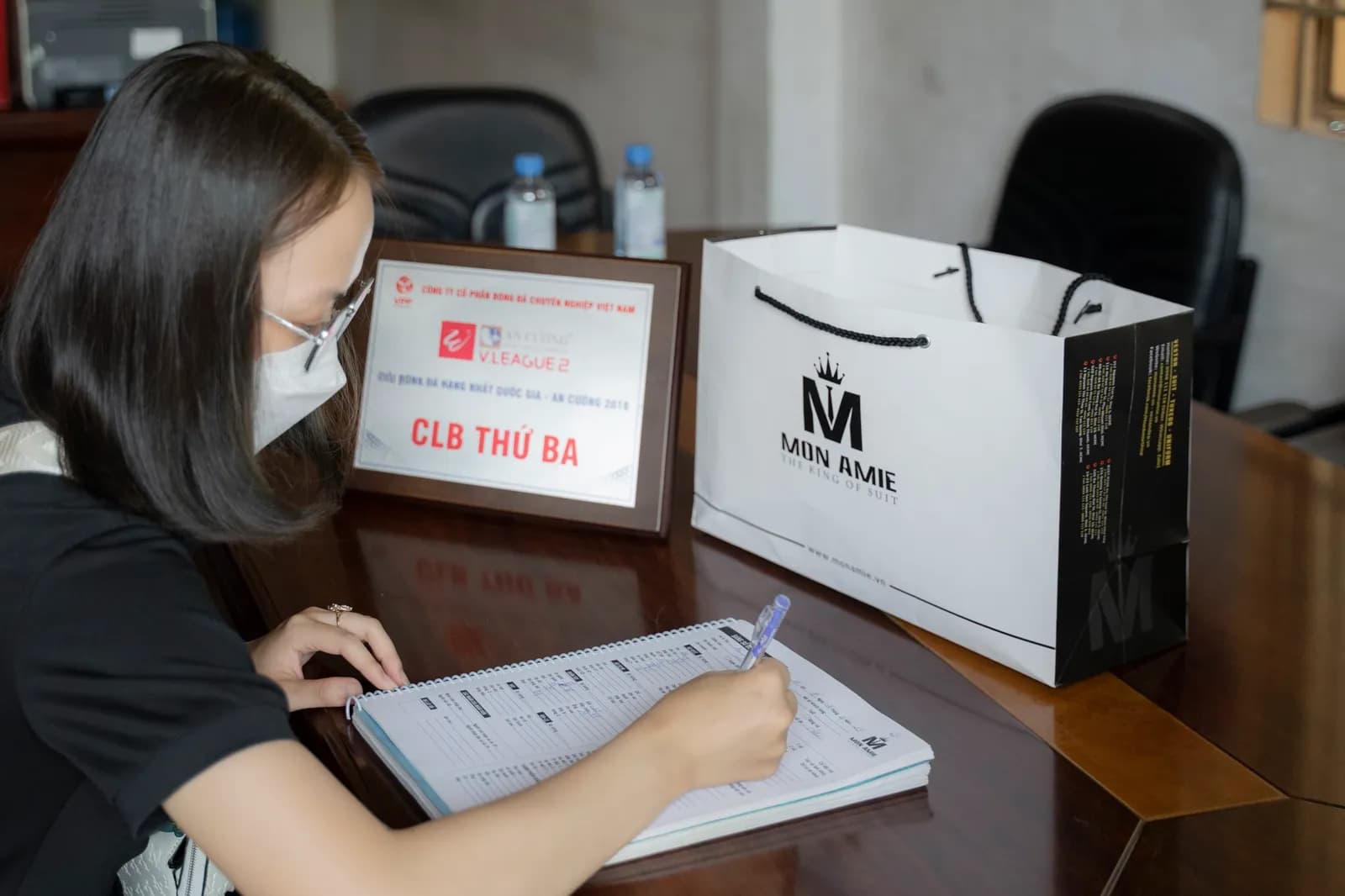
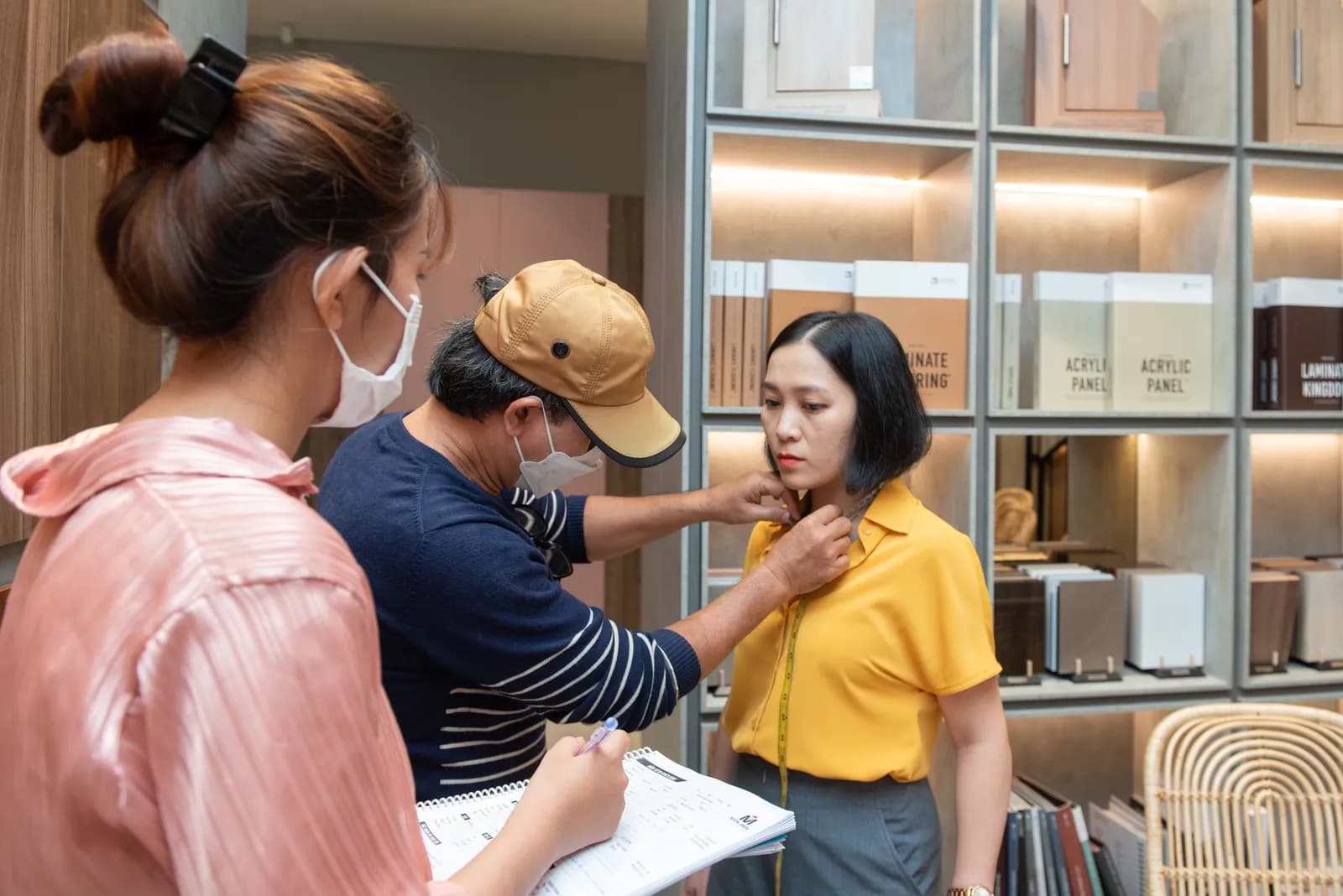
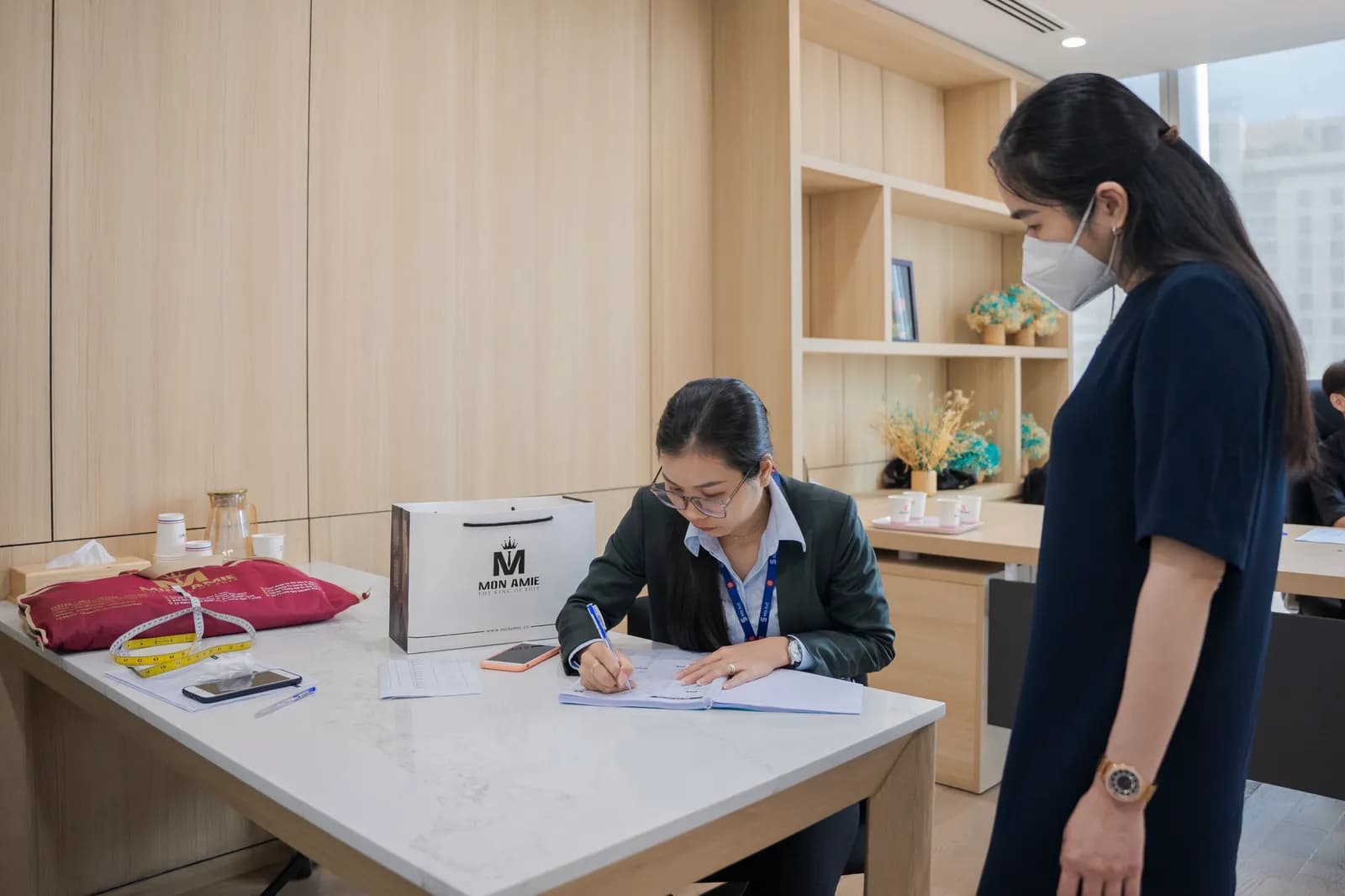
- Mon Amie's mobile measuring team comes to your office and measures each employee on your schedule, including outside office hours. That helps with officers who travel in rotations or work shifts.
- Measurements are stored under employee IDs, so people already measured need not be measured again for later orders.
- At delivery, staff try the garments on and alterations are made on the spot. Alterations are also covered by a free 3-year warranty at every showroom.
Mistake two: stuffy cloth between the cold room and the sun
An engineer sits in a chilly briefing room in the morning, inspects an outdoor technical area at noon and receives partners in the afternoon. If the outfit is cut from thick, heavy cloth, the wearer is soon sweating outside and sheds the outer layer. The error appears when approval comes from photographs alone, without anyone holding the fabric.
Dividing by role is more sensible:
- Managers and partner-facing staff: a jacket or waistcoat in polyester-viscose, commonly used because it holds shape and resists creasing.
- Engineers on the move: short- or long-sleeved shirts in a cotton blend, or piqué polos. These families are generally described as more breathable, though the actual feel depends on blend ratio and finishing.
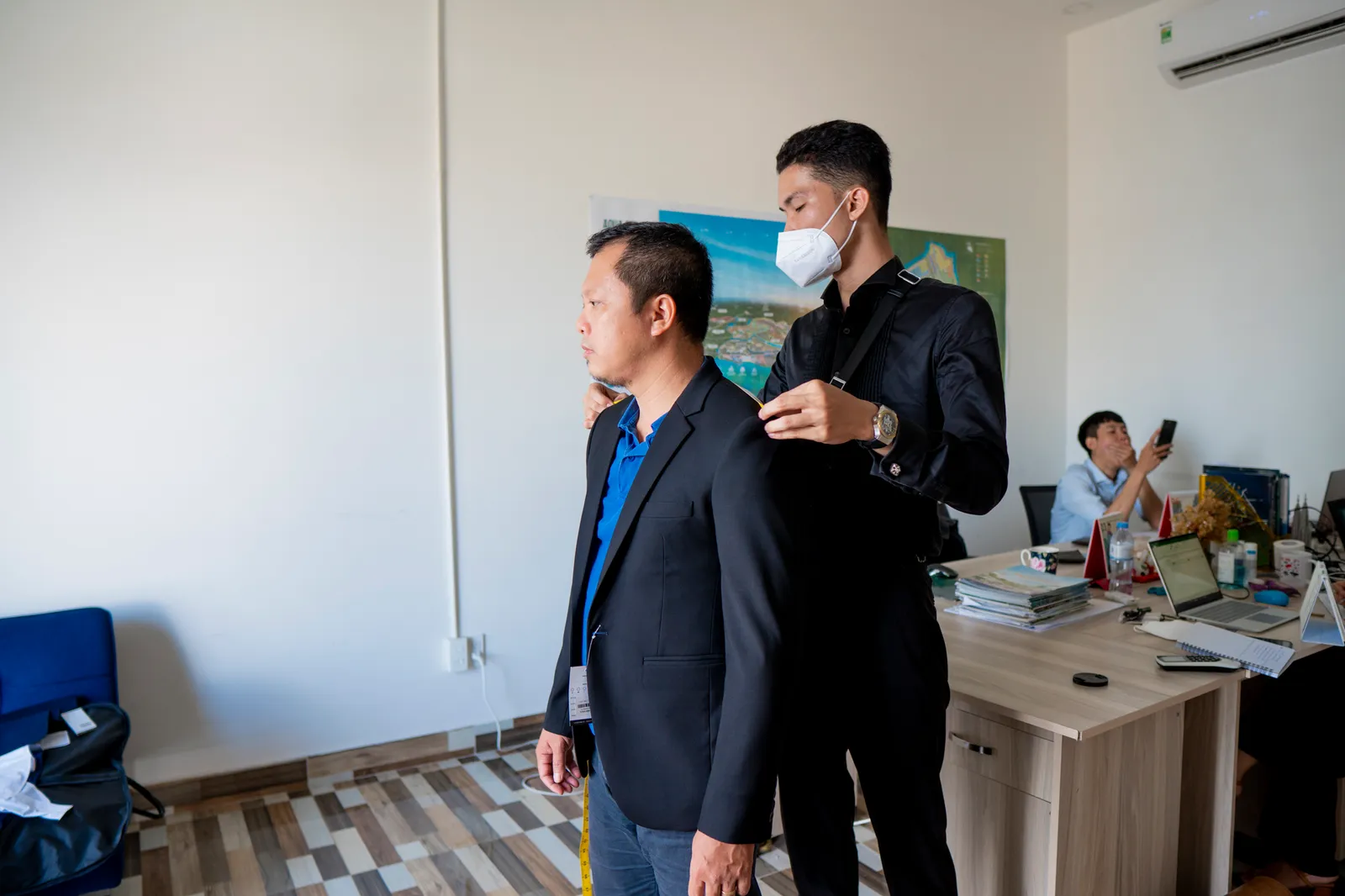
Real swatches are shown at the design stage, and the sample is approved before production. Below is a photo from one of Mon Amie's uniform projects, and our fabric library shows the main fabric families.
Mistake three: colour drift
A corporate blue or red looks different on a monitor, on a printout and on cloth, and two lots of the same fabric dyed on different days can vary slightly. Beside signage, banners and company vehicles, the mismatch shows at once.
To prevent it:
- Take the official colour reference and hold it against real cloth, under both indoor and outdoor light.
- Choose among the three design options Mon Amie prepares in your brand colours, rather than accepting the first.
- Sign the sample only when colour and logo position are right. Mon Amie starts production only after the sample is signed.
You can find more design ideas in the design library.
Four small mistakes that keep repeating
- Forgetting travelling staff: a hurried list leaves out absent officers. Schedule extra measuring for them.
- No plan for later orders: new or transferred engineers will need uniforms after the first batch. They are measured individually and made to the approved sample, so keep that sample as the standard.
- Not trying on at delivery: discovering a tight or long fit weeks later makes it harder to put right. Try on at handover.
- Squeezing the schedule: allow 4–6 weeks after sample approval for measuring, making and delivery.
A checklist before signing the sample
| Check | Warning sign | What to do |
|---|---|---|
| Measurements | Generic size chart, no individual figures | Measure each person; store under employee ID |
| Fabric | Photos only, no real swatch handled | Handle swatches and try the made-up sample |
| Colour | Right on screen but never held against cloth | Compare with the colour reference in two lighting conditions |
| Logo and name badge | Position undecided or across a seam | Fix the position on the approved sample |
| Later orders | No reference sample kept | Keep the approved sample for new hires |
If you would like to run through this table with someone who knows tailoring, send your details through the quote page or call 0888.111.118 and Mon Amie will arrange a survey.
Frequently asked questions
How is an office uniform different from protective clothing?
An office uniform identifies your organisation at work in the office, in meetings and with partners. Protective clothing for operating areas follows the safety rules of each organisation, so ask your safety department before deciding.
How do we avoid wrong sizes when many officers travel?
Schedule separate measuring for the absent group. Mon Amie's team works on the company's schedule, including outside office hours, and measurements are stored under employee IDs for later orders.
Will the uniform colour match our brand colour?
Mon Amie presents three options in your brand colours with real swatches. The finished colour depends on the fabric and dyeing, so compare it directly with your colour reference before signing the sample.
How do engineers who join after the order get their uniforms?
Each new engineer is measured on his or her own and the clothing follows the sample approved in the first order. For those already measured, the figures are on file under employee IDs, ready for the next order.