Hospital uniform mistakes to avoid: sizing, fabric and colour
Planning hospital uniforms? Avoid blanket sizing, fabric that traps heat and colour drift between orders. Mon Amie Uniform explains four common mistakes.
Four mistakes spoil most hospital uniform orders: sizing the whole workforce from a generic chart, choosing a fabric that traps heat over a long shift, letting colours drift between orders, and giving every role the same garment. Each is avoidable if the hospital measures people individually, tests a sample in real working conditions and keeps the approved sample as the reference for later orders.
Mistake 1: sizing from a blanket chart
Picture an administration office collecting height and weight for the entire hospital in one spreadsheet, then ordering in sizes S, M and L. On delivery, broad-shouldered people feel tight under the arm, tall people find the sleeves short, and a nurse who bends to help a patient finds the hem riding up.
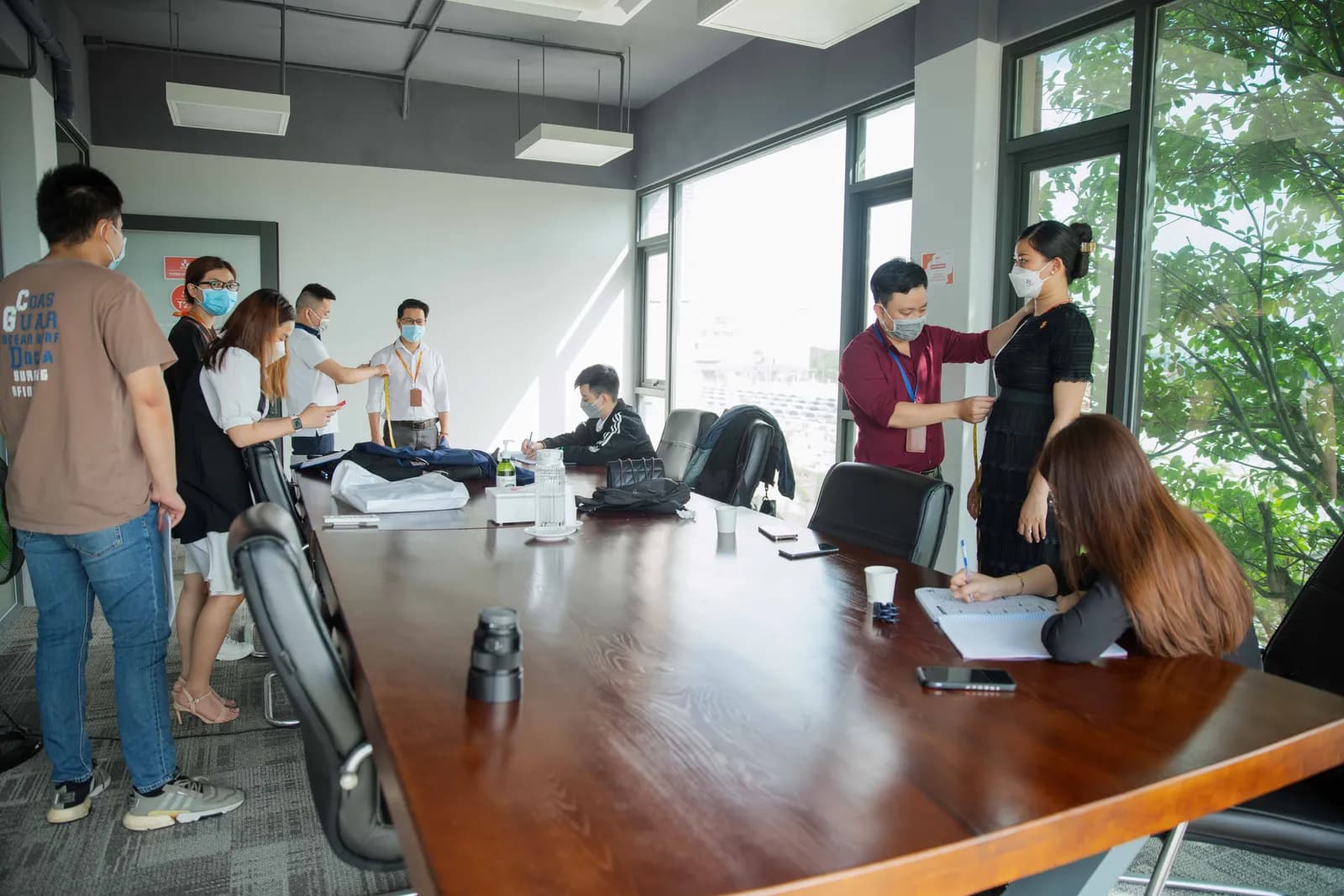
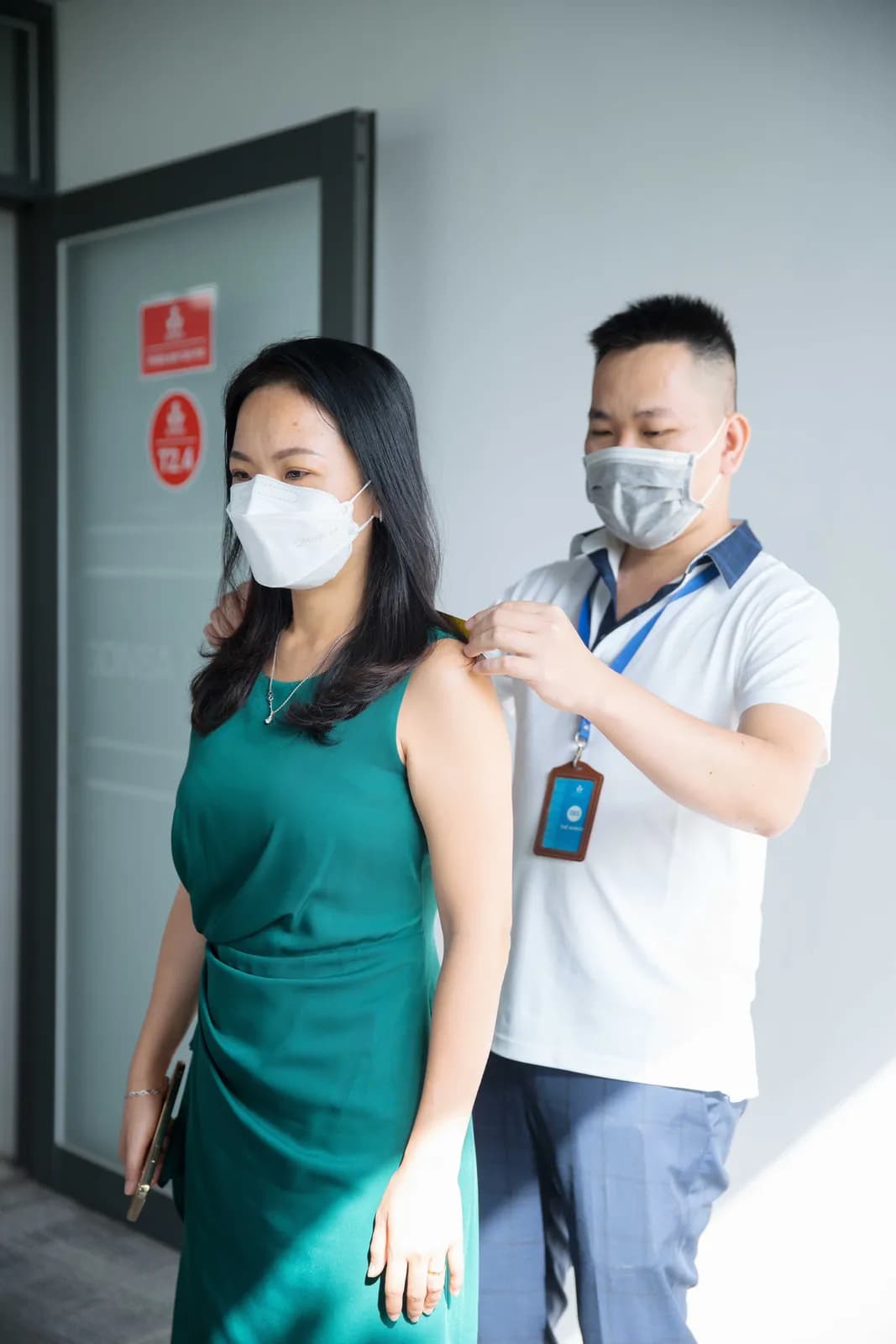
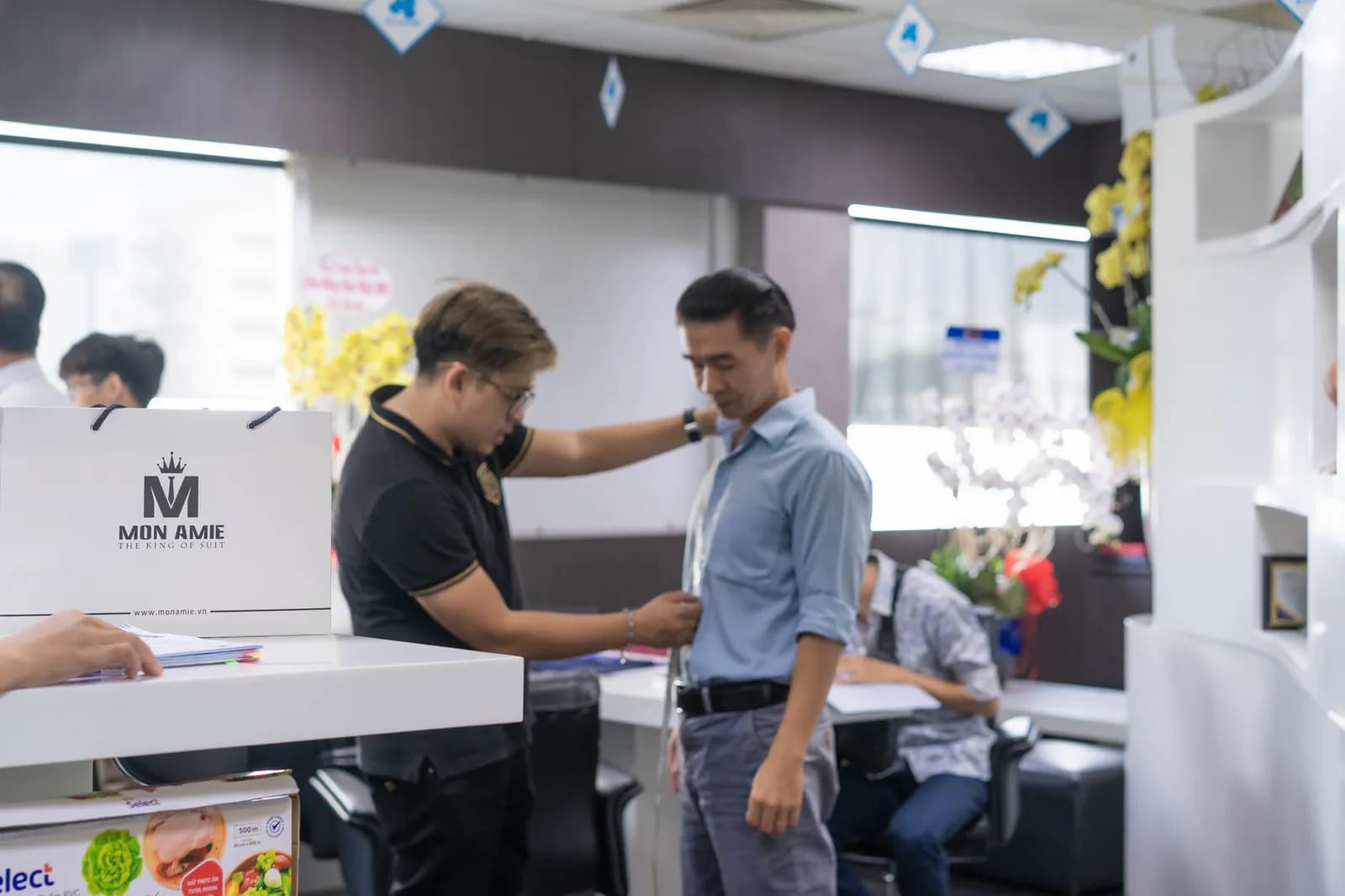
Height and weight say nothing about shoulder width, chest or sleeve length, the measurements that decide whether a garment moves with its wearer. The remedy is to measure each person. Mon Amie Uniform measures every employee at your premises on your schedule, including outside office hours, so staff on shift rotations can still be fitted. Measurements are stored under each employee ID, so nobody is measured twice for later orders.
Mistake 2: fabric that traps heat
Many hospital areas are air-conditioned, yet nurses and reception staff still stand for long periods, walk briskly and pass between zones of different temperature. A dense, tightly woven cloth, particularly one high in polyester, tends to hold heat more than an open weave, while cotton blends usually breathe better but crease more. Weave and blend matter more than the name on the label.
Handle real swatches, or browse our fabric library first, then ask a few people from different departments to wear the sample during their actual shift. Production starts only after the hospital signs off the sample, so that is the moment to test.
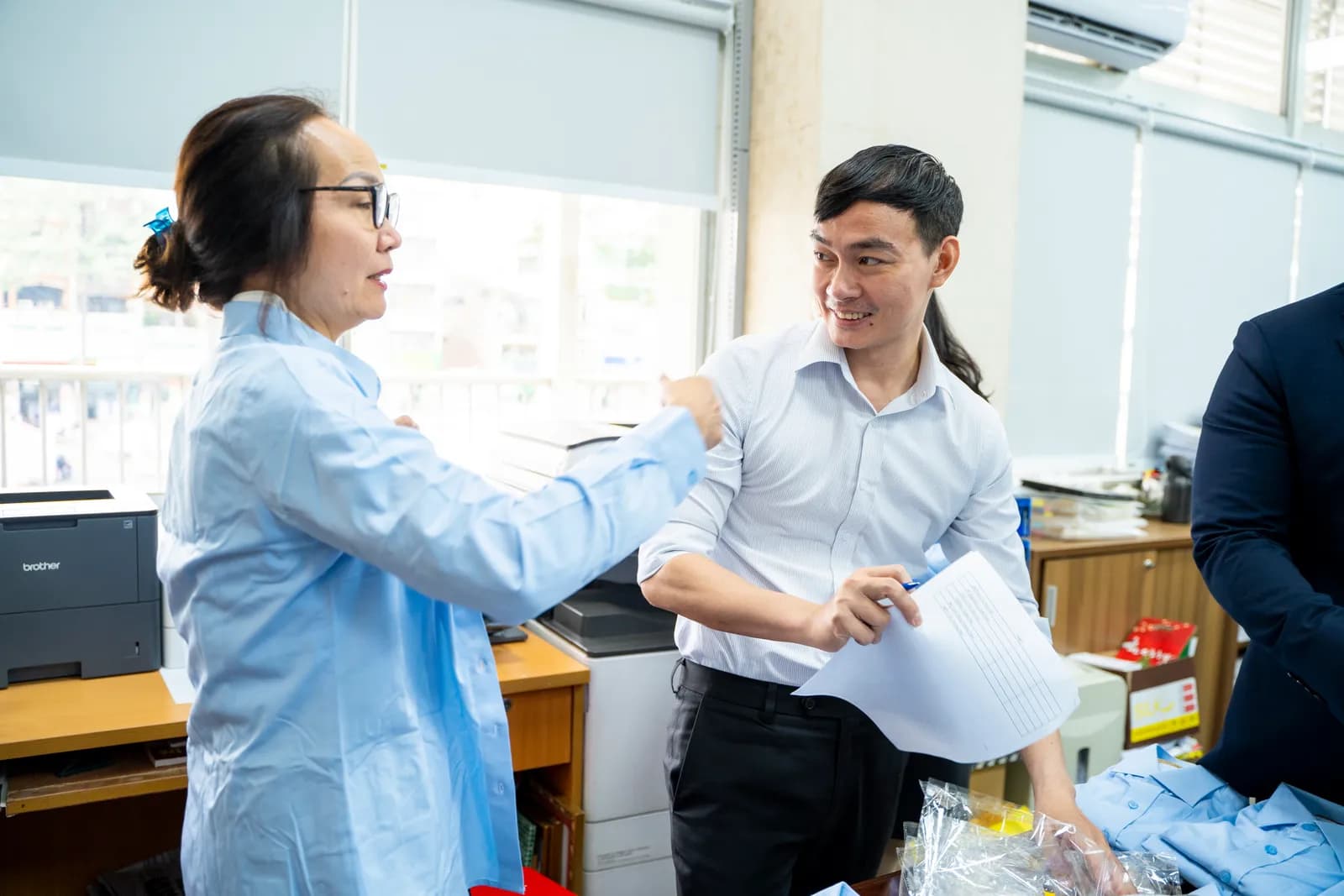
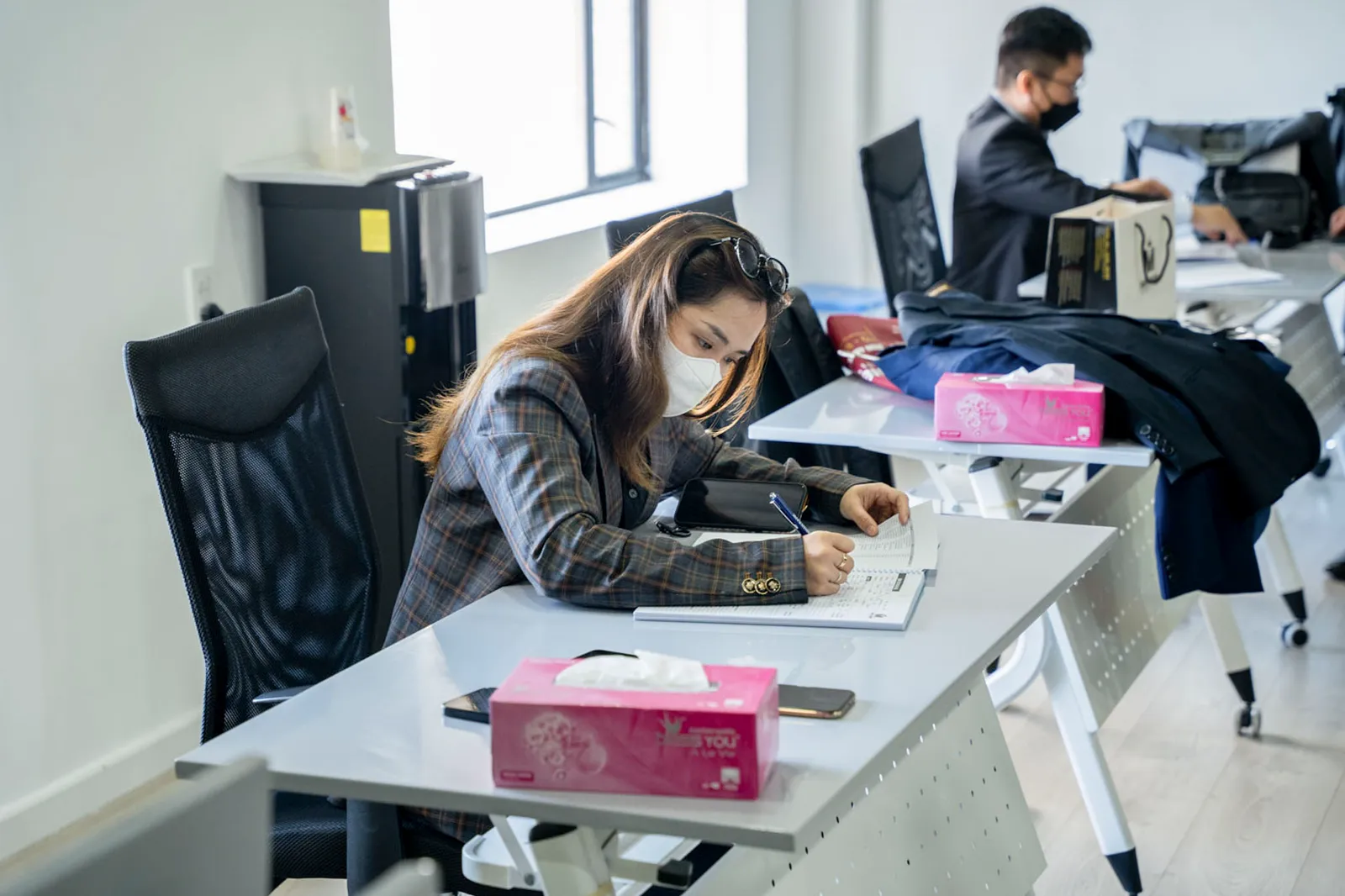
The photo below records a Mon Amie Uniform project with Fresenius Kabi Việt Nam.
Mistake 3: colour drift between orders
The first order covers one department; a little later another is added. Side by side, two shirts that are both called "blue" turn out slightly different, one leaning towards teal. The usual causes are a different fabric or dye lot, or no original sample left to compare against.
Keep the signed-off sample as the colour reference for every later order, and view swatches under both indoor lighting and daylight, since colours can look different in each. Mon Amie presents three design options built on your brand colours before any sample is made, and staff who join later are ordered from the approved sample.
Mistake 4: one style for every role
Administrative staff sit for long stretches, reception teams meet patients and families at a counter, and nurses move and handle equipment continuously. A single garment for all of them will feel too formal in some places and restrictive in others. A tidy approach is to share the colour identity and vary the style by role: shirts, trousers or ladies' jackets for administration and reception, and industry uniforms for clinical positions.
If the hospital has its own rules on colour by department, or on fabric for specialised areas, put them in the brief at the survey stage. Our page on healthcare and pharmaceutical uniforms is a good place to read more about this sector.
A quick check before approving a sample
| Mistake | What shows up in a trial | How to avoid it |
|---|---|---|
| Wrong size | Tight underarms, short sleeves, hem rising when bending | Measure each person and test with real movement |
| Heat-trapping fabric | Wearer feels hot across the back within an hour or two | Handle real swatches, trial during a shift |
| Colour drift | Garments from two orders look different side by side | Keep the signed-off sample as the reference |
During a trial, ask the wearer to bend forward, raise both arms overhead, sit down and stand up, and walk briskly for a short stretch. Those movements reveal most fit problems before the full batch is cut.
Budgeting and next steps
Mon Amie publishes starting prices by category, for example women's shirts from 480,000 VND (minimum 20) and industry uniforms such as healthcare wear from 300,000 VND (minimum 20). Actual prices depend on fabric, style and quantity, and our budget estimate page helps HR plan before the first meeting. After the survey you receive a proposal with a price range and approve a sample before measuring and making begin; allow 4–6 weeks from sample approval to delivery.
To discuss your hospital's brief, send your details through our quote request page or call 0888.111.118, the same number on Zalo.
Frequently asked questions
Should hospital uniforms be measured individually or ordered in standard sizes?
For uniforms made to your own pattern, individual measuring gives a better fit across the shoulder, chest and sleeve than a blanket size chart, especially for roles that involve bending, lifting and reaching. Mon Amie measures each employee at your premises and stores the figures under the employee ID.
When are night-shift staff measured?
Mon Amie measures on site to the client's schedule, including outside office hours. The exact arrangements for each shift are agreed during consultation.
What happens when new staff join after the order is complete?
New employees are measured individually and made to the approved pattern, while people already measured keep their stored figures. Alterations are covered by the free 3-year warranty at every showroom.
How should we choose the uniform colour?
Start from the hospital's own brand colours; Mon Amie presents three options in those colours with real swatches. View them under both indoor lighting and daylight, and keep the approved sample to check against in later orders.