The Super number on suit wool, such as Super 100s or Super 120s, describes how fine the wool fibre is: the higher the number, the finer the fibre, and the softer, smoother and lighter the cloth, though usually less hard-wearing for daily use. For office suits, the Super 100s to 120s range is often a balanced point between appearance and durability. Still, the number is only part of the story: weight, weave and blend decide how a suit actually behaves.
What the Super number really tells you
Many people read "Super 120s" as a quality score, as if a higher number always meant a better cloth. It is a technical measure of fibre fineness, and nothing more:
- It tells you: how fine the fibre is, and so roughly how soft, smooth, light and fluid the cloth will be.
- It does not tell you: whether the cloth will last, whether it runs hot or cool, or whether it suits the wearer.
- The same number can feel different depending on the weave and the weight of the cloth.
Reading Super 100s, 120s and above
The table is a general reading used in tailoring; the real feel also depends on weave and weight.
| Level | Typical feel | Durability for daily wear | Suits |
|---|---|---|---|
| Super 100s | Firm hand, clear surface | Better than higher levels | Suits worn several days a week |
| Super 120s | Softer, smoother, drapes well | Balanced, needs more care | Suits worn regularly where a polished look matters |
| Super 130s and above | Very soft and light | Wears and creases more easily | Formal occasions, worn in rotation |
Real swatches are the most reliable test: feel them, drape them, view them in daylight. Mon Amie Uniform brings physical swatches to the design stage; when reviewing them, ask about the composition and weight of each cloth.
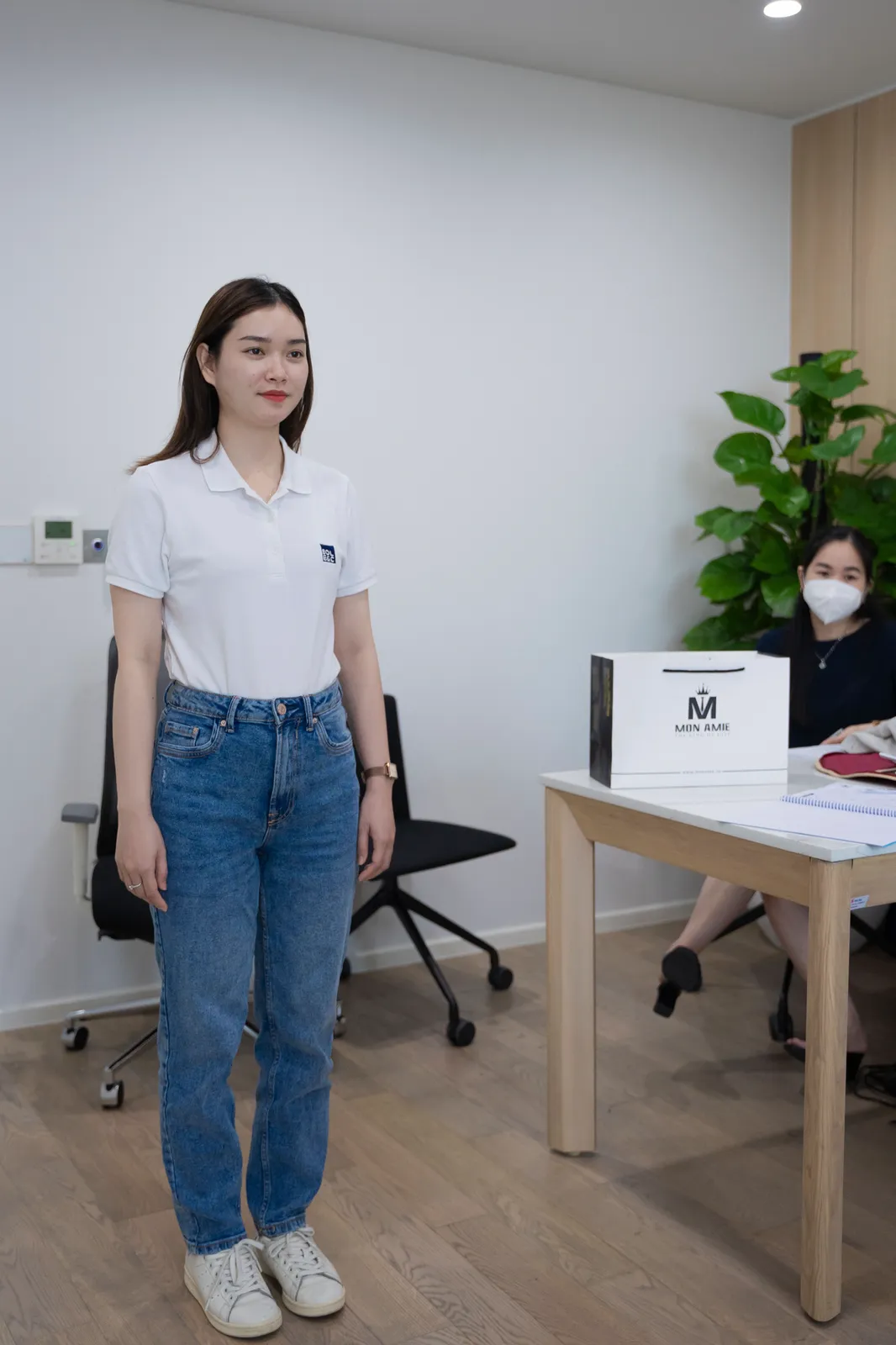
Mon Amie Uniform has worked with Newtecons; the photo below shows one of our projects.
Three more factors beyond the Super number
Whether a suit looks good also depends on how the cloth is woven, how heavy it is and what it is blended with:
- Weight: lighter cloth breathes better and suits a hot, humid climate such as Ho Chi Minh City; heavier cloth holds its shape and suits cold air-conditioned rooms or cooler seasons.
- Weave: twill drapes softly, plain weave looks clean and flat, and hopsack is more open and airy. Each gives a different look and crease resistance.
- Blend: polyester adds crease resistance and durability, viscose softens the surface, and a small amount of spandex gives stretch for movement.
Matching cloth to the wearer
What matters more than the figure is how the suit will be worn:
| Wearer | Use | Suggested cloth family |
|---|---|---|
| Executives | Worn through the week, meeting partners | Wool from Super 100s to 120s, or a fine wool blend |
| Office teams | Worn daily, cleaned or pressed often | Wool-polyester or polyester-viscose with spandex |
| Guest-facing and front-desk staff | Standing and walking a lot | Blended cloth, low-crease, easy to maintain |
For uniforms across a large team, many companies consider blended cloth because it is easier to clean and holds its shape for months, while finer wool is kept for a few roles with a high polish requirement. Men's office suits start from 3,000,000 VND and women's from 1,500,000 VND, minimum 5 pieces each; real prices depend on fabric, style and quantity, so finer cloth can raise the figure.
Caring for a wool suit
- Rest the suit between wears, hanging it on a wide-shouldered hanger so it recovers shape and releases moisture. Wearing the same suit day after day wears it out quickly.
- Brush off dust instead of washing; wool suits rarely need laundering, and water can distort the shape.
- Steam or dry-clean according to the care label when real cleaning is needed.
- Press on medium heat through a thin cloth, never directly on the wool.
- Store in a dry, ventilated place under a breathable cover rather than sealed plastic.
From knowledge to your company's uniform
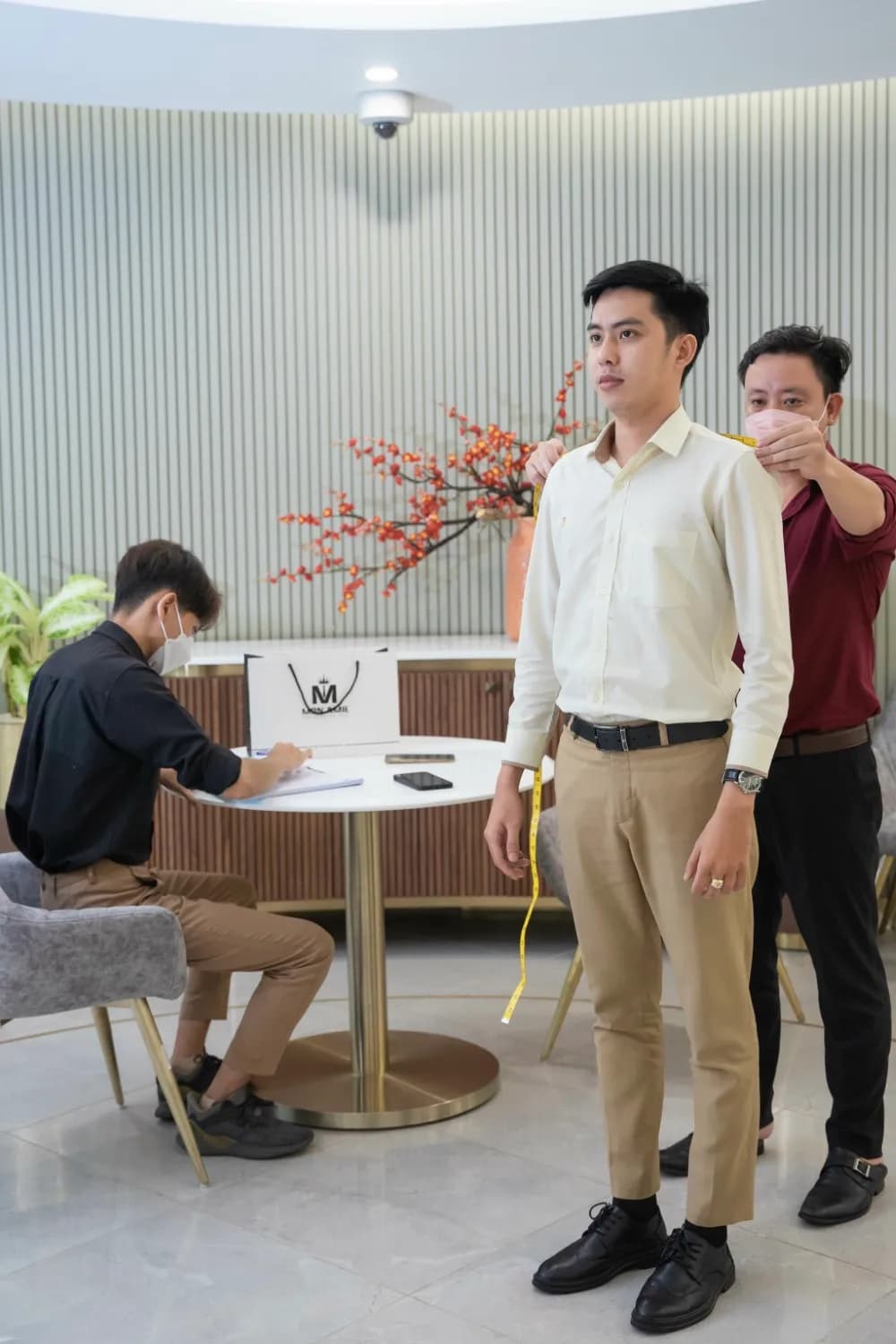
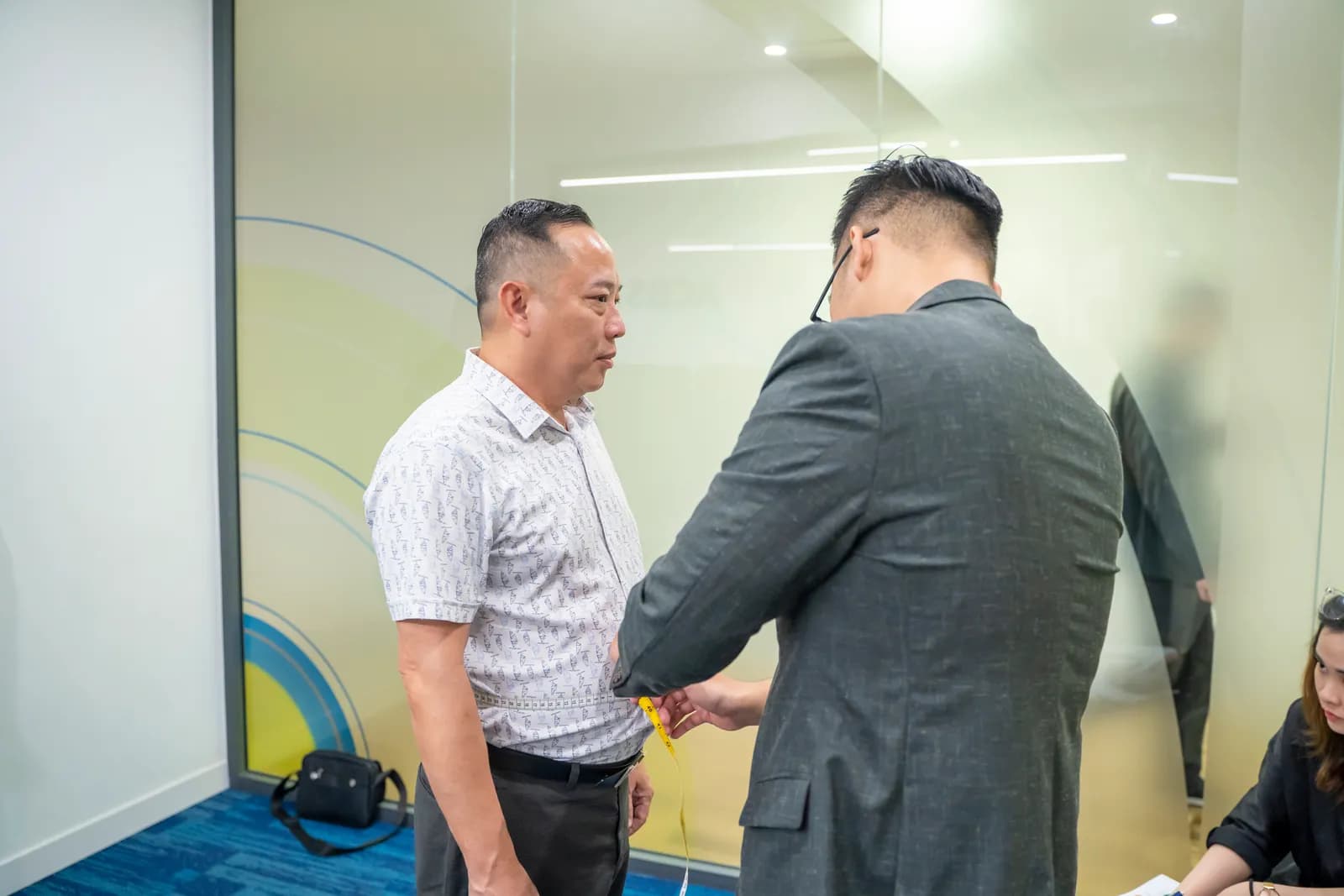
When you order suits for a whole team, Mon Amie lets you hold the real cloth before deciding. Our six-step process covers a survey at your premises, three design options in your brand colours, an approved sample, individual measuring, production and delivery. Allow 4–6 weeks after sample approval; alterations are covered by a free 3-year warranty at every showroom. For ideas on cut and style, browse our design library.
To receive a proposal with a price range and arrange to see real swatches, submit your details on our quote page or call 0888.111.118 (the same number on Zalo). Mon Amie will arrange a survey at your premises and send a proposal with a price range based on quantity and fabrics.
Frequently asked questions
Is Super 120s better than Super 100s?
There is no absolute "better". Super 120s is smoother and drapes more gracefully, while Super 100s has a firmer hand and usually wears longer in daily use. Choose by how the suit will be worn, not by the higher number.
Is a wool suit suitable for Ho Chi Minh City's climate?
Yes, if you choose a light, breathable cloth and consider a half-lined construction. For roles that spend time outdoors, a light polyester blend can be more comfortable.
Should a uniform suit be pure wool or a blend?
For large quantities worn daily, a blend is usually easier to maintain and keeps its shape; fine pure wool suits a few roles that need a particularly polished look. Mon Amie advises based on real usage during the survey.
How should a wool suit be cared for?
Rest the suit between wears on a wide-shouldered hanger, brush off dust instead of washing, steam or dry-clean according to the care label when real cleaning is needed, and press on medium heat through a thin cloth. Wearing the same suit day after day wears it out quickly.