Pilling is what happens when short fibres on the surface of a cloth are pulled up by friction, tangle together and form small balls. To choose a fabric that pills less, favour long, tightly spun fibres and a close weave with a flat surface, avoid brushed or loosely knitted faces, and wash gently. No fabric is immune, but the right choice makes pilling slower and milder.
Why fabric pills
Yarn is spun from many short fibres. When the surface rubs against something, fibre ends work loose and twist around each other. Four causes are common:
- Short fibres and loose twist: short fibres are easily drawn out, and loose twist holds them poorly.
- Open weave or brushed surface: soft, fluffy, brushed or knitted cloth has many fibre ends sitting on the surface already.
- Repeated friction: straps, chair backs, desks, elbows, the sides of a shirt.
- Hard washing and drying: heavy cycles, washing with zips or hook-and-loop strips, wringing out, and high-heat drying.
On natural fibres such as cotton, the balls are usually weak and fall away. On synthetic fibres such as polyester, the fibres are strong, so the balls cling to the surface and show up more. That is why the quality of the yarn matters more than which blend the label names.
Where pilling appears first
Cloth tends to pill first where friction is steady:
| Area | Why it pills | How to reduce it |
|---|---|---|
| Underarms and sides of a shirt | Arms rub the body while walking | Close weave, a cut that is not too tight |
| Cuffs and elbows | Rubbing on desks and armrests | Flat, tightly spun fabric |
| Shoulders under bags or straps | Fixed friction on one spot | Avoid brushed faces at the shoulder |
| Inner thigh and seat of trousers | Rubbing when walking and sitting | Close-woven trouser cloth with ease at the crotch |
| Back of a shirt | Chair back | Woven cloth with few raised fibres |
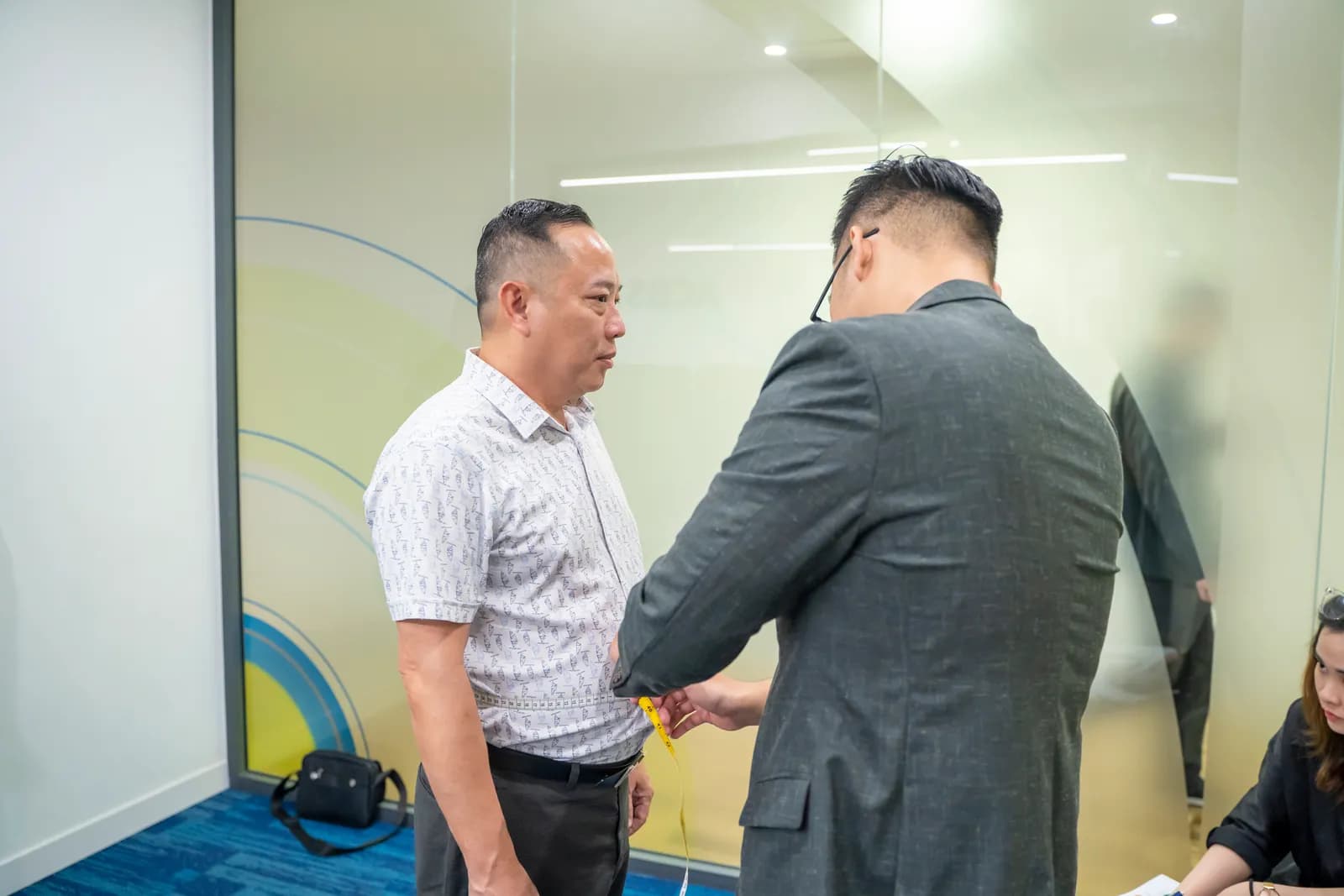
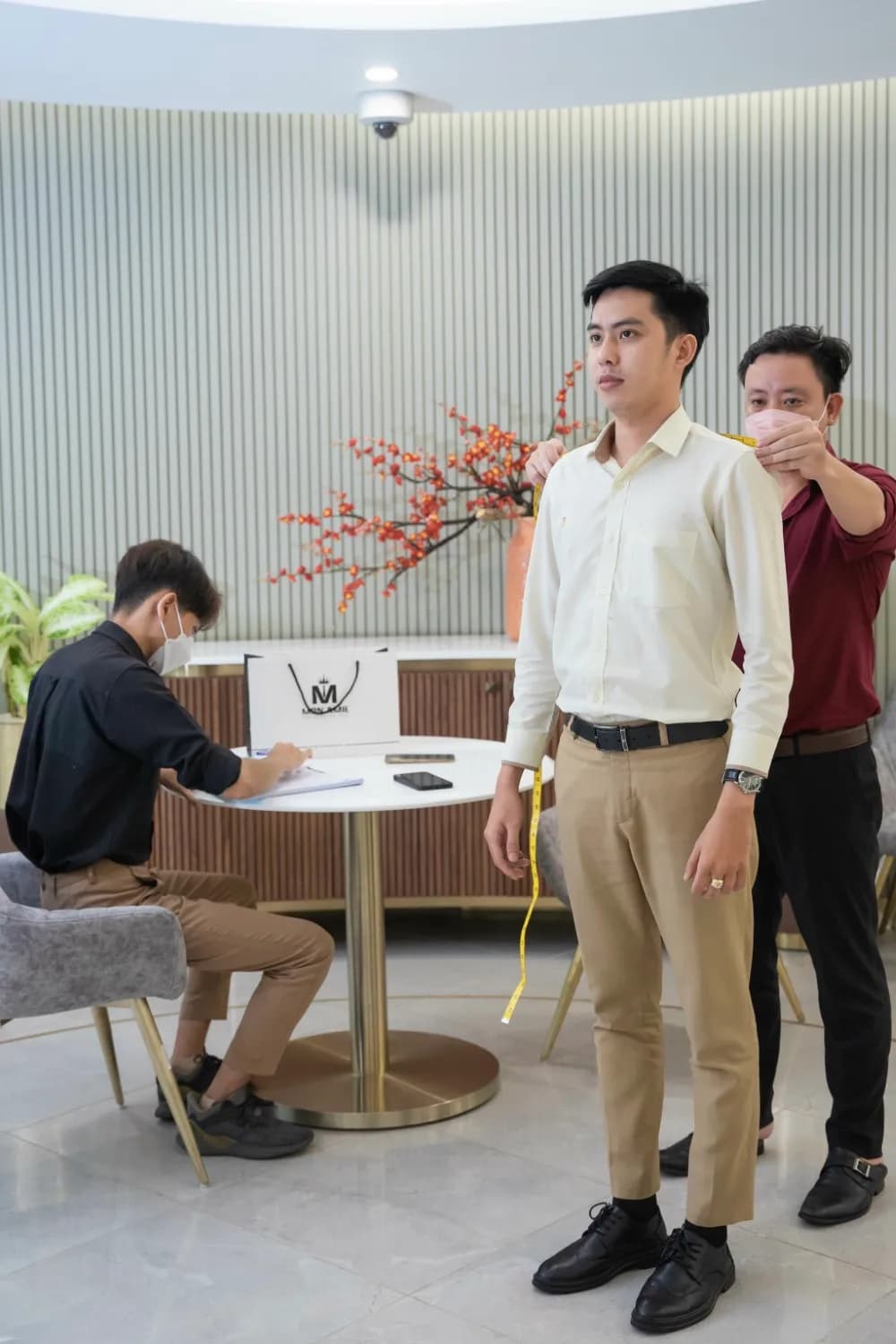
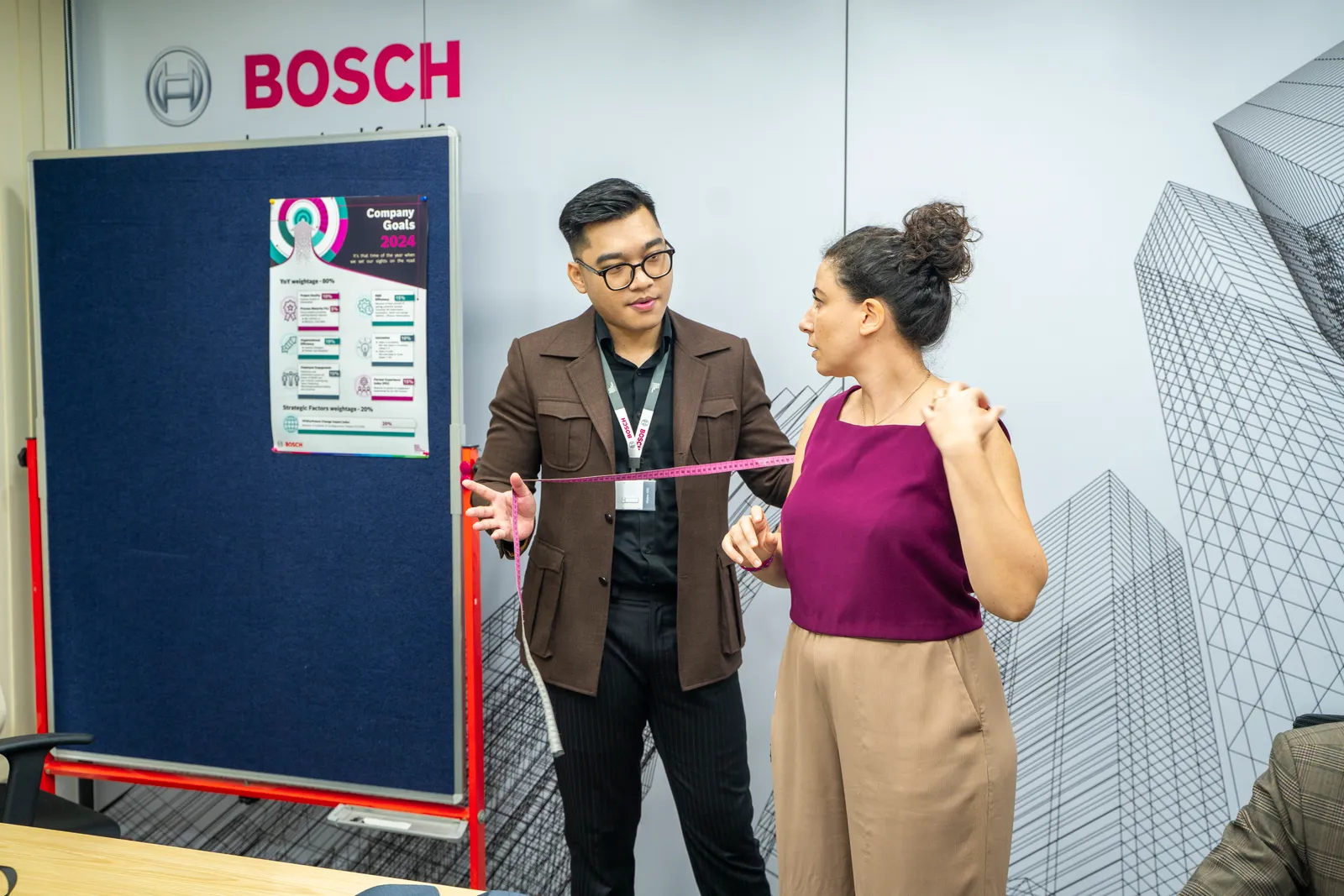
Mon Amie Uniform has worked with BOSCH. The photo below records one of our uniform projects.
How to choose a fabric that pills less
Use five checks when you look at swatches:
- Long fibres, tight twist. Combed, firmly twisted yarn holds fibres better, so the surface stays cleaner.
- Close weave, flat surface. Woven cloth usually pills less than a knit of the same fibre; brushed, fleecy or spongy faces pill sooner.
- Judge the yarn, not only the blend. Polyester helps cloth hold shape and resist creasing, but short fibres in it form balls that do not fall away.
- Test by hand. Rub the swatch with a finger a few times, or rub two swatches together, then see whether the surface fuzzes.
- Match the cloth to the friction. Roles with heavy rubbing, such as logistics, assembly or carrying straps, need sturdier cloth than desk jobs.
Washing and care
Good cloth washed hard still pills early. These habits help:
- Turn garments inside out and use a mesh bag.
- Close zips and hook-and-loop strips first, or wash apart from heavy items such as jeans and towels.
- Use a gentle cycle, cool water and a sensible amount of detergent.
- Do not wring out hard; dry flat or hang in a ventilated spot, away from high heat.
- Iron on a medium setting as the care label advises.
For a garment that has already pilled, a fabric shaver or a fuzz-removal blade works if used lightly on a flat surface. Do not pull the balls off by hand, which can damage the yarn. Repeated shaving thins the cloth, so a badly pilled garment is better replaced from the same pattern.
Testing fabric before you commit
At Mon Amie Uniform you have two chances to check pilling before mass production. At the design stage, real swatches are shown so your team can handle and rub them, and our design library is a good place to gather style ideas. At the approved-sample stage, the sample can be worn and test-washed, because our six-step process produces only after your company signs off.
Hoàng Vy – Mon Amie was founded in 1991; our 1,000 m² workshop on 3/2 Street employs more than 80 skilled tailors and checks quality at three stages: cutting, assembly and finishing. Alterations are covered by a free 3-year warranty at every showroom.
Frequently asked questions
Does pilling mean the fabric is poor?
Not necessarily. Pilling is a friction effect, and good cloth still pills if it is washed hard or rubbed heavily. However, short-fibre, loosely spun cloth pills sooner and more, so test swatches before choosing.
How can I tell if a fabric will pill before it is sewn?
Rub a swatch with a finger a few times, or rub two swatches together, and see whether the surface fuzzes. For large orders, wear and test-wash the sample before you approve it.
Does polyester blend pill more than cotton?
There is no general answer. Polyester balls cling harder than cotton ones if the fibres are short, but a well-spun, close-woven cloth pills little whether it is cotton or a blend. Compare the yarn and the weave.
What should we choose for roles with a lot of friction?
Close-woven cloth with a flat surface, and no brushed or fleecy faces at shoulders and underarms. We advise by job group during the on-site survey.
To receive real swatches and a proposal for your uniforms, submit your details on our quote page or call 0888.111.118 (the same number on Zalo).