Wrinkle-resistant fabric is not fabric that never creases. It reduces creasing through three things working together: resilient fibres, a firm weave and sometimes a surface finish, so creases form more slowly and fall out faster. Understanding the mechanism helps a company set realistic expectations when choosing uniform fabric, and see where pressing is still needed.
Why fabric creases
A shirt creases when its fibres are folded, pressed or stretched while warm and slightly damp from the body, and then stay in the new position. Tailors commonly explain that natural and cellulose-based fibres such as cotton and viscose hold creases more readily because they recover less when damp. Polyester is more resilient and tends to spring back, though it absorbs less moisture than natural fibres. How much exactly depends on the fibre, the blend ratio and the weave.
Three ways fabric resists creasing
| Mechanism | How it works | Limit |
|---|---|---|
| Resilient fibres (polyester blends, sometimes with spandex) | Fibres spring back after folding | May breathe less than natural fibres; high-heat pressing can mark the surface |
| Firm weave at a medium weight | The surface holds shape, so creases set less deeply | A very tight weave can feel less airy |
| Surface finish (often sold as easy-care or non-iron) | Treated so fibres resist holding creases | Names vary by maker; the effect may fade over repeated washes, depending on the treatment |
No mechanism works alone. Good low-crease fabric is usually a combination: a sensible blend, a suitable weave and, where used, a modest finish. You can look at the fabric families in our fabric library.
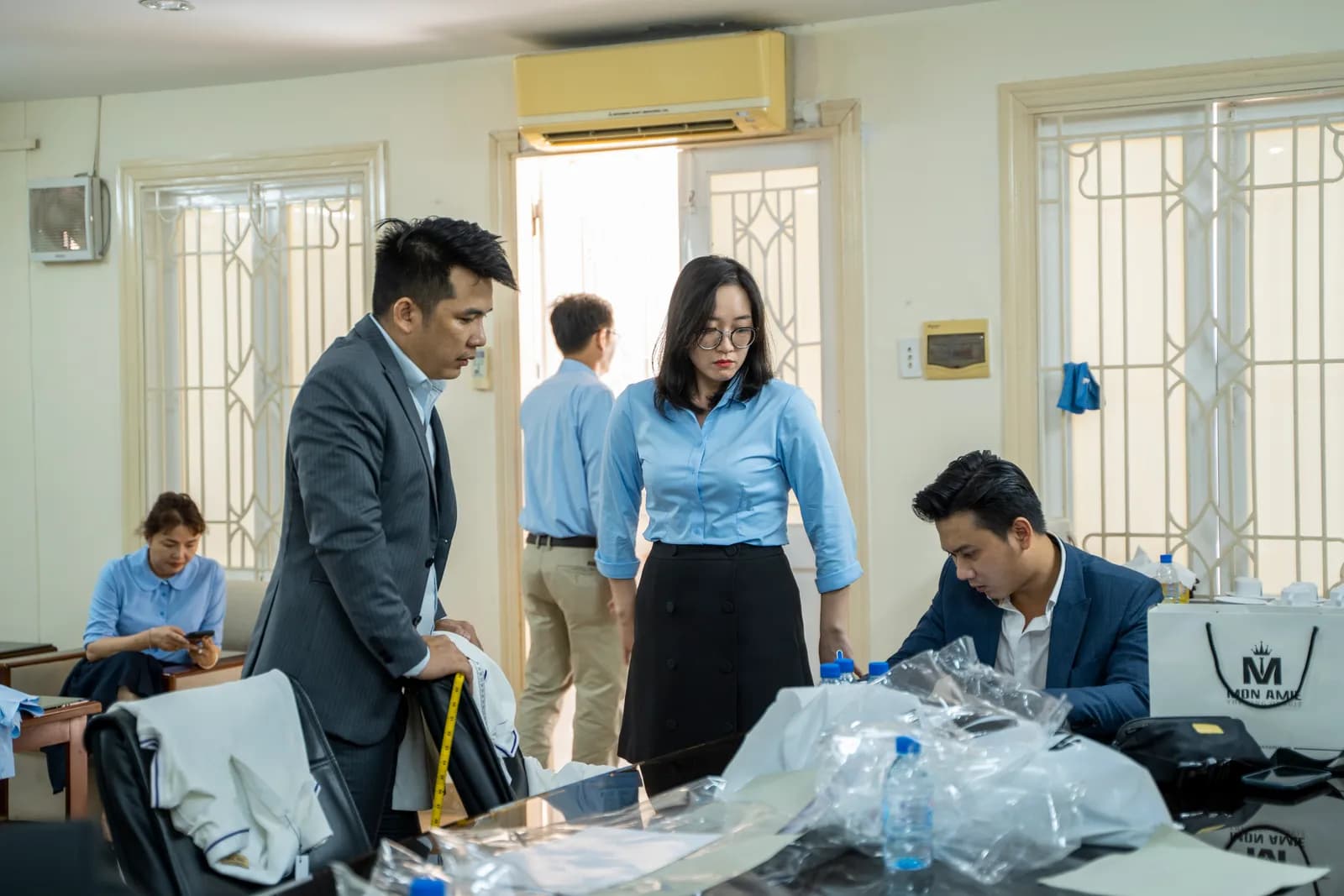
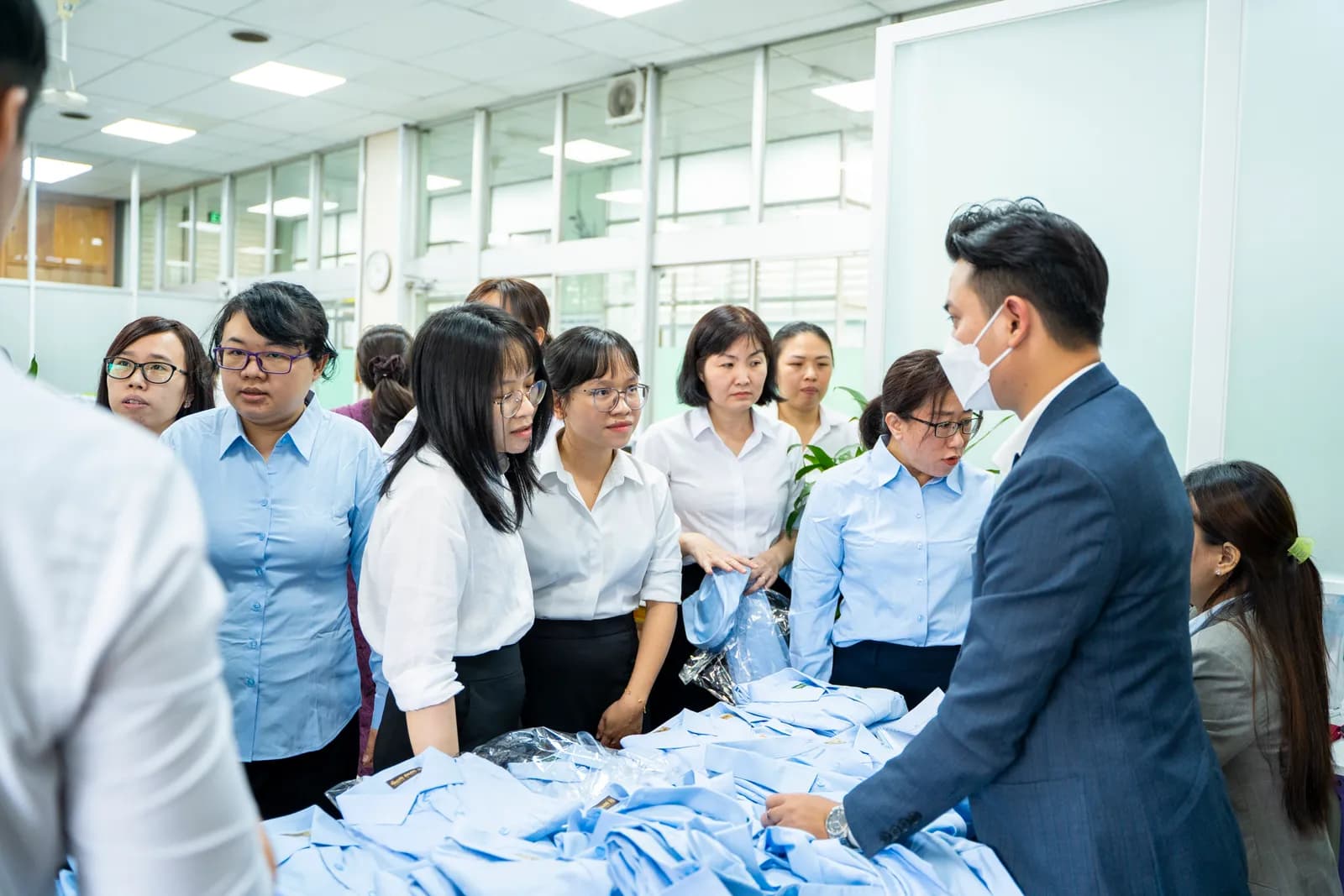
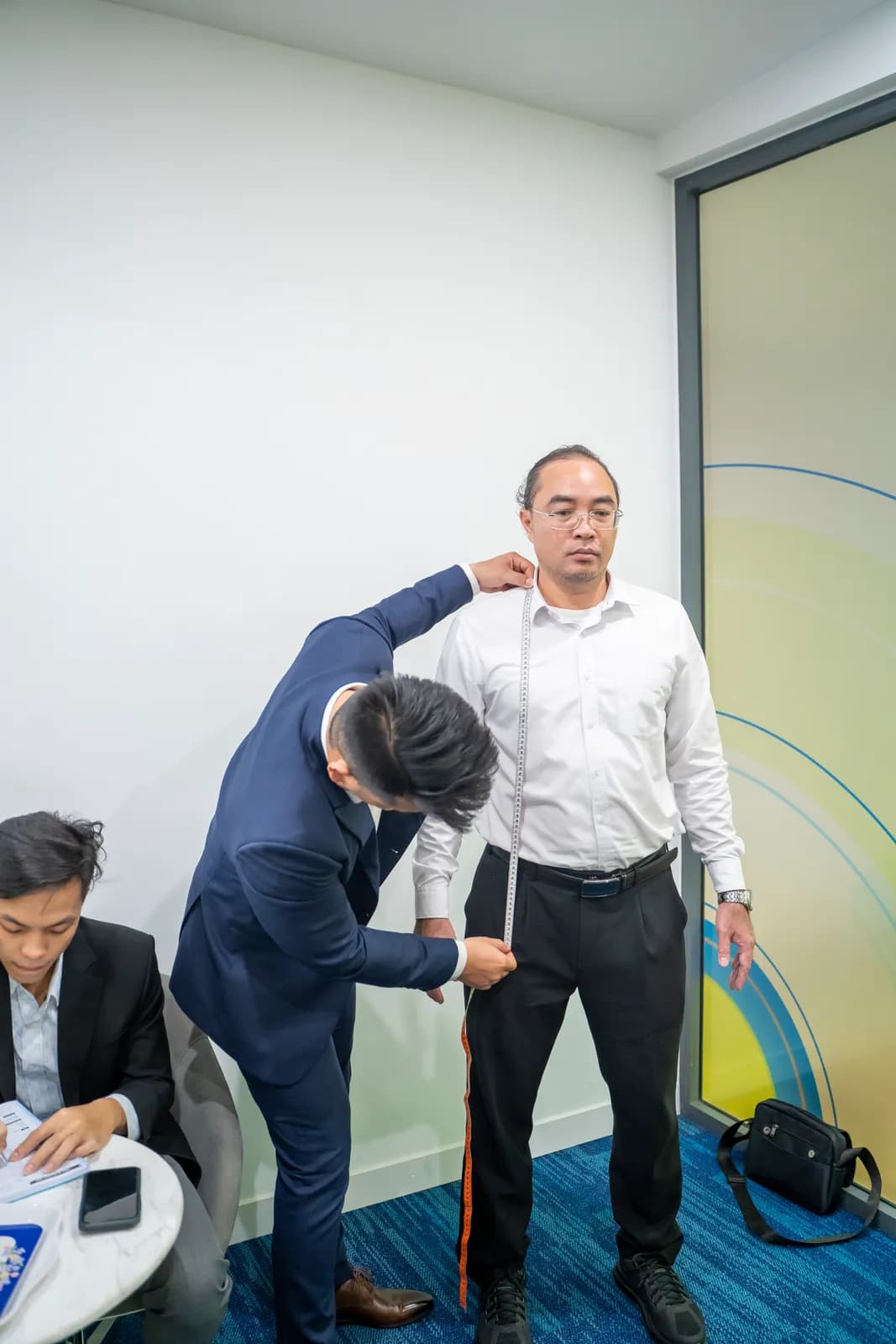
Here is one of Mon Amie Uniform's projects.

What a "wrinkle-resistant" label often leaves out
Picture a sales executive who sits in a car for most of a journey and walks straight into a meeting. Even in wrinkle-resistant cloth, creases can still show at the waistband, thighs and elbows. A few limits worth knowing:
- Long sitting and bending: creases still appear at the elbows, waist and thighs; good fabric makes them fainter and quicker to recover.
- Suitcases: tightly folded garments will crease after hours, especially at the fold lines.
- Breathability: some finishes and very tight weaves can make cloth less airy, depending on the type.
- Washing and drying mistakes: hard wringing, high-heat drying or leaving damp clothes in a heap sets creases deeper, even in low-crease cloth.
- Pressing mistakes: excessive heat can shine or damage polyester-blend surfaces.
Test the fabric before trusting the label
- Squeeze test: squeeze the swatch hard in your palm for a moment, release it and watch how fast it recovers.
- Fold and press: fold it in half, press with your fingers and open it out.
- Wear and sit: look at the elbows, waist and thighs after sitting for a while.
- Feel on the skin: does it feel stuffy in a moderately cool room?
- Care label: ask about washing and pressing temperatures, and whether tumble drying is allowed.
To keep cloth looking smoother in daily use, hang garments straight after washing, avoid high-heat drying and steam-press rather than pressing hard onto stubborn creases.
Choosing low-crease fabric for uniforms
For uniforms, low-crease cloth matters because a whole team needs to look tidy from morning to evening without anyone re-pressing mid-shift. Mon Amie Uniform shows real swatches and three options built on your brand colours at the design stage, so your team can squeeze, crease and judge them by hand before deciding; the design library offers styling ideas. To request a quotation based on the fabric you choose, use our quote page or call 0888.111.118 (the same number on Zalo).
Frequently asked questions
Does wrinkle-resistant fabric still need ironing?
Usually a light press for important occasions, but less often, and creases fall out faster if garments are hung properly after washing. How much depends on the fibre, the weave and the finishing of each fabric.
Does the anti-crease effect wear off after many washes?
With surface finishes, the effect may fade over repeated washes, depending on the treatment and how the garment is laundered. When low creasing comes from the fibre blend and weave, the property tends to last because it is built into the cloth. Read the label and ask when choosing.
Why do some people find polyester warm if it creases so little?
Polyester is resilient, so it tends to crease less, but many polyester fabrics absorb less moisture than natural fibres and can feel stuffy in hot weather. Blends with cotton or viscose are often more balanced; try before you decide.
How can we judge low-crease performance before ordering?
Use the squeeze, fold-and-press and seated tests above. Mon Amie Uniform also makes an approved sample: production starts only after your company signs it off, so you can test an actual garment before the full batch is made.