Clinic and dental uniform fabric should be chosen for the environment each role works in, not one cloth for everyone. In an air-conditioned room, fabric needs to wash well and resist creasing; for roles that bend, reach and move all day, it needs light stretch and good recovery; and for work away from the clinic it needs to be airy and not hold heat. Doctors, receptionists and dental assistants therefore often end up with different fabrics.
Air-conditioned all day, yet nobody stands still
Clinics, dental rooms especially, are cool and clean, which can make any fabric seem fine. In practice each role moves very differently:
- Dental assistants stand or sit beside the patient chair, bend over and reach for instruments all shift. Shoulders, elbows and knees take the most strain.
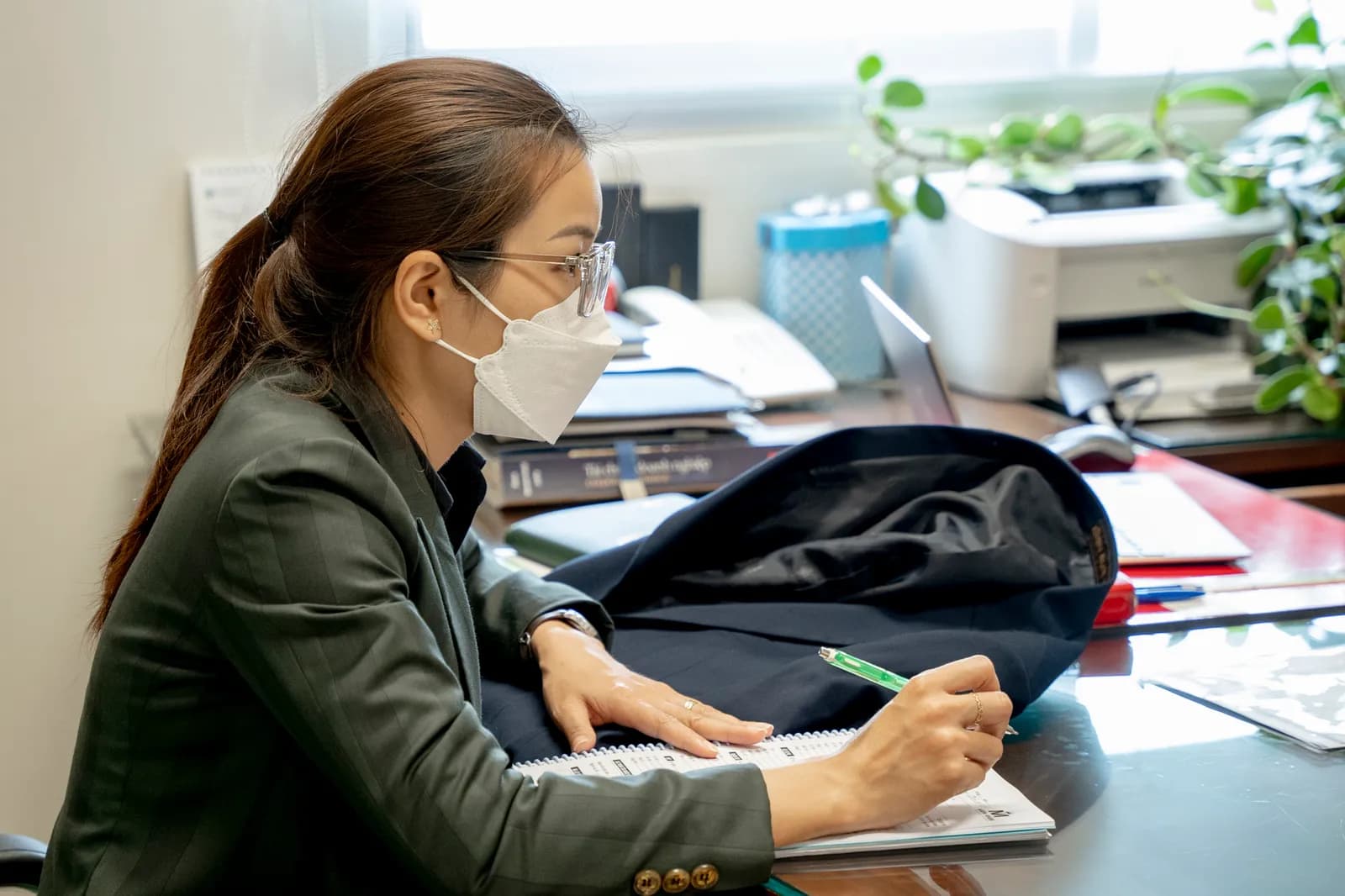
- Receptionists sit at a desk, stand to greet people and answer calls. Their shirts must stay flat after hours of sitting and look neat as the practice's first face.
- Doctors move between consulting rooms, procedure rooms and waiting areas in an outer layer worn for hours. It should be light, easy to launder and free at the cuff.
Because uniforms in this field are washed often, colour fastness and shape retention matter as much as how the fabric feels.
Three environments, three demands
- Air-conditioned rooms: the fabric need not be very thin. Favour colour-fast, low-pilling, low-crease cloth that still looks tidy at the end of a shift.
- Constant movement and bending: a blend with light stretch keeps shoulders and elbows from straining. Check how well it recovers after stretching.
- Away from the clinic: if your practice runs health checks at companies or community events, lighter, airy fabric in tones that do not absorb heat helps.
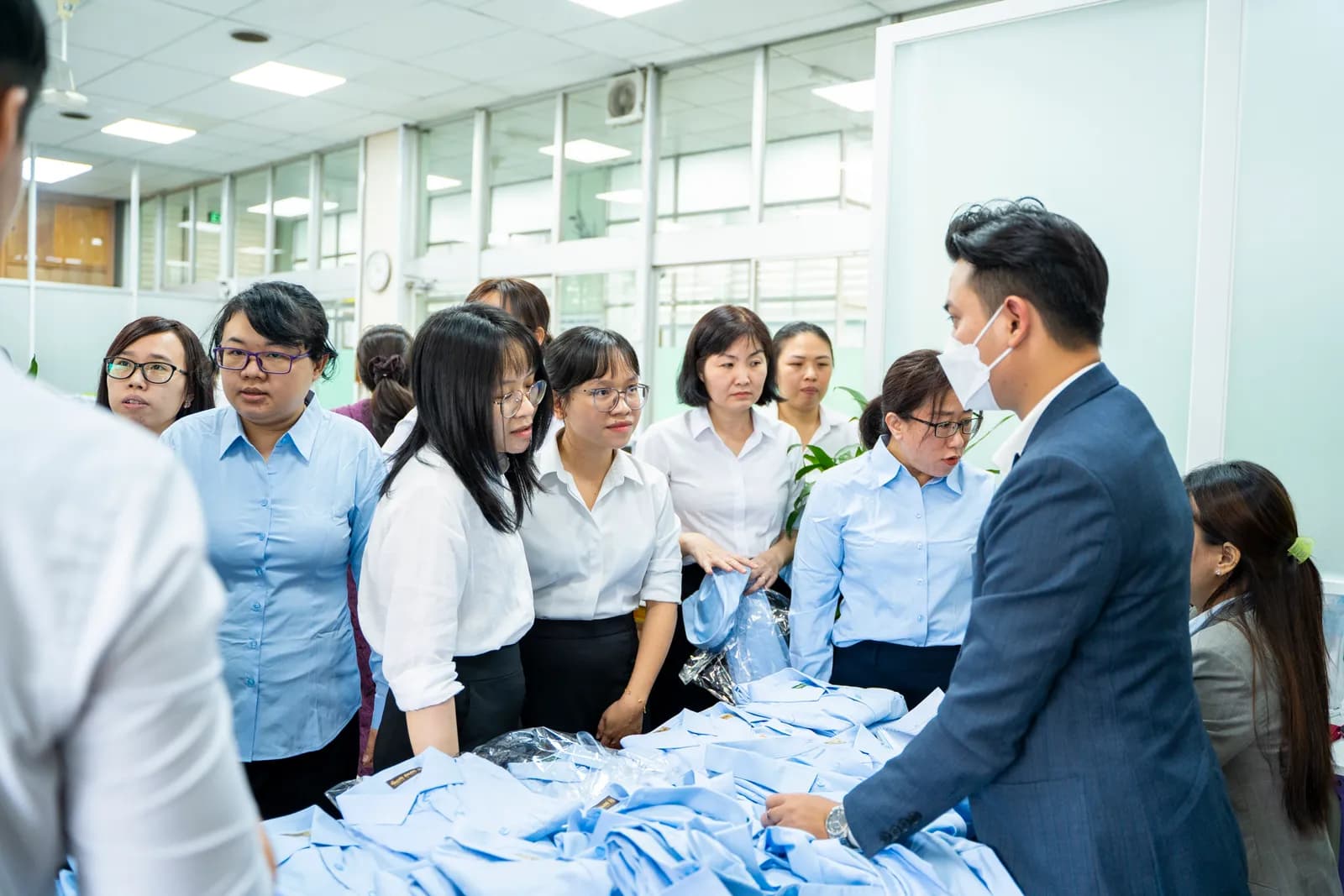
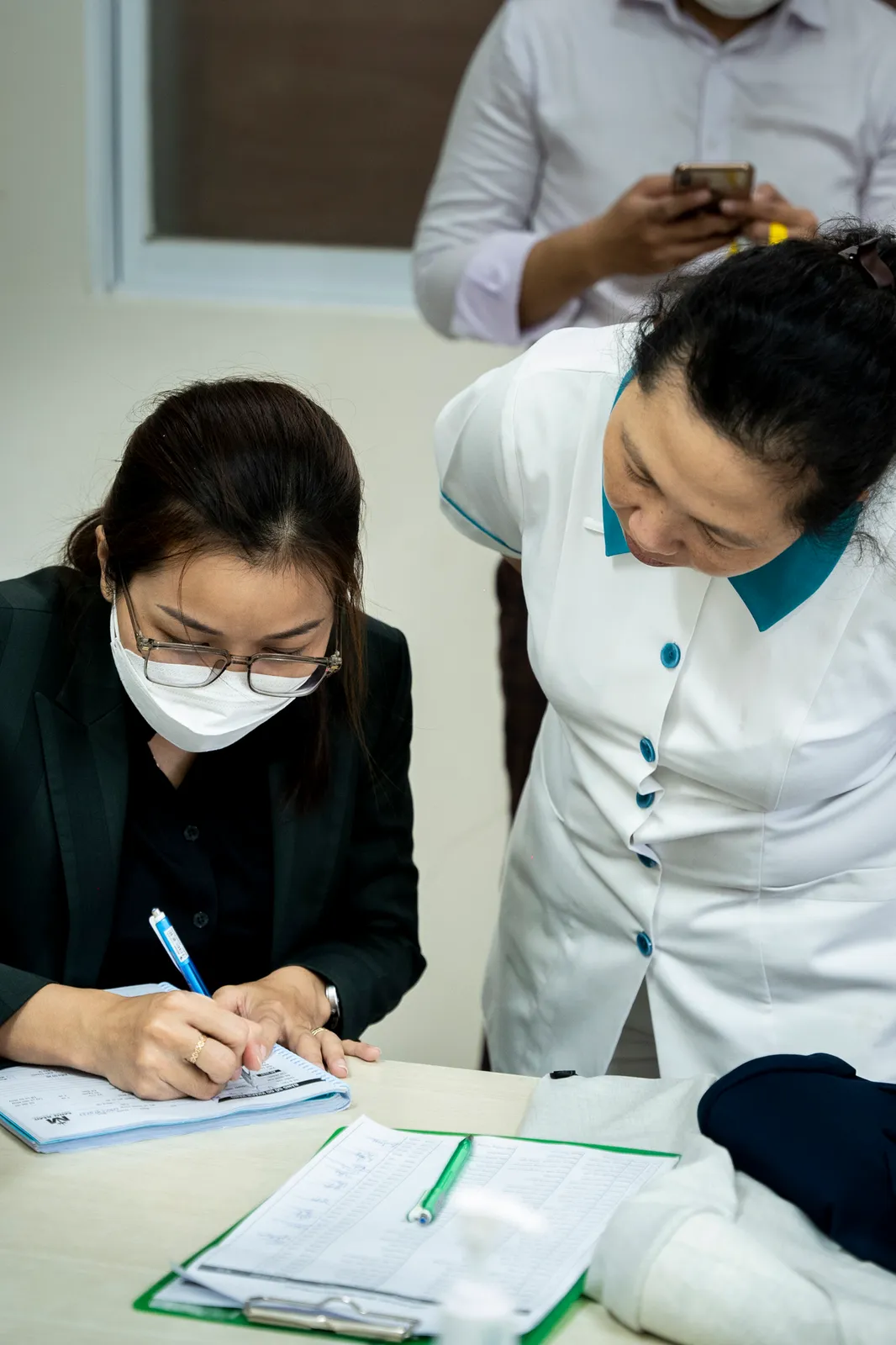
Here is one of Mon Amie Uniform's uniform projects.
Four common fabric families compared
| Fabric family | Strengths | Watch out for | Suits |
|---|---|---|---|
| Cotton-polyester blend | Durable in the wash, usually creases less than pure cotton | Less soft than pure cotton | Tunics, assistant tops, receptionist shirts |
| Polyester-spandex blend | Light stretch, recovers well | Press on medium heat; some weaves feel warmer | Dental assistants, trousers |
| Pure cotton | Soft, absorbent | Creases easily and may shrink | Short shifts, lightly washed roles |
| Viscose blends | Soft drape, flattering line | Creases more than polyester blends; wash with care | Reception, managers |
Some fabrics are described as antibacterial or stain-resistant, but results depend on the fibre and finishing and do not replace your practice's hygiene routine. When you view swatches, ask for the finishing details of each cloth.
Suggestions by role
- Doctors: an outer layer or industry uniform in a durable blend, in a light, moderate tone that helps patients find the person in charge. Medical industry uniforms start from 300,000 VND, with a minimum of 20.
- Receptionists: a shirt or neat-collared top with trousers or a skirt; the women's shirt category starts from 480,000 VND, minimum 20.
- Dental assistants: tops and trousers in a light-stretch blend, with attention to elbows, knees and the underarm seam.
Each figure is a starting price for its own category, and real prices depend on fabric, style and quantity. The remarks in the comparison table are indicative and vary with fibre, blend ratio and finishing. Our medical and pharma uniforms section gathers the styles commonly used for each role.
Choosing without guessing
The surest way to choose a fabric is to see and feel it, so you can browse our fabric library beforehand. Mon Amie shows real swatches at the design stage and then makes an approved sample, with production starting only once your practice signs off. That is the moment for one doctor, one receptionist and one dental assistant to wear it through a shift, and to launder it the way your practice launders, before signing. The six steps are laid out on our process page.
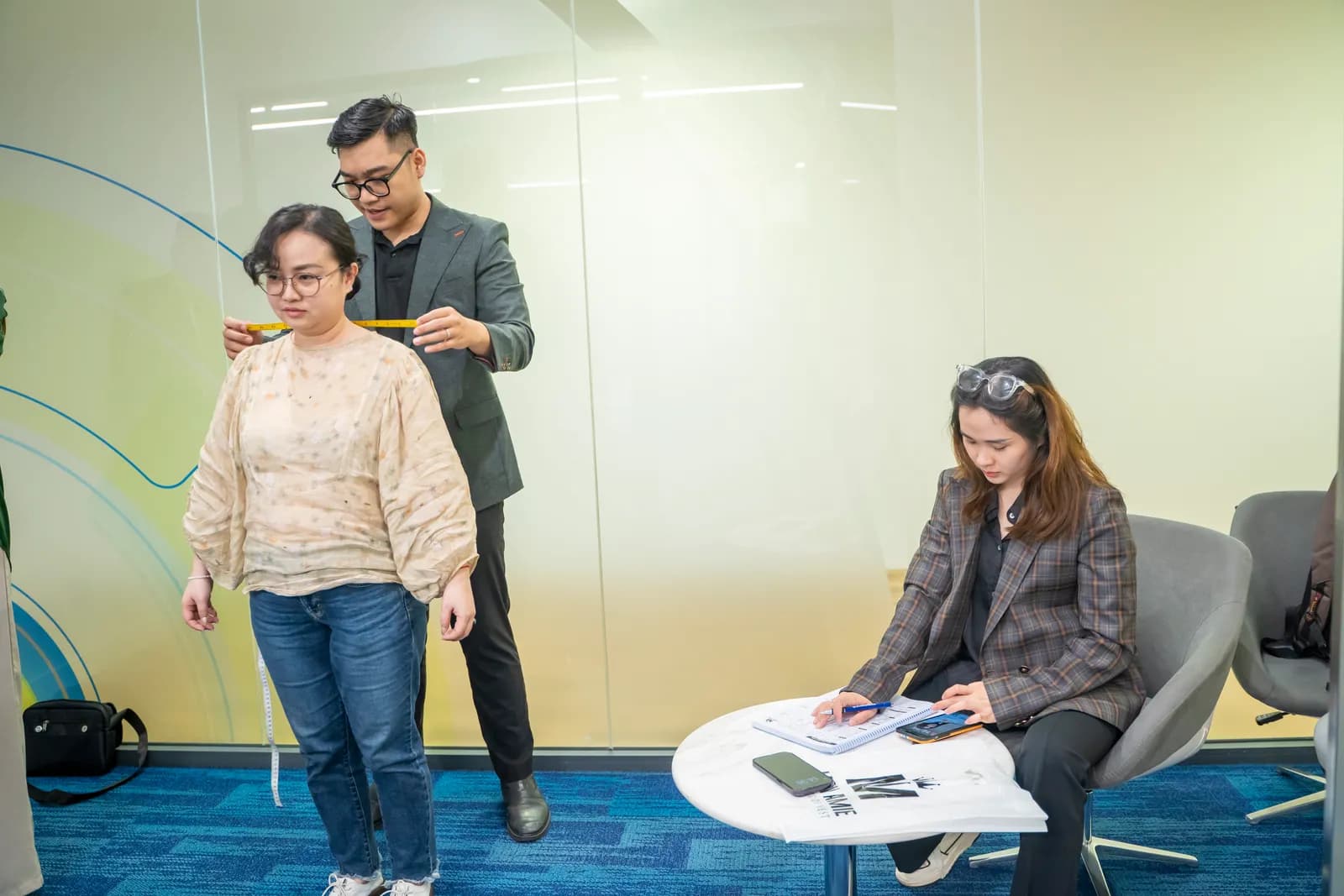
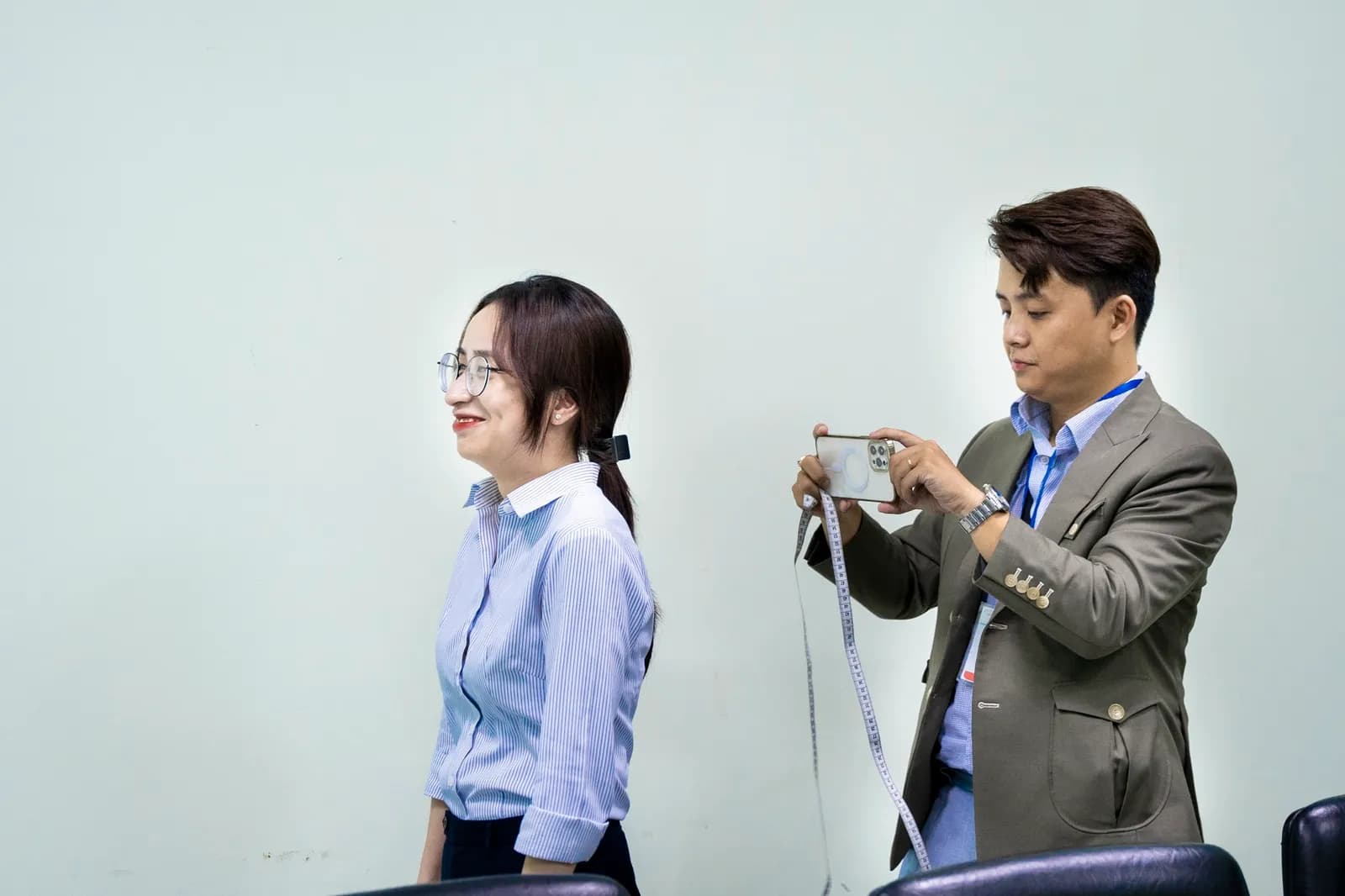
Mon Amie measures each person at your practice by appointment, including outside office hours, which suits clinics that run into the evening. New staff are measured individually and made to the approved pattern, while stored measurements serve anyone already measured. Allow 4–6 weeks after sample approval.
Practices can send a request through the quote page or call 0888.111.118; Mon Amie will arrange a survey and then send a proposal with a price range.
Frequently asked questions
Which fabric suits dental assistants who sit and bend all day?
Consider a blend with spandex so the shoulders and elbows are not strained, with strong seams at the underarm. Check recovery and try a sample for a full shift before approving, because the feel in use differs from the feel in the hand.
Is antibacterial fabric necessary for clinic uniforms?
Some fabrics are described as treated for this, but how much depends on the fibre and finishing, and it does not replace your hygiene and laundry routine. Ask for the finishing details when viewing swatches, and focus on colour fastness and how the cloth holds up to frequent washing.
What if our clinic holds outdoor sessions?
Favour light, airy cloth in tones that do not absorb heat, and try a sample in the sun before approving. If only some roles work outdoors, choose a separate fabric for that group rather than changing the whole uniform.
How do new hires get their uniforms?
New hires are measured individually and the uniform is made to the approved pattern, in the same fabric and colour as the existing team. Measurements of anyone already measured are stored under their employee ID for later orders.