Breathable fabric for people who work outdoors should have a moderately open weave, a surface that is neither too thick nor too glossy, quick drying once damp with sweat, and a few construction details that let heat escape. No single "cool" cloth suits every condition: dry sun, humid weather and wind on the road each call for something different. This guide helps you read those differences before you decide.
Dry sun, humid air or road wind
Picture two people working outdoors: a site supervisor walking in midday sun, and a delivery rider crossing a rain shower. They need different shirts.
| Condition | Fabric families often considered | Note |
|---|---|---|
| Strong, dry sun | Open-weave cotton-polyester blend in a light or mid tone | A thin long-sleeved shirt can feel better than short sleeves because it shades the skin, depending on cloth and breeze |
| Humid, rain showers | Open-weave polyester that dries fast | Pure cotton absorbs well but dries slowly and clings when damp |
| Wind, riding | A moderately firm weave | Very thin cloth balloons or feels cold at speed |
Features such as UV protection or cooling are commonly claimed by fabric makers, and real performance depends on the fibre and finish. Treat them as guidance and try the garment on before you commit.
Three things you can judge without a laboratory
- Weave: hold the swatch up to the light. A breathable cloth shows small, even gaps and is not sealed like plastic sheet.
- Thickness: thick does not automatically mean hot, but a thin, tightly woven cloth can still feel stuffy. Hold it and squeeze lightly to sense its drape.
- Surface: a glossy, plastic-like surface tends to hold heat and cling to sweat more than a matt, smooth one, though this varies by fibre.
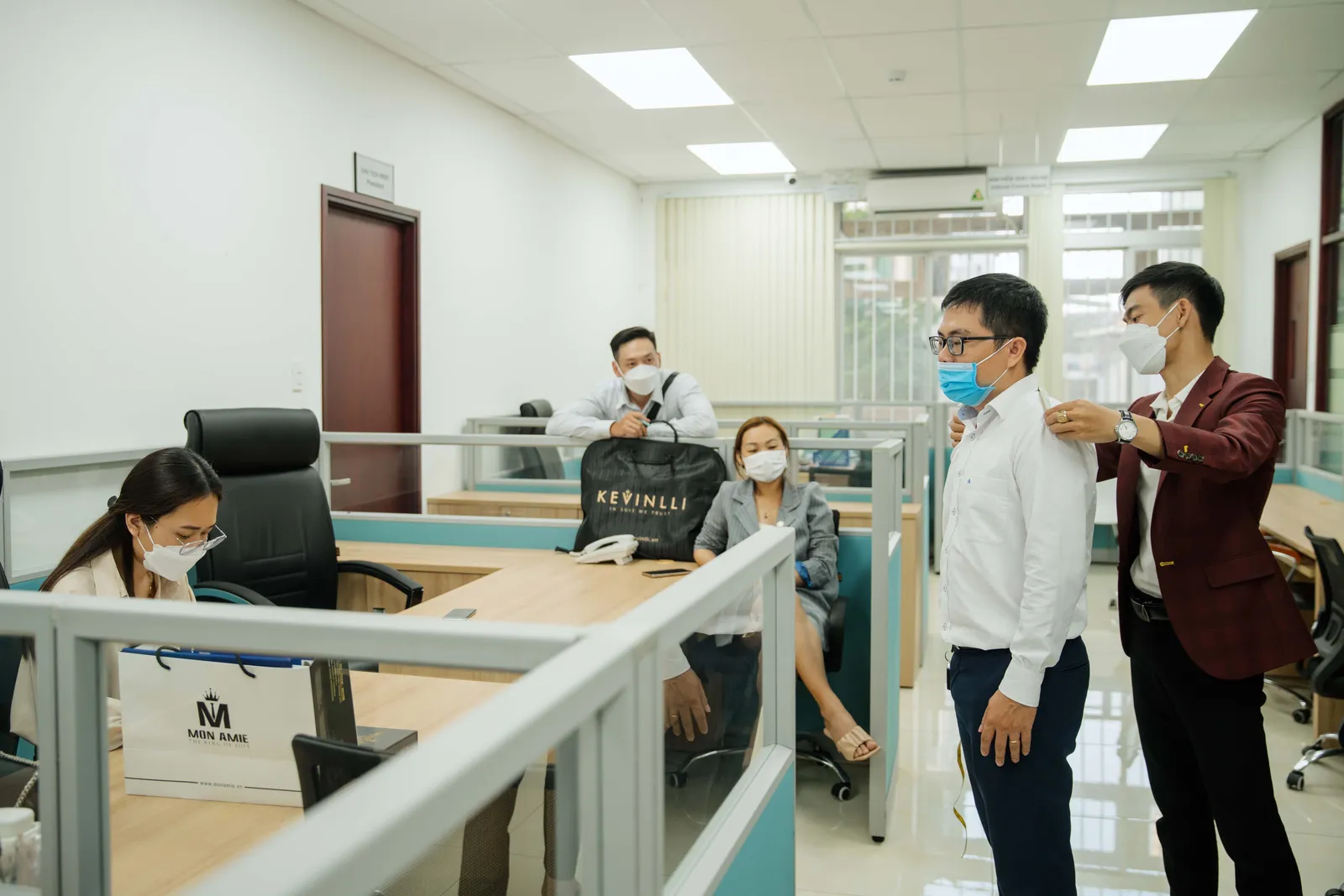
The image below comes from a Mon Amie Uniform project.
Construction details that release heat
The same cloth can feel pleasant or oppressive depending on how it is made:
- Underarms and back: a mesh panel or vent lets warm air out. This is a detail worth raising at the design stage.
- Collar: low, soft and unstiffened, since the neck collects sweat and rubs the skin.
- Shoulder and underarm seams: flat, so bag and backpack straps do not chafe.
- Colour: light colours usually run cooler in the sun, mid-tones hide dirt better. Balance the two against the job.
Specialist protective gear, such as helmets, reflective vests or equipment required by occupational safety rules, discuss the required standards directly when requesting a quote.
From swatch to a midday wear test
A swatch that looks cool in an office can feel very different after three hours in a yard. When Mon Amie shows real swatches at the design stage and makes the approved sample, have one person from each outdoor role wear the sample at midday instead of admiring it in the meeting room. Production begins only after your company signs off the sample. The six-step process page gives the full sequence.
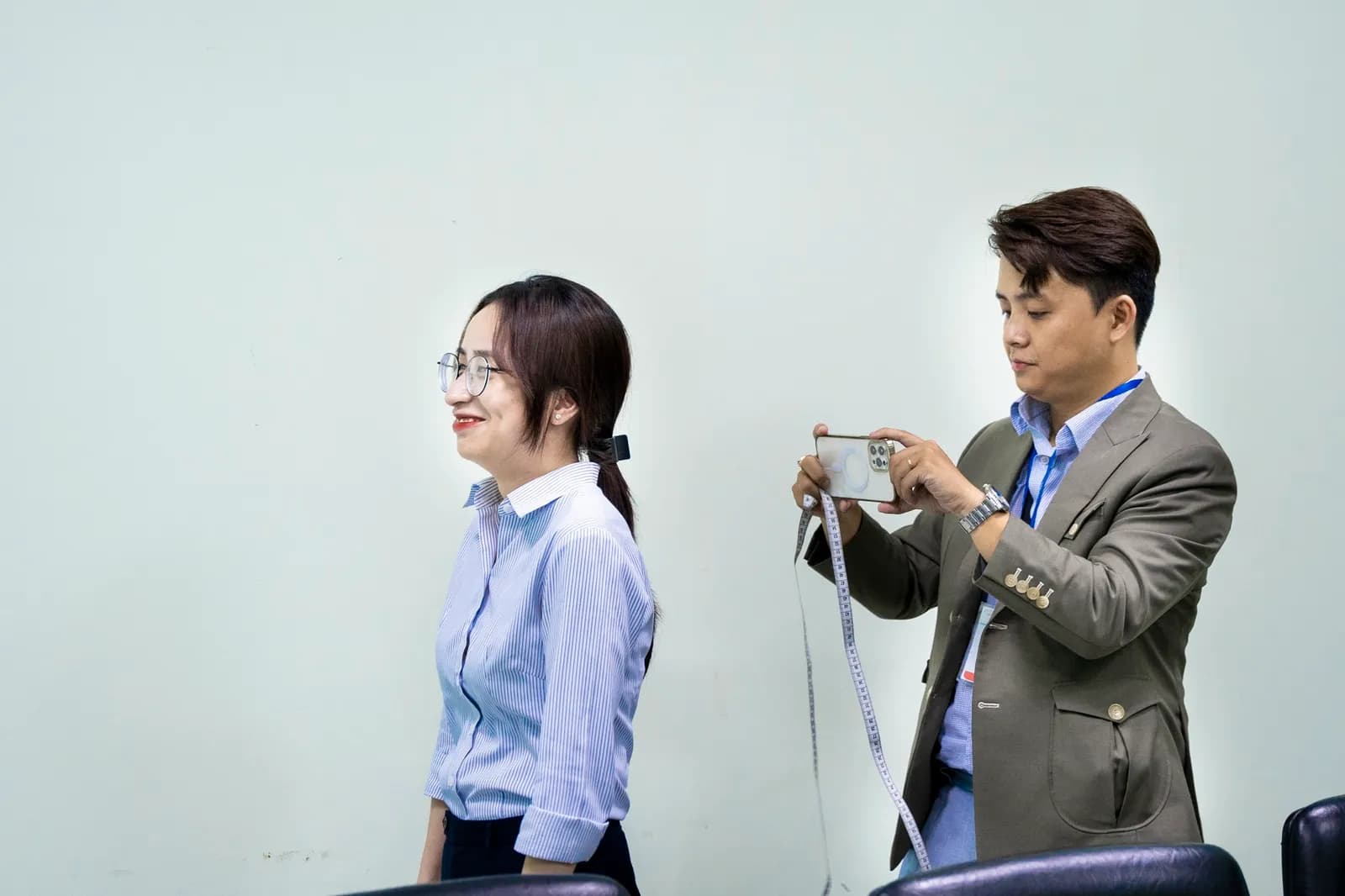
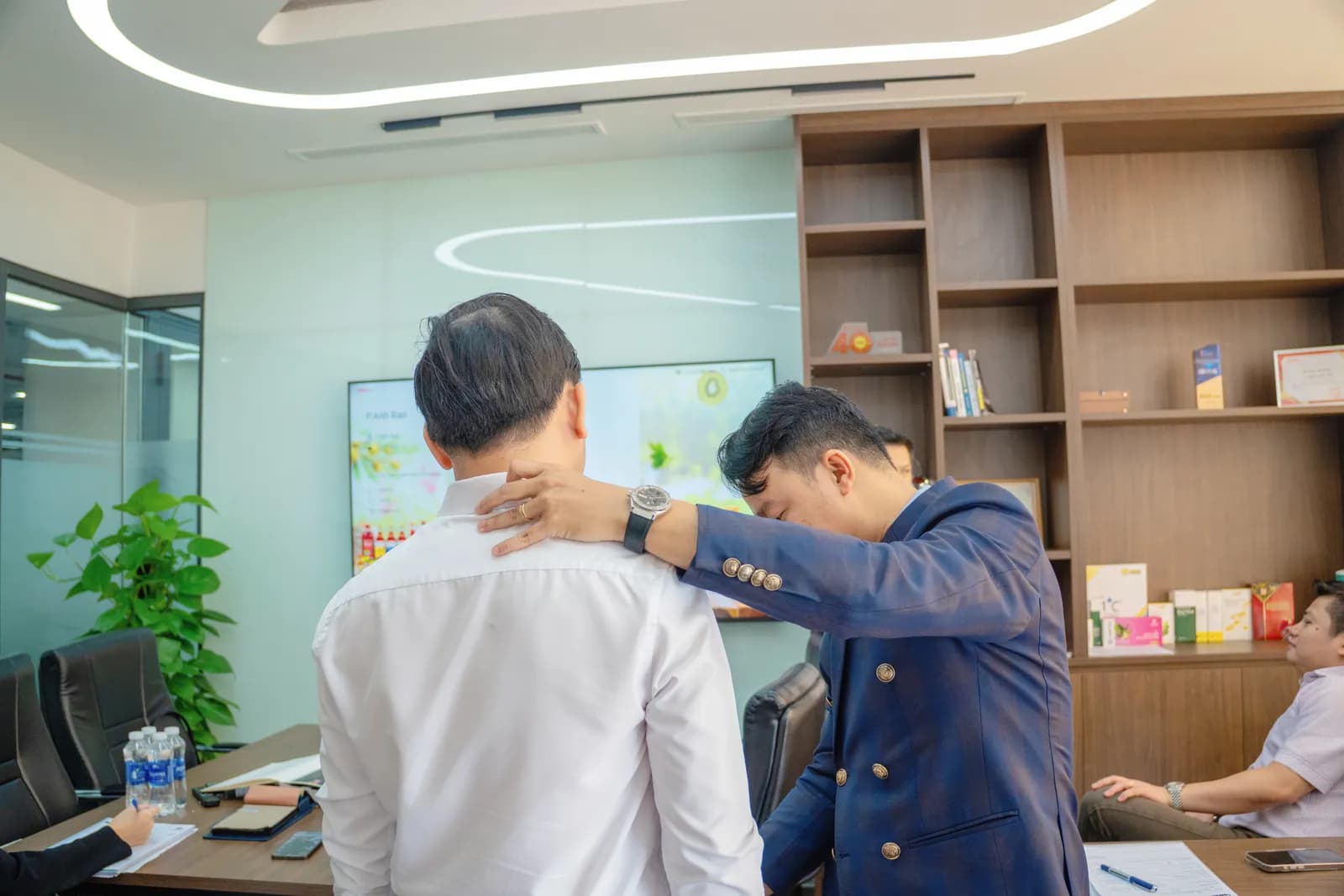
People who work outdoors often cannot leave their post to be measured. Mon Amie measures on site, on your schedule, including outside office hours; see our on-site tailoring page.
Reference prices and how to get advice
Mon Amie publishes starting prices of 150,000 VND for T-shirts and polos (minimum 30) and 300,000 VND for industry uniforms such as security wear (minimum 20). Both are starting points by category; fabric, style and quantity decide the real price. Send details of the working conditions, headcount and brand colours through the quote page or call 0888.111.118, and Mon Amie will arrange a survey.
Frequently asked questions
Is cotton or polyester cooler outdoors?
There is no single answer. Cotton absorbs sweat well but dries slowly; open-weave polyester dries fast, while a tight, glossy one can feel stuffy. A cotton-polyester blend is often chosen as a compromise, depending on the ratio and the weave.
Is a long sleeve hotter than a short sleeve?
Not necessarily. Some outdoor workers find a thin, open-weave long sleeve more comfortable because it shades the skin, but this depends on the cloth and the breeze. Try both in real conditions.
What colour suits outdoor work?
Light colours usually run cooler in the sun, while mid-tones hide dust and stains better. If the job involves a lot of dust or oil, a moderate mid-tone is often the more practical choice.
How should breathable fabric be washed?
Use the right temperature, go easy on fabric softener since its coating can reduce absorbency in some cloths, and dry in open air. Exact care depends on the fabric you choose.