Polyester piqué usually dries quickly, holds its colour and creases little, so it suits people who work outdoors or whose shirts are washed constantly. Cotton piqué is usually softer and more absorbent, which suits air-conditioned rooms or people who perspire, but it creases and shrinks more readily. A cotton-polyester blend sits between them and is often chosen as a compromise. For uniform polos the real question is where the wearer works, not which fabric is more prestigious.
What "vải cá sấu" actually is
In Vietnamese tailoring, vải cá sấu (literally "crocodile fabric") is the usual name for piqué: a knitted cloth with a surface of small, even raised cells. That texture makes it airier than plain jersey and gives it more body, which is why it is the standard cloth for polos. What matters is the fibre: cotton, polyester or a blend. All three are called "cá sấu", yet they feel quite different on the body.
Three kinds of piqué compared
The table is a general trade description. The actual feel also depends on weight, knit density, blend ratio and finishing.
| Criterion | Polyester piqué | Cotton piqué | Cotton-polyester blend |
|---|---|---|---|
| Touch | Smoother, slightly cool | Soft, close to skin | Between the two |
| Moisture absorption | Usually lower | Usually higher | Depends on cotton share |
| Drying | Usually quick | Slower | Fairly quick |
| Creasing and shrinking | Little | Creases easily, may shrink after washing | Moderate |
| Colour retention | Usually good | Colour may fade gradually | Fairly good |
| Suits | Outdoors, heavy laundering | Air-conditioned rooms, perspiration | General use across roles |
Matching fabric to the wearer
A common mistake is choosing one fabric for the whole company. A delivery team in pure-cotton polos out in the sun all day ends up with soaked shirts that dry slowly; a receptionist in a smooth polyester polo in an air-conditioned room may find the back of the shirt stuffy. So look group by group:
- Delivery and field technical staff, outdoors: polyester piqué or a polyester-rich blend, so shirts dry fast and crease less after daily washing.
- Receptionists and customer care in air-conditioned rooms: cotton piqué or a cotton-rich blend for softness through the day.
- Shop staff on their feet all shift: a blend, for some breathability with a shape that holds.
- Event and team staff: polyester piqué in a deep colour, which changes little through repeated washing.
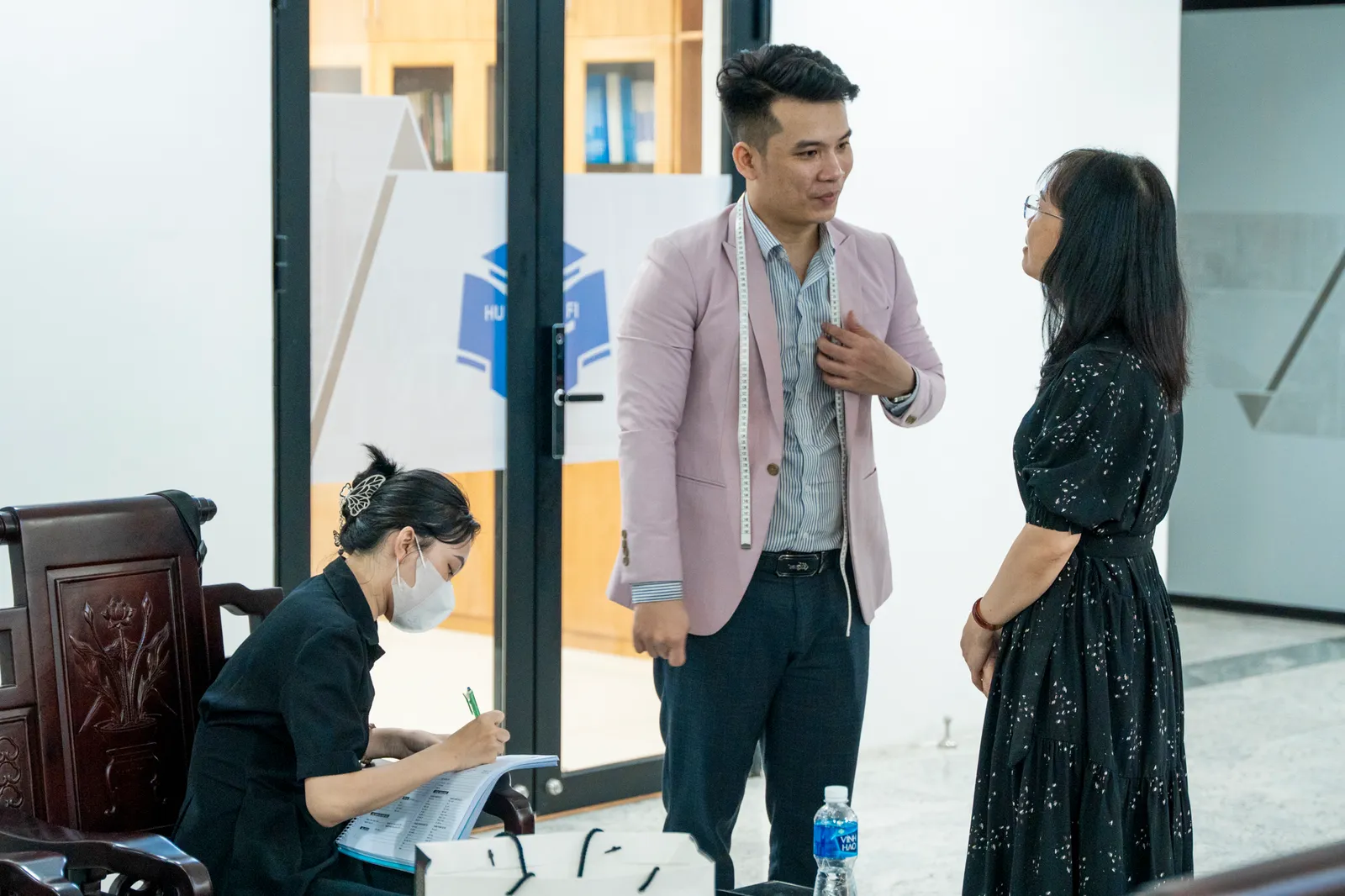
The next image shows a Mon Amie uniform project.
How to test a swatch before ordering
A small piece of cloth tells you more than a description. You can test it with your hands:
- Crush and release: squeeze the swatch for a few seconds and let go. The deeper the creases that remain, the more the shirt will crease in wear.
- Stretch both ways: the cloth should spring back. If it stays stretched, collars and hems tend to sag after a few washes.
- A drop of water: quick absorption suggests absorbent cloth; beading suggests the opposite.
- Hold it to the light: thin or loose cloth may show underclothes or lose shape.
- Rub the surface gently: many fuzz balls is a sign of future pilling.
- Wash a sample: launder it as staff would, then compare with an unwashed piece.
Beyond the fabric: details that make a good polo
Many polos lose shape through details, not cloth:
- Collar: whether knitted separately or from the body fabric, it must stand after washing. A sagging or curling collar is a common fault.
- Placket and buttons: a flat placket, firmly sewn buttons, no springing open when bending.
- Sleeve bands: snug without marking the upper arm.
- Hem: long enough to avoid exposing the back when bending or reaching.
Ordering polo uniforms
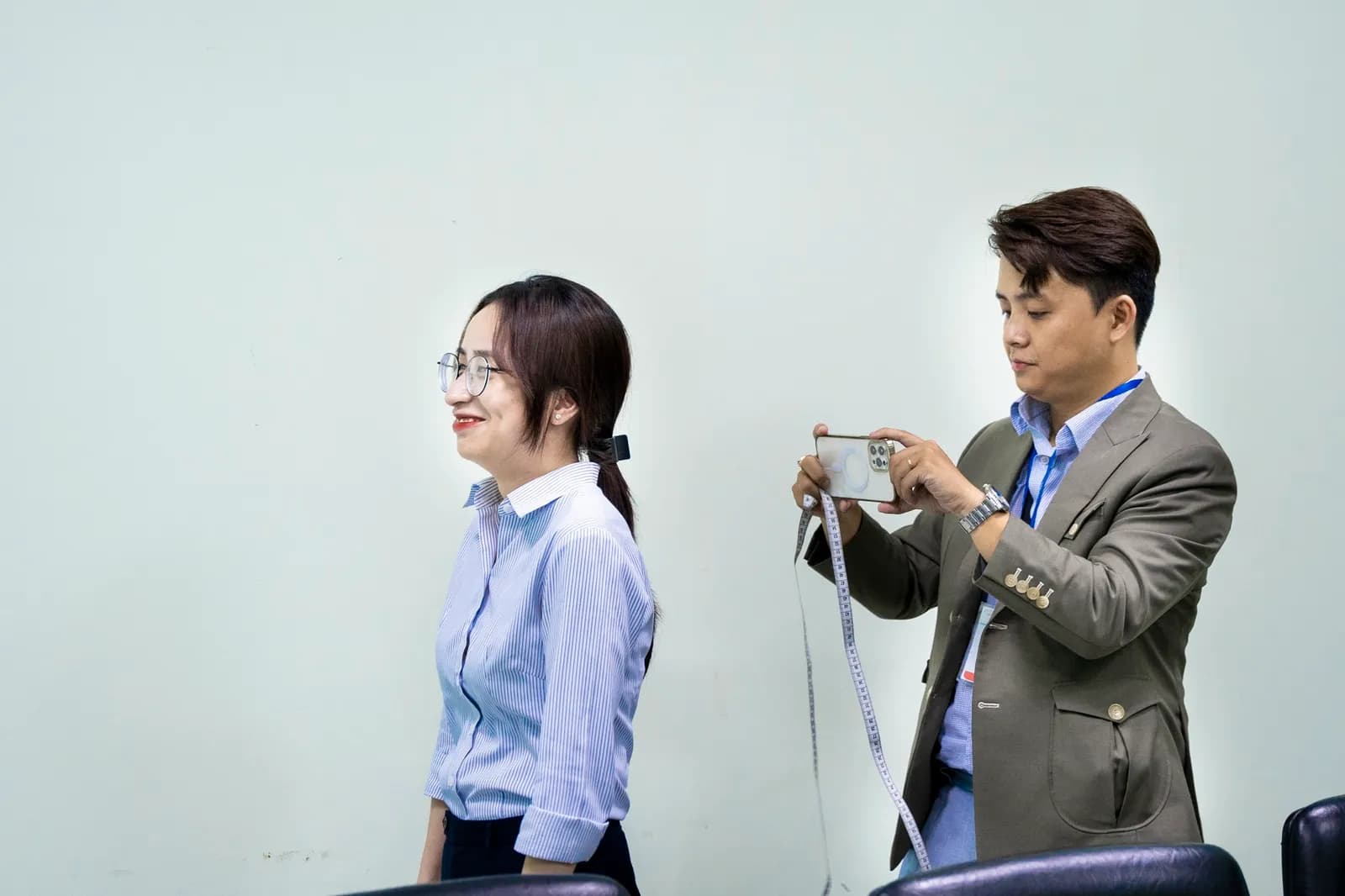
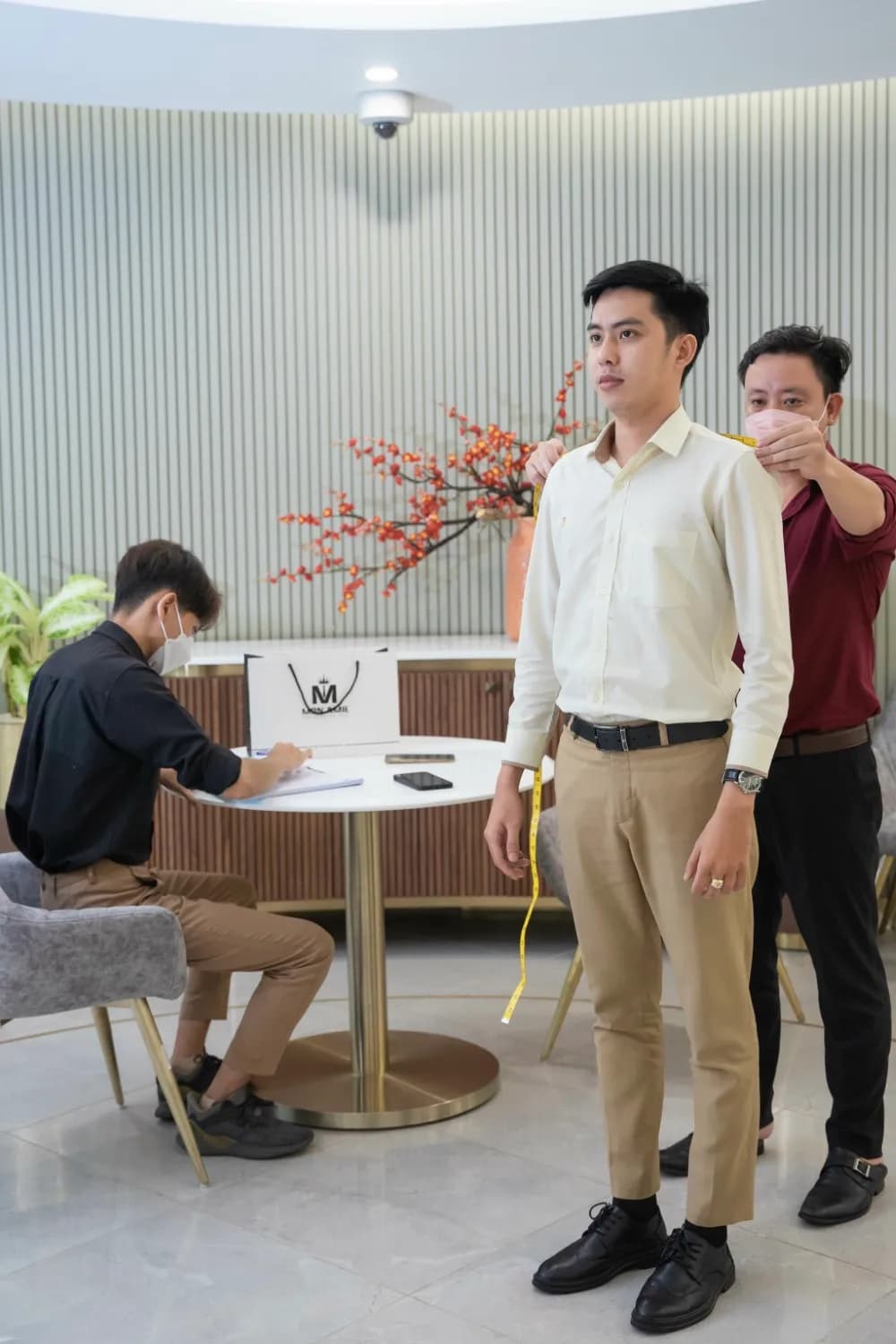
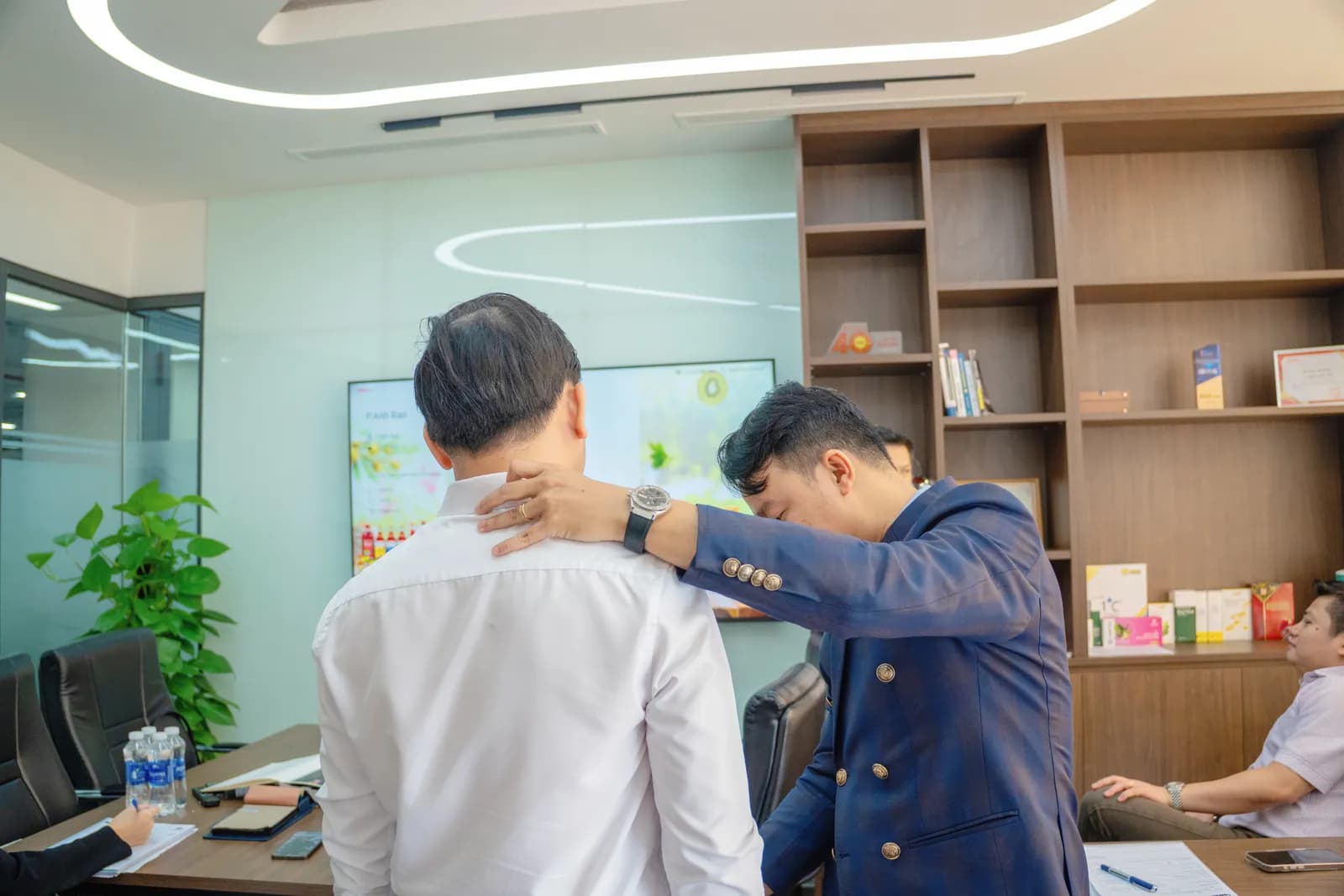
Mon Amie measures each employee at your office through our on-site tailoring service, so body length and chest are fitted to the person rather than a generic size. Real swatches are shown at the design stage, and your company approves a sample before production, as set out in our six-step process.
Polos and T-shirts start from 150,000 VND, minimum 30 pieces; actual prices depend on fabric, style and quantity. For a quotation on uniform polos, use the quote page or call 0888.111.118.
Frequently asked questions
Which is cooler, polyester or cotton piqué?
Coolness depends on the weight and openness of each cloth. Cotton usually absorbs perspiration well, which feels comfortable when you sweat, while polyester usually dries fast, so the shirt stays less damp afterwards. The surest test is to wear a sample in the actual working environment.
Does piqué polo fabric pill?
It can, depending on fibre quality and knit density. Rub a swatch and wash-test a sample before a large order to see how the cloth looks after laundering.
Is a cotton-polyester blend the safe choice?
Blends are often chosen for balancing the softness of cotton with the durability and low creasing of polyester. The real feel depends on the blend ratio, so still handle and try a swatch.
What is the minimum order for polos?
T-shirts and polos start from 30 pieces. When someone joins later, they are measured individually and the polo is made to the approved sample, so nothing looks out of step with the existing team.