Uniforms and sweat: choosing fabric and colour
Uniforms and sweat: wet marks, underarm stains and odour fall when you choose breathable fabric, the right colour and good construction. Polos from 150,000 VND.
Uniforms and sweat come down to three things: whether the fabric absorbs and releases heat well, whether the colour shows damp marks, and whether the cut leaves room for the body to cool down. Get all three right and staff stay more comfortable, shirts stain less at the underarm and smell less by the end of a shift. This guide goes through each one with examples by working environment.
How sweat affects a uniform in four ways
- Visible wet patches: damp fabric darkens, so the back and underarm show.
- Long-term staining: sweat and skin oil build up at the underarm and collar, leaving yellow marks or dried white salt.
- Odour: synthetic fabrics can hold smell if left damp or washed carelessly.
- Heat and cling: tightly woven cloth and very close fits trap warmth.
The good news is that all four can be adjusted when choosing fabric, colour and cut, not just through washing.
Colour: what shows, what hides
Colour has a large effect on whether sweat shows.
| Colour group | Wet marks | Watch out for | Suits |
|---|---|---|---|
| White, cream | Wet patches show little, but yellow underarm stains do, and the fabric may turn see-through when damp | Needs adequate weight and a good laundering routine | Air-conditioned offices |
| Light grey, light blue | Wet patches show very clearly because the cloth darkens | Better avoided for active roles | Seated, low-movement roles |
| Navy, charcoal, black | Hide damp well | Dried salt marks show; absorbs heat in the sun | Technical, warehouse, security |
| Heathered or finely patterned | Hide marks well because the eye cannot find a clear edge | Pattern should stay discreet and fit the brand | Sales, guest-facing roles |
A shade that fits the logo but shows every damp mark makes staff reluctant to wear it. Mon Amie presents three options in your brand colours with real swatches so you can weigh brand and daily reality together.
Fabric: breathable, quick-drying, low odour
| Fabric | Strengths | Watch out for | Suits |
|---|---|---|---|
| Pure cotton | Absorbent, soft | Slow to dry; clings when wet | Offices, low-movement roles |
| Cotton-polyester blend | Balance of absorbency and quick drying, low-crease | Choose a moderate weight | Most roles |
| Cotton piqué | Textured weave breathes, durable, absorbent | Soft structure, suits polos more than shirts | Warehouse, delivery, guest-facing |
| Technical open-weave fabric | Dries quickly | Very tight weaves feel stuffy; wash well to avoid odour | Outdoor, high movement |
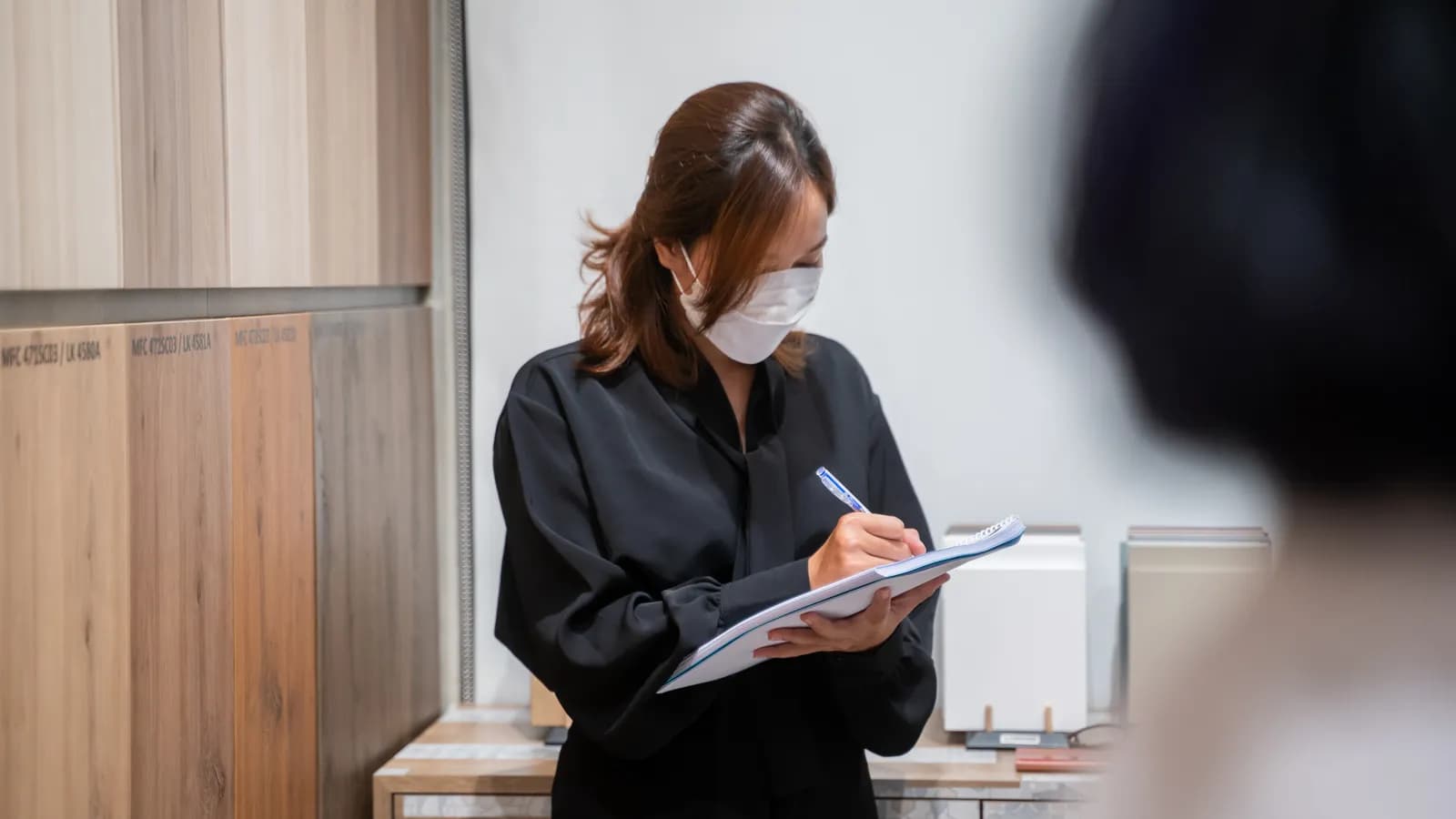
Mon Amie Uniform has worked with Á Đông Land; the photo below shows one of our projects.

Construction details that help
The same fabric can feel cooler or hotter depending on how it is made:
- A relaxed fit, not too close. A small gap between cloth and skin lets heat escape; a very close fit makes fabric cling to the back and underarm.
- Underarm seam placement so that raising an arm does not pull the garment tight, reducing friction and tearing.
- A soft, low collar, especially on polos, so it does not chafe on a hot neck.
- A cotton undershirt for roles wearing white or pale shirts.
Other details, such as an absorbent underarm lining or logo position, can be discussed during the survey. Our design library shows ready references for style.
Suggestions by work environment
- Air-conditioned office: a cotton-polyester shirt in a neutral tone. Men's shirts start from 600,000 VND and women's from 480,000 VND, minimum 20.
- Warehouse, delivery, outdoors: a cotton piqué polo or a breathable T-shirt in a moderately dark colour. T-shirts and polos start from 150,000 VND, minimum 30.
- Kitchen, restaurant, industry uniforms: absorbent, easy-wash fabric in a colour that hides marks; industry uniforms start from 300,000 VND, minimum 20.
- Security and technical roles: long hours standing in the sun call for darker tones in breathable fabric, plus a spare top for the shift.
Real prices depend on fabric, style and quantity.
Laundering and rotation to limit odour
- Never leave damp shirts in a bag or basket for hours; wash or dry them promptly.
- Give each person at least two sets to rotate, so each garment rests and dries fully.
- Pre-treat the underarm and collar with detergent and rinse thoroughly.
- Dry in a ventilated place; too much softener can make cloth feel stuffy and hold odour.
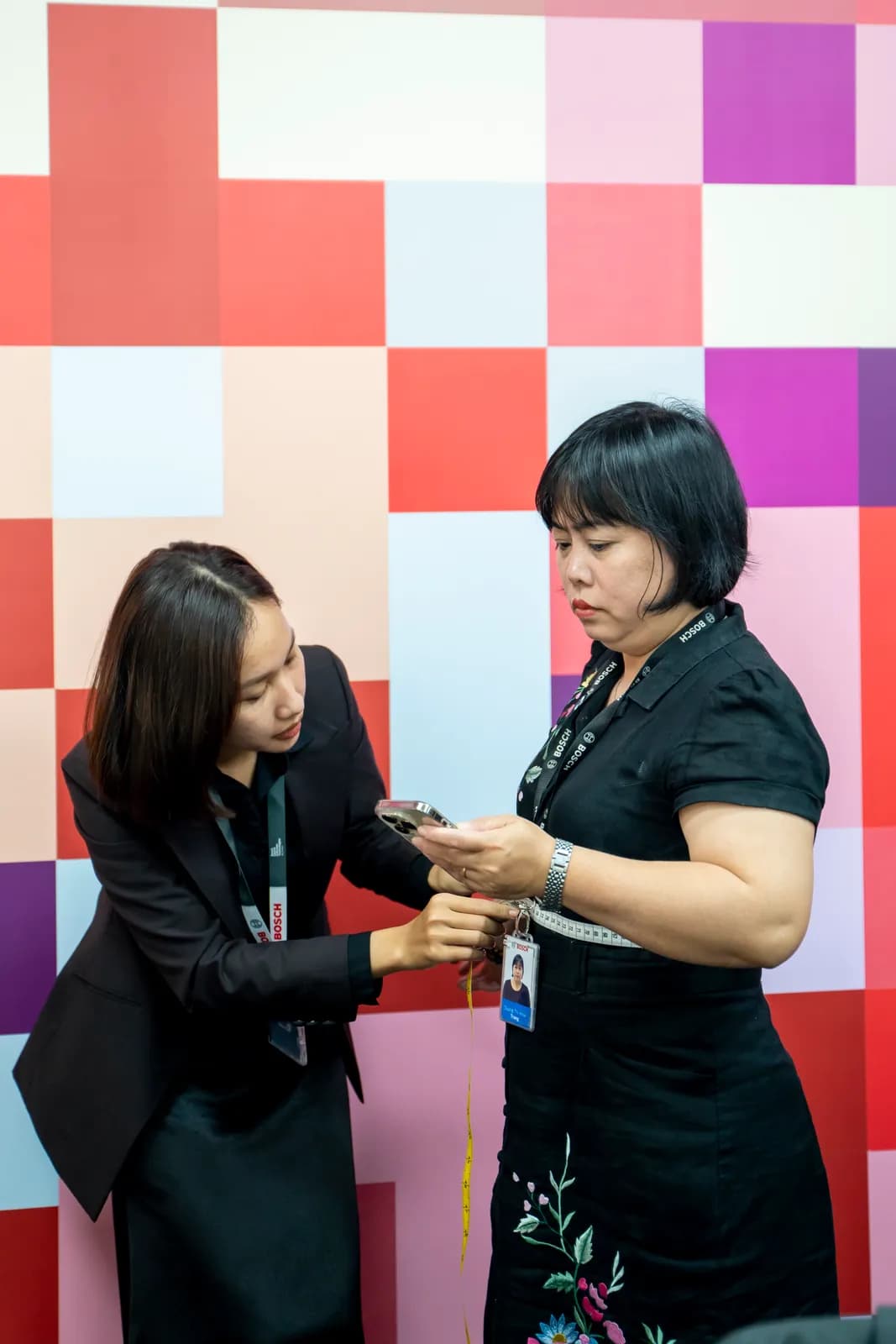
Before signing off the sample, let a few staff wear it during the hottest part of a real shift and give feedback. With on-site measuring on your schedule, including outside office hours, any adjustment to fit happens right at your office. Allow 4–6 weeks after sample approval.
To receive a proposal with a price range for your team, submit your details on our quote page or call 0888.111.118 (the same number on Zalo). Mon Amie will schedule a survey at your premises and send a proposal with a price range based on quantity and fabrics.
Frequently asked questions
Which colours show sweat least?
Deep tones such as navy, charcoal and heathered fabrics hide wet marks better than light grey or light blue. Dark colours can show dried salt and run warmer in the sun, so weigh them against the working environment.
Is cotton or polyester better for people who sweat a lot?
Each has strengths: cotton absorbs well but dries slowly; polyester dries quickly but can feel stuffy and hold odour. A cotton-polyester blend is usually the balanced choice for most roles.
How do we limit uniform odour?
Wash or dry garments promptly after the shift, rotate at least two sets, pre-treat the underarm and collar and rinse well. Choosing a breathable fabric from the start reduces odour noticeably.
Is a white shirt a good idea for people who sweat a lot?
White and cream show wet patches little, but they show yellow underarm stains and may turn see-through when damp, so they need adequate fabric weight and a good laundering routine; they suit air-conditioned offices best. For active roles, deep tones or heathered fabrics usually hide marks better.