Removing ink and coffee stains from work uniforms
Removing ink and coffee stains from uniforms: blot, use cold water, test a hidden spot, avoid heat. Mon Amie Uniform explains each step by stain and fabric.
Ink and coffee stains respond well to treatment while still fresh: blot with a clean cloth without rubbing, use cold water on coffee, use rubbing alcohol on ballpoint ink, test a hidden spot first, and keep hot water, dryers and irons away until the mark is gone. The result also depends on the fabric, its colour and how long the stain has soaked in.
General rules before you start
A few early steps decide most of the result:
- Blot, do not rub. Rubbing spreads the mark and damages the fibres.
- Work from the back. Place a clean towel or paper under the reverse side so the stain is pushed into the towel, not deeper into the weave.
- Start with cold water. Hot water sets some stains harder, especially coffee with milk.
- Test a hidden spot. Dab the product on an inside seam or hem to see whether the colour holds.
- Read the care label. It tells you the wash temperature, whether bleach is allowed and whether the item is dry-clean only.
Three things to avoid: drying or ironing before the stain is gone, because heat fixes it; chlorine bleach on coloured items, because it fades them and may yellow some fabrics; and mixing cleaning chemicals, which can release toxic fumes.
Coffee stains step by step
Black coffee and white coffee need slightly different handling, but both start as soon as possible:
- Blot up any coffee still sitting on the cloth.
- Rinse the back of the stain under cold running water to push the coffee out of the weave.
- Work in a little dish soap or mild detergent and let it sit for a while. For coffee with milk, a detergent containing enzymes helps break down the milk protein.
- Rinse in cold water and check in good light. If a mark remains, repeat before any heat touches it.
- For a brown ring, try diluted white vinegar, or an oxygen-based stain remover on white shirts, following the pack. Test first.
- Once clear, wash as the label says.
Ink stains by pen type
Ballpoint ink dissolves in alcohol, while water-based ink does not. So identify the pen first:
| Stain | First step | Note |
|---|---|---|
| Ballpoint | Place a towel under the back, dab rubbing alcohol with cotton wool from the outside inward | Change the cotton often so ink is not put back |
| Gel pen | Dab alcohol, then mild soap and a cold rinse | Old marks are harder and may only fade |
| Fountain or water-based ink | Rinse the back in cold water at once, then mild detergent | Do not let it dry |
| Marker or oil-based pen | Do not rub; alcohol can make it spread | Take it to a dry cleaner and name the pen |
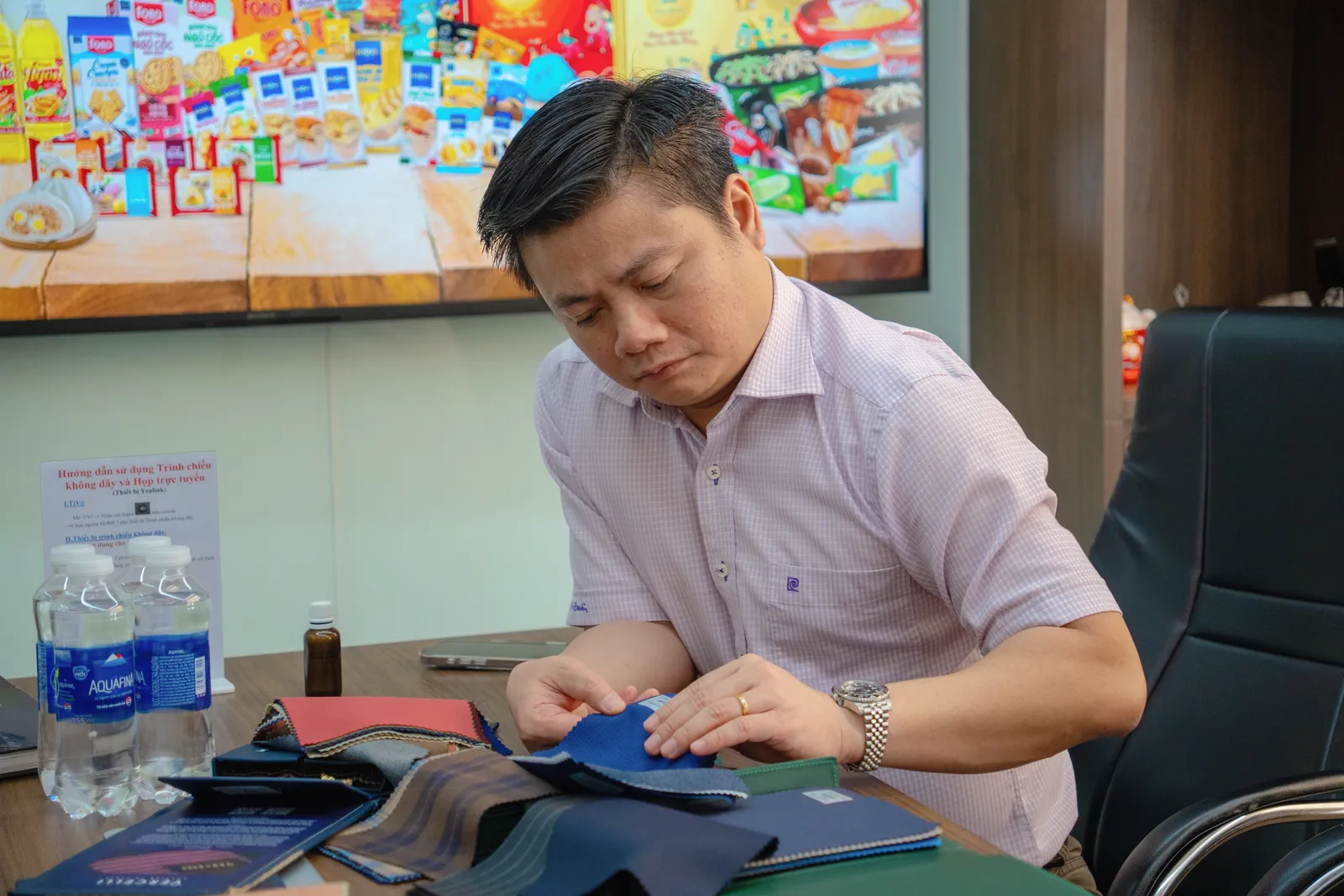
Mon Amie Uniform has worked with Tập đoàn KIDO. The photo below records one of our uniform projects.
By garment type
Each garment is built differently, so care differs:
- Cotton-polyester shirts tolerate hand and machine washing, so follow the steps above, then wash normally. Polyester blends generally release water-based marks such as coffee more easily than pure cotton.
- Polos and T-shirts in cotton piqué absorb well, so a stain sinks quickly. Treat it at once, never overnight.
- Jackets, waistcoats, trousers and skirts are usually polyester-viscose with spandex. Viscose weakens when wet, hard rubbing damages the yarn, and linings can distort. Blot gently, then go to a dry cleaner and tell them what the stain is.
Preventing the next stain
Some choices made when the uniform is designed make cleanliness easier:
- Mid-tone colour: very pale shades show a mark at once, very dark ones show dust and wash marks. Mon Amie presents three options in your identity colours so you can compare.
- A spare set: staff need at least two sets to rotate through the wash.
- Easy top-ups: Mon Amie offers on-site measuring and stores measurements under employee IDs, so a ruined shirt can be reordered from the approved sample and still match the team.
Hoàng Vy – Mon Amie was founded in 1991, and our 1,000 m² workshop on 3/2 Street employs more than 80 skilled tailors. Fabrics and styles for each team are settled in our six-step process: real swatches at the design stage, an approved sample before production, and free alteration warranty for 3 years at every showroom.
Frequently asked questions
Should I use hot water on a coffee stain?
No. Hot water sets the stain, especially coffee with milk because the protein hardens. Use cold water first, then wash as the label says.
Can an old ballpoint stain still be removed?
Old marks are harder and may only fade. Dabbing rubbing alcohol from the outside inward, with the cotton changed often, is the first thing to try; if it fails, go to a dry cleaner rather than testing many chemicals.
Should a suit jacket be treated at home or dry-cleaned?
Dry-cleaned, with the stain named. At home, only blot a fresh mark gently to stop it spreading. Viscose weakens when wet, and rubbing can distort the lining.
Is bleach safe to use?
Not on coloured items. On white shirts, use an oxygen-based remover as directed, after a hidden-spot test. Chlorine bleach fades colour and may yellow some fabrics.
For advice on fabrics and colours suited to your working environment, submit your details on our quote page or call 0888.111.118 (the same number on Zalo).