How to wash white shirts without yellowing the collar
Keep a white shirt collar clean: treat marks early, use cool or mild water, soak in oxygen bleach, avoid chlorine and hot ironing. Tips for uniform shirts too.
To wash a white shirt without yellowing the collar, treat marks soon after wearing, use cool or mildly warm water instead of hot, soak in oxygen bleach before washing, and iron only once the collar is clean. Most collar marks are body oil and sweat that build up over several wears, so washing at the right time matters more than reaching for harsh chemicals. This guide explains the causes, the steps and how to keep a collar clean for longer.
Why white collars turn yellow
The collar sits against the skin all day, so it collects dirt first. Each cause leaves a different sign and needs a different fix:
| Cause | What you see | What to do |
|---|---|---|
| Body oil and sweat | An even yellow band along the collar edge, mostly inside | Dab dish soap or an enzyme cleaner, brush gently, then soak in oxygen bleach |
| Foundation, powder, sunscreen | Beige, pink or orange marks on the collar rim | Break down with a grease-cutting cleaner before washing |
| Detergent residue, hard water | Dull, greyish, stiff fabric | Use the right amount of detergent and add a clear rinse |
| Pressing or drying hot over a mark | A stubborn yellow-brown mark | Check the collar before ironing; old marks need a longer soak |
Five steps for an existing stain
- Act early. A fresh mark comes out far more easily than one left for days. If you cannot wash straight away, at least rinse the collar in clean water.
- Wet with cool or mildly warm water. Very hot water can set sweat stains.
- Apply a grease-cutting cleaner. Dab dish soap or an enzyme cleaner along the collar edge, brush with the grain using a soft brush and leave for about 15–30 minutes.
- Soak in oxygen bleach. Mix as the packaging and garment label advise and soak the whole shirt. Older marks may benefit from an overnight soak.
- Wash and rinse well. Use a gentle cycle without overfilling the drum so the shirt rinses clean, then check the collar in good light before drying.
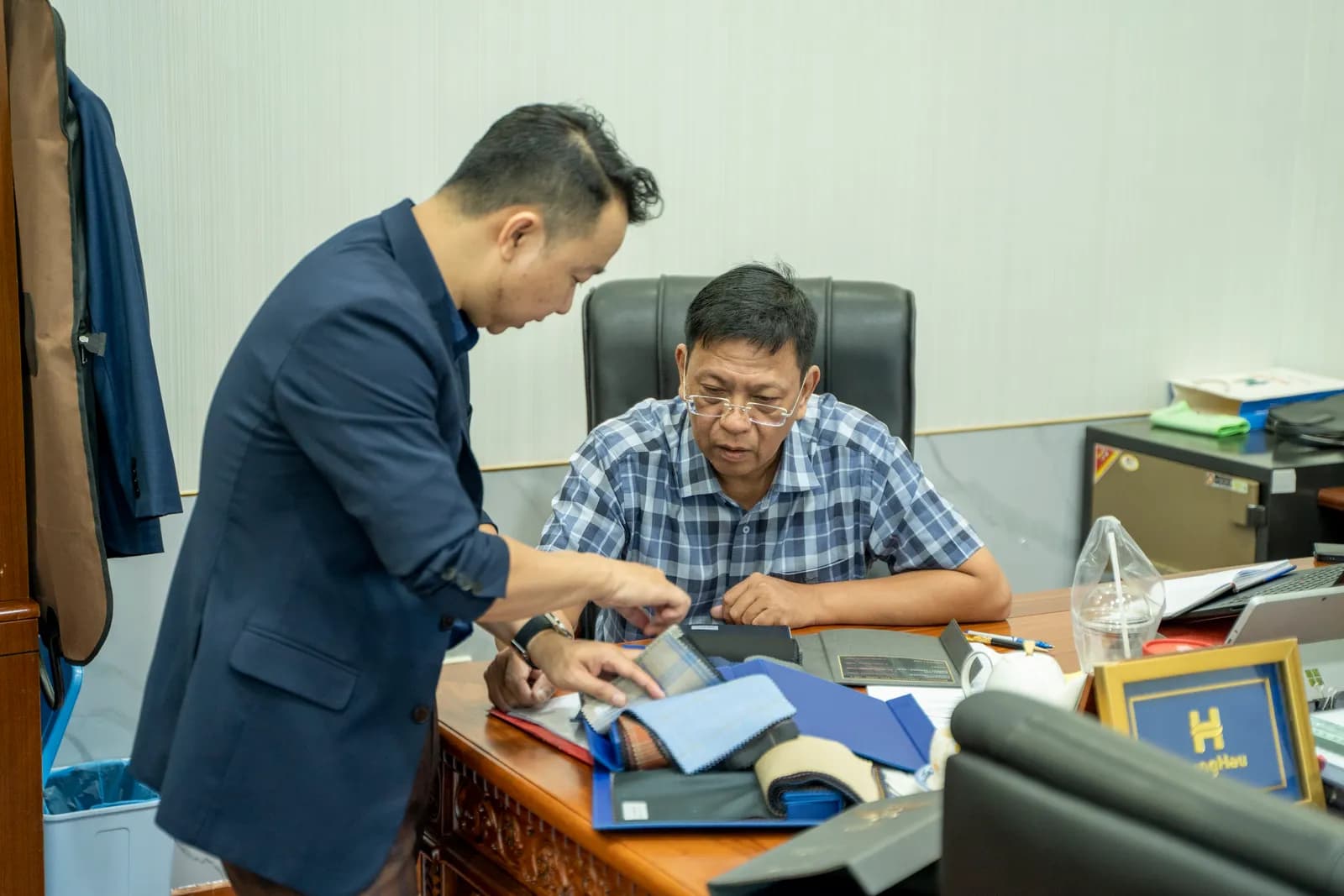
Companies with many staff in shirts every day often think about laundering when they choose the fabric. The photo below shows one project by Mon Amie Uniform with Fresenius Kabi Việt Nam.

What damages the shirt
- Chlorine bleach on sweat marks: it can deepen the yellow and weaken fibres. Never mix chlorine bleach with other cleaners.
- Scrubbing with a stiff brush: it roughens the weave, so the collar frays and soils faster.
- Ironing or tumble-drying over a mark: heat sets it.
- Long exposure to harsh sun: prefer a breezy, shaded spot, especially for blended fabrics.
- Leaving dirty shirts in the basket for days: marks dry and sink into the fibres.
Habits that keep collars clean
- Wash a white shirt after every wear, since the collar touches skin directly.
- Let deodorant, foundation and sunscreen dry fully before putting the shirt on.
- Rotate at least two or three shirts so each gets a rest.
- Button up and smooth the collar flat when drying so it holds its shape.
- Rinse well and use the right amount of detergent so residue does not turn the shirt grey.
For uniform shirts: fabric, collar and rotation
White uniform shirts are washed far more often than personal ones, so three choices are worth making at the design stage. First, fabric: cotton-polyester blends are common because they resist creasing and stand up to frequent washing. Second, collar style: a neat collar with flat seams is easier to brush clean than a layered one. Third, the number of shirts per person, enough to rotate.
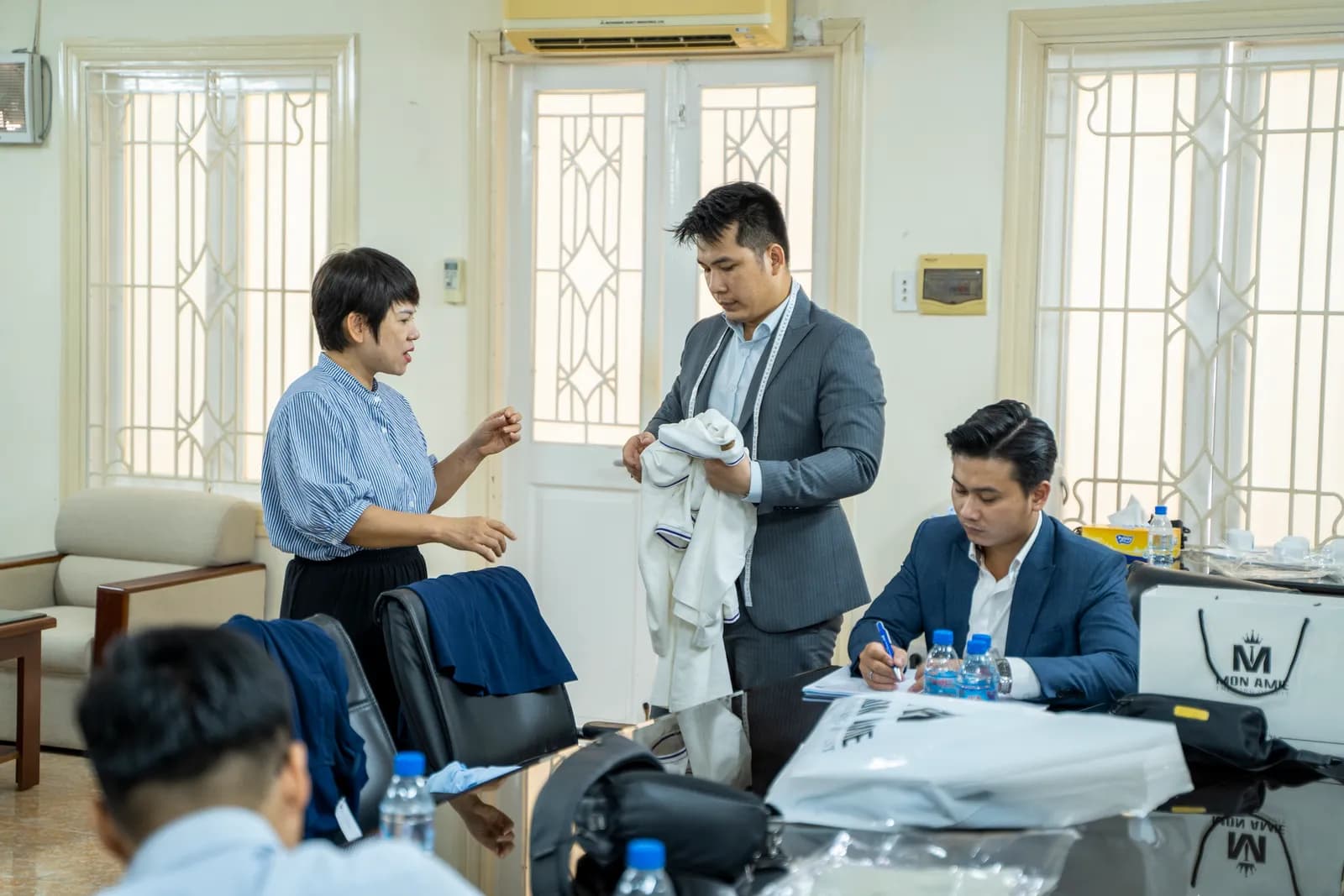
Mon Amie measures each employee at your office, as described on our on-site tailoring page. Measurements are stored under employee IDs for later orders; new hires are measured individually and made to the approved sample, so they match the rest of the team. The full path from survey to warranty is our six-step process. Our 3-year warranty covers free alterations to fit; it does not replace correct laundering.
Frequently asked questions
Should I use chlorine bleach on a yellowed white collar?
Not for sweat and body-oil marks, because chlorine can deepen the yellow and weaken the fabric. Oxygen bleach is gentler and suits most white shirts; read the garment label and the packaging first.
Is hot or cool water better for collar stains?
For fresh sweat and oil marks, cool or mildly warm water is safer because very hot water can set the stain. Once the collar is treated and soaked, the temperature on the garment label is appropriate for the wash.
How often should a white shirt be washed?
After every wear, because the collar and underarms touch skin directly. Several wears between washes let the soil build up and make it harder to remove.
Do white uniform shirts yellow faster?
Not because they are uniforms, but because they are worn and washed constantly. Hard-wearing fabric, a neat collar and enough shirts per person to rotate help them stay white longer. Choosing these is part of step 2 of our six-step process, where you compare three design options with real swatches.
If you plan uniform shirts for your team, you can request a quotation on our quote page or call 0888.111.118 (the same number on Zalo). Men's shirts start from 600,000 VND and women's shirts from 480,000 VND, with a minimum of 20.