Bamboo fabric is usually viscose or lyocell made from bamboo pulp, woven into a soft cloth that absorbs moisture well and feels cool against the skin. The antibacterial claim deserves caution: bamboo fabric is often described as antibacterial, but after pulping, dissolving and spinning into fibre, the effect depends on the type of fibre and how it is processed, and should not be treated as absolute. For uniforms, bamboo suits polos, T-shirts and shirts worn in hot, humid conditions better than garments that face heavy abrasion.
What "bamboo" on a label can mean
A label saying "bamboo" may refer to any of these:
- Bamboo viscose (rayon): a common type. Very soft with a fluid drape, but it creases easily and needs gentle washing.
- Bamboo lyocell: made in a more closed-loop process, with fibre that stays stronger when wet, and usually at a higher cost.
- Mechanically processed bamboo: closer to linen, coarser and rarely used in garments.
- Blends: bamboo mixed with cotton, spandex or polyester for durability and stretch. A shirt labelled "bamboo" may well fall here, so read the composition label.
So the first thing to ask is the exact composition: how much bamboo, blended with what. "Eco-friendly" also depends on the processing route, not on the plant alone.
"Cool" and "antibacterial": how true are they?
Cool: bamboo fibre absorbs moisture quickly and the smooth, fluid surface feels cool to the touch, which suits hot, humid cities such as Ho Chi Minh City. That is a sensation on contact and when taking up sweat, not a fabric that lowers body temperature. Cloth that absorbs well can also dry more slowly than polyester, so a shirt that is not dried thoroughly may hold odour.
Antibacterial: marketing often calls bamboo "naturally antibacterial". After manufacturing, the effect may drop and differs between batches. If this property matters to your company, ask for test results on the specific batch you will use rather than relying on general claims.
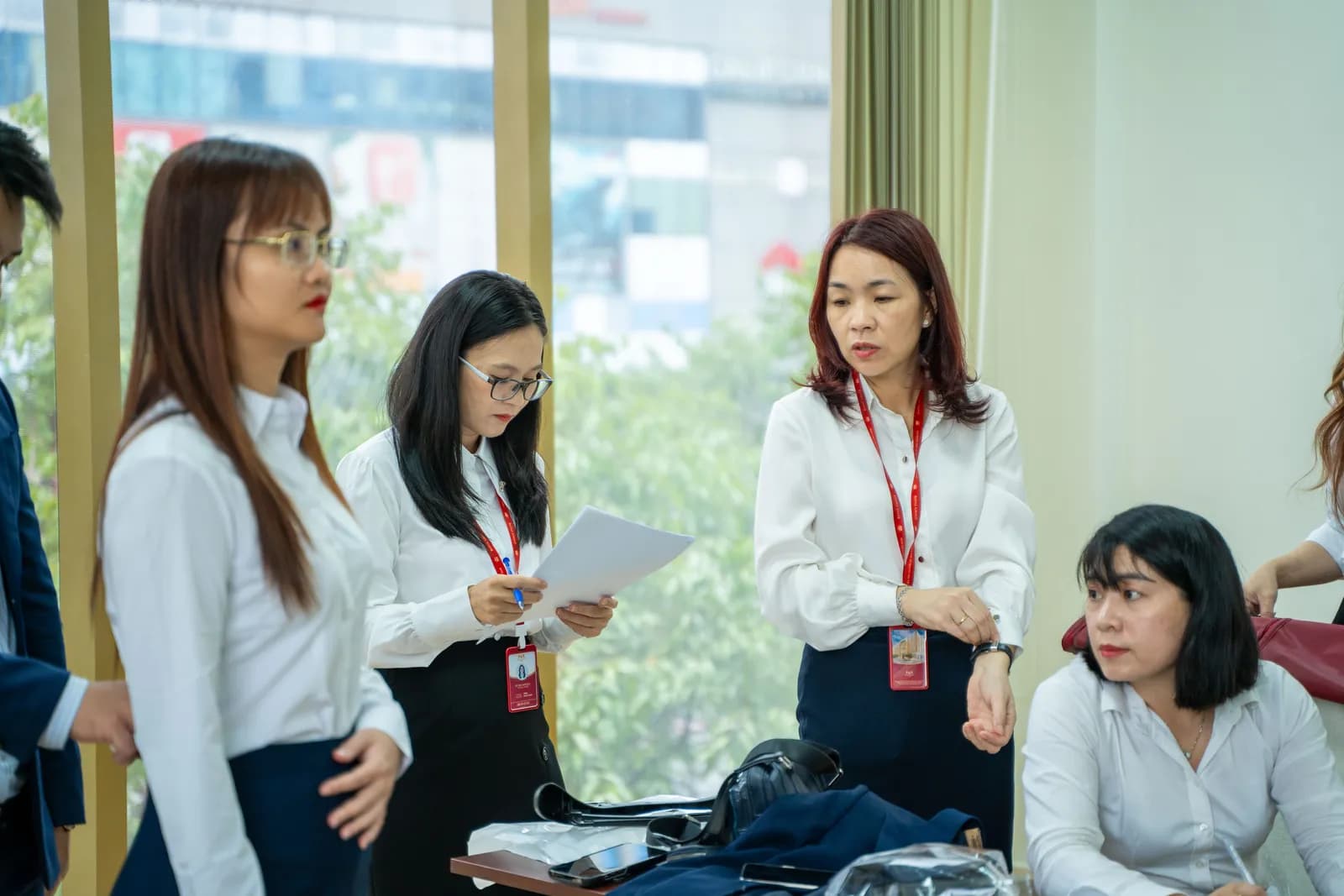
In the banking and finance group, Mon Amie Uniform has worked with Chứng khoán ACBS; fabric samples for each project are viewed at the consultation.
Bamboo versus cotton and polyester
The table is a general guide; individual cloths vary.
| Criterion | Bamboo (bamboo viscose) | Cotton | Polyester |
|---|---|---|---|
| Hand feel | Very soft, smooth | Soft, natural | Slick, some types feel stuffy |
| Moisture absorption | Good | Good | Low |
| Drying speed | Medium | Slow | Fast |
| Creasing | Creases easily | Creases easily | Low creasing |
| Abrasion resistance | Lower, may pill | Fair | High |
| Care | Gentle wash | Easy | Easy |
No cloth wins on every point. Blends are the usual compromise: bamboo for softness, polyester or cotton for durability and a flat finish.
Which uniforms suit bamboo?
- Good fit: polos, T-shirts and office shirts for reception, spa and any role where fabric sits against skin for much of the day.
- Use with care: uniforms facing strong abrasion, such as warehouse, workshop or kitchen wear, or places with harsh industrial laundering. Cotton or polyester blends are safer there.
- Cost: real prices depend on fabric, style and quantity. For reference, Mon Amie's starting prices are T-shirts and polos from 150,000 VND (minimum 30), men's shirts from 600,000 VND and women's shirts from 480,000 VND (minimum 20). If you want bamboo or a bamboo blend, say so at the survey and we will advise which cloths we can work with and at what price.
Care that keeps colour and limits pilling
- Wash in cool or lightly warm water on a gentle cycle, turning garments inside out to reduce pilling.
- Avoid strong detergents and hard wringing.
- Dry in a shaded, ventilated place and let them dry fully before storing.
- Iron on low to medium heat while the cloth is slightly damp.
Because staff launder at home or through different services, it helps to hand out a short care note with the uniform.
Five steps before choosing bamboo for a whole team
- Ask for the composition and test results if you need the antibacterial property.
- Handle real swatches under office lighting and daylight.
- Approve a sample: in Mon Amie's six-step process, production begins only after you sign off the sample.
- Wash the sample a few times to check shrinkage, pilling and colour loss.
- Trial the shirts with a few employees through a working day before committing the whole team.
At the final stage, on-site tailoring lets each employee be measured so that a soft, fluid cloth falls correctly. After sample approval, delivery takes 4–6 weeks for measuring, making and handover, with quality checks at three stages (cutting, assembly, finishing) and free alterations for 3 years at every showroom. You can request a quotation on our quote page or call 0888.111.118 (same number on Zalo), mentioning that you want bamboo or a bamboo blend.
Frequently asked questions
Is bamboo fabric really antibacterial?
Not absolutely. Bamboo fabric is often described as antibacterial, but depending on the fibre type and how it is processed, the effect can drop and varies between batches. Ask for test results on the specific batch if the property matters to you.
Does bamboo fabric shrink?
It can, especially bamboo viscose washed in hot water or tumble-dried hard. Washing a sample garment before approval shows the real shrinkage of the cloth you have chosen.
Is a bamboo shirt comfortable in Vietnam's heat?
The soft, absorbent cloth usually feels comfortable in hot, humid weather, but the experience also depends on cut, weight and blend. Let a few employees wear a sample through a full day before you decide.
Should we choose pure bamboo or a blend for uniforms?
For uniforms worn all day and washed often, blends of bamboo with cotton, spandex or polyester are commonly used to balance softness and durability. Ask exactly how much bamboo the cloth contains and what it is blended with. At the survey, Mon Amie will advise which cloths we can work with and the matching price range.