Uniform trouser fabric that resists bagging and pilling
Uniform trouser fabric that resists bagging and pilling comes down to weave, blend and a hands-on swatch test. Trousers and skirts start from 600,000 VND.
Uniform trouser fabric that resists bagging and pilling is a firmly woven cloth with tightly spun yarn, a sensible blend, and a swatch you have tested by hand before the full run is cut. No fabric is entirely free of bagging or pilling. What you can choose is a cloth that copes better with friction and long hours of sitting, matched to what the wearer actually does. Below: how to read a blend, how to test a swatch, and how to match fabric to role.
Where bagging and pilling come from
Picture an administrator who sits through every shift. A few months in, the trousers puff out at the knees and seat, and the cloth on the inner thigh has grown small pills. The two problems have different causes.
- Bagging: yarn is stretched and does not return to its shape. It shows at the knee, seat and crotch, where sitting, standing and bending put load on the cloth.
- Pilling: short fibre ends are rubbed up to the surface and tangle into little balls, usually on the inner thigh, seat and around pocket mouths.
Three things tend to matter: fibre type and length, the weave (a tight weave is generally steadier than a loose one), and daily laundering and pressing. That is why two swatches that look alike on a table can behave differently after several months.
Reading the blend
The table lists common trouser fabric families. Comments are for orientation only, since results depend on yarn quality, blend ratio and weave.
| Fabric family | Often described as | Worth asking about |
|---|---|---|
| Polyester-viscose, twill weave | Holds shape, resists creasing, easy to launder | Whether the surface fuzzes where it rubs |
| Polyester with spandex | Light stretch, easy movement when seated | Recovery after repeated stretching, spandex share |
| Cotton-polyester | Breathable, soft hand | Level of creasing, colour retention after washing |
| Thin wool blend | Refined surface, good drape | Care instructions, durability at the seat under daily wear |
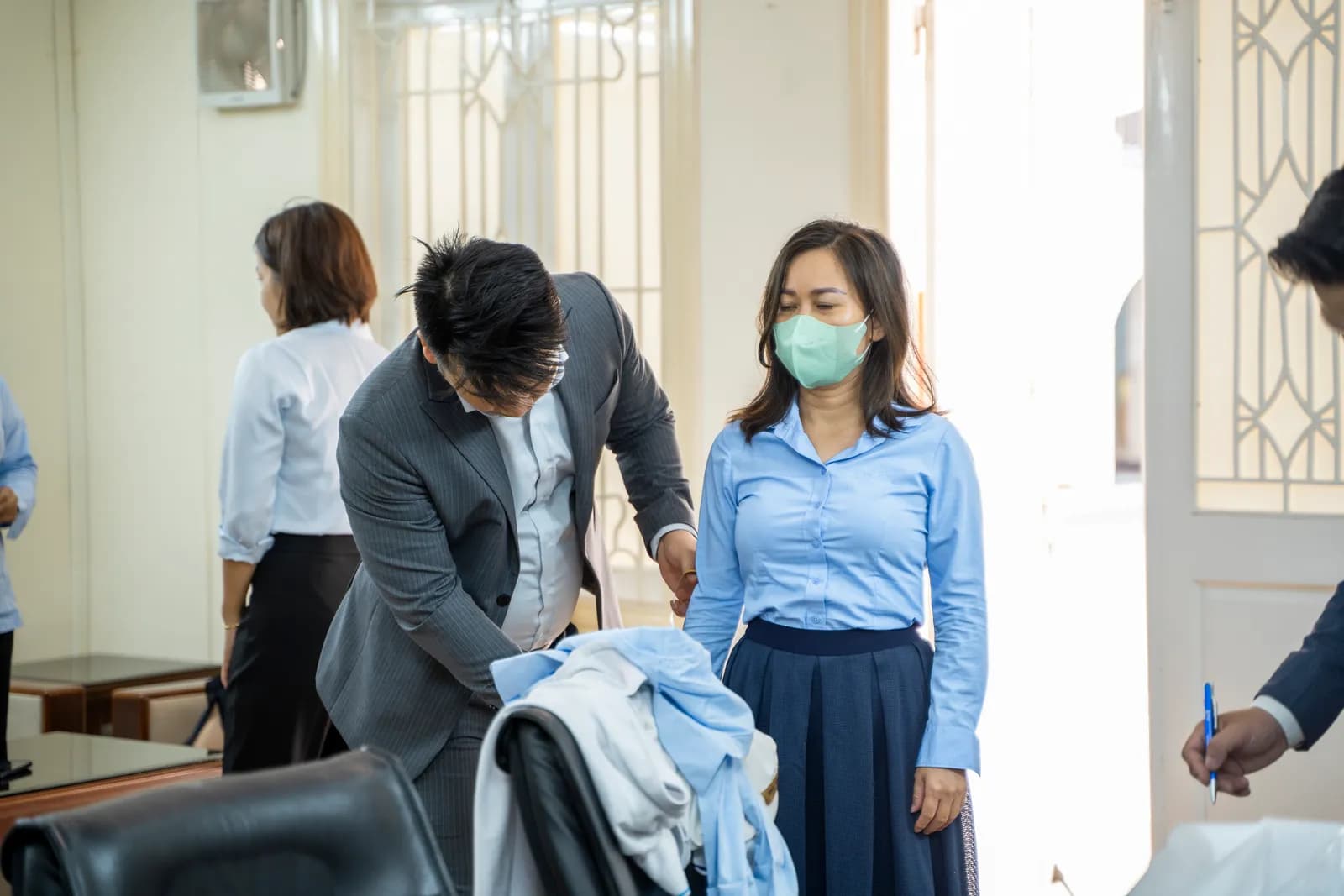
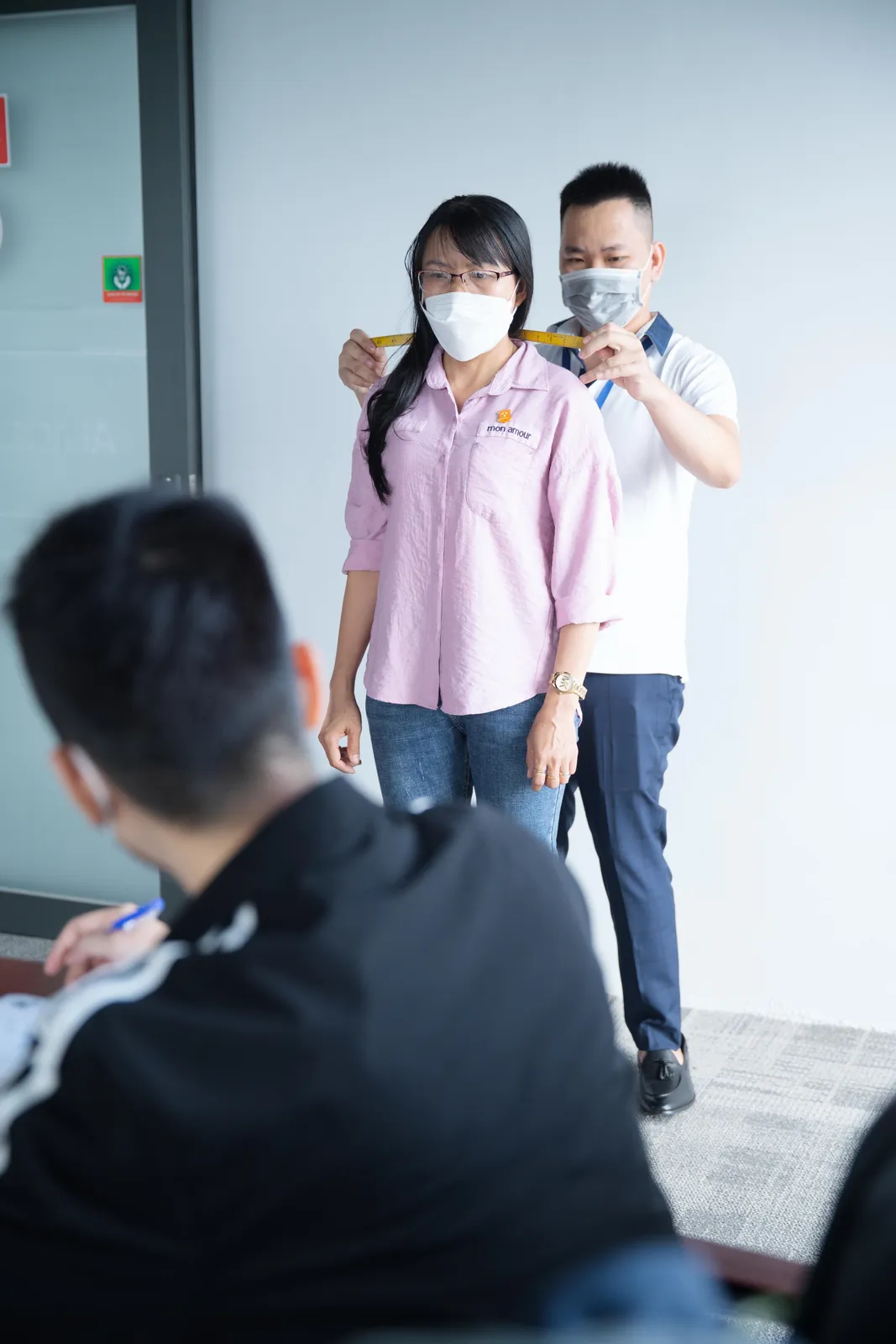
The image below comes from a Mon Amie Uniform project.
Four tests to run at the table
Real swatches are shown at the design stage, so you can do a few quick checks yourself. These are hand tests, not a substitute for laboratory testing.
- Crush the swatch tightly in your palm for a few seconds, then release. Do the creases fall out quickly or stay?
- Stretch it in both directions and let go. Does it spring back or stay slack?
- Rub two pieces together a few dozen times and check whether the surface fuzzes.
- Hold it under a lamp and look at whether the yarn is even or shows loose fibres.
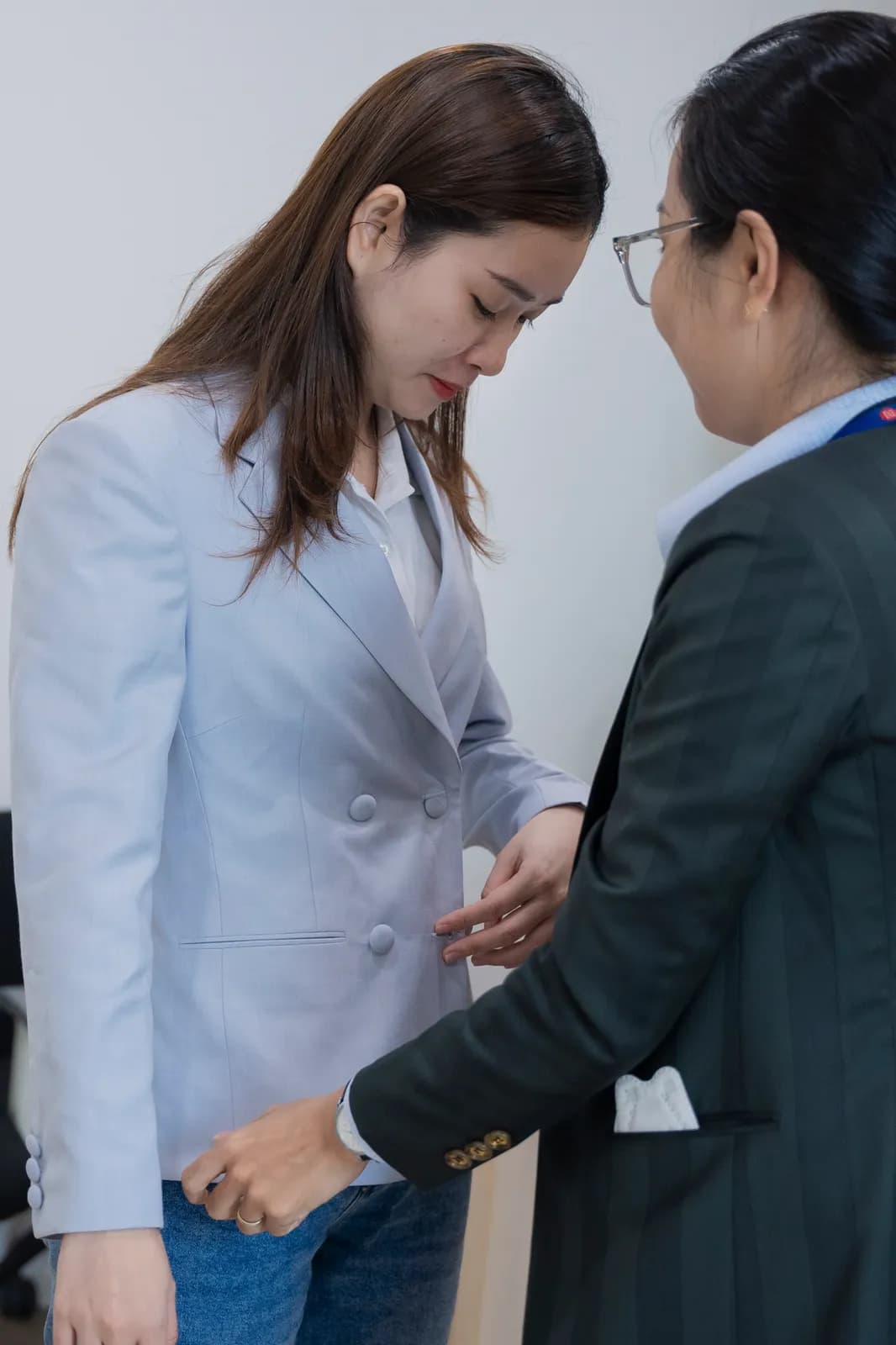
Once the sample garment is made, ask one employee to put it on, sit, stand and bend to see whether the knee or seat binds or feels close. Production starts only when your company signs off the sample, so that is the time to catch problems.
Matching fabric to role
- Administration and accounting, mostly seated: prioritise recovery at the knee and seat. Moderate stretch is fine, but a very soft cloth can sag.
- Reception and sales, on the move: a cloth that holds its crease and resists wrinkling after car rides and meetings.
- Hotel and restaurant teams, heavy laundering: ask closely about colour retention and wash care.
- Skirts and straight-leg trousers: browse the design library to find a silhouette suited to each department.
Samples can also be viewed beforehand in our fabric library.
Starting prices, minimums and later orders
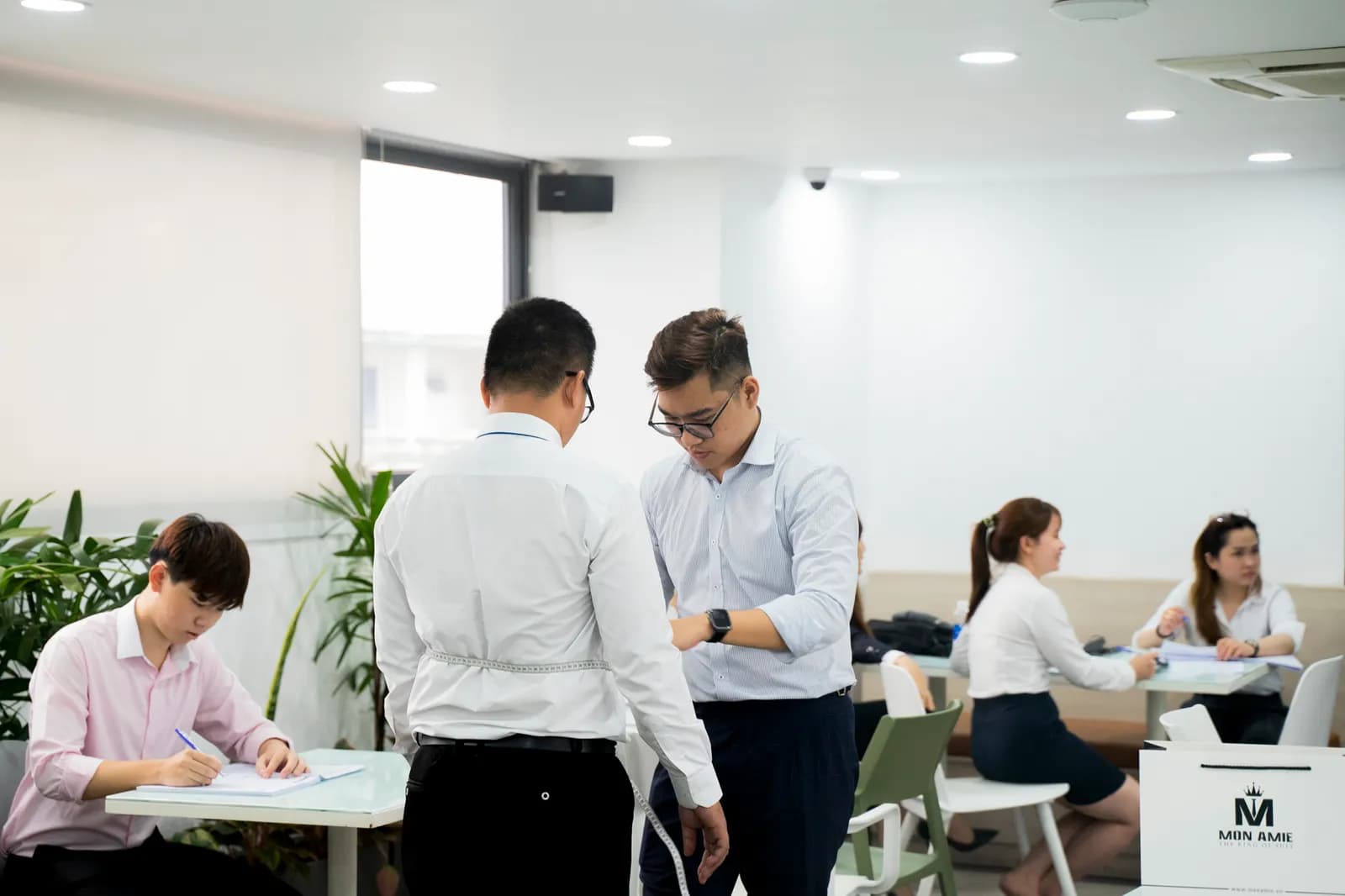
Trousers and skirts start from 600,000 VND with a minimum of 20 pieces; the trousers and skirts page has more on the range. Actual prices depend on fabric, style and quantity. When someone new joins, they are measured individually and the garment is made to the approved sample, so it matches the trousers already made in the same cloth and colour. Measurements of people already measured are stored under their employee ID for later orders. To test a swatch against your own team's trousers, leave your details on the quote page or call 0888.111.118 and we will arrange a survey.
Frequently asked questions
Which fabric pills least on uniform trousers?
Tightly woven cloth with well-spun yarn and a clean surface generally pills less, but nothing is immune. Rub-test a swatch at approval and ask about the exact composition. Mon Amie Uniform provides real swatches for you to check.
Does stretch fabric make trousers bag more easily?
Not necessarily. What matters is how well the stretch fibre recovers, and the blend ratio. Moderate stretch is usually comfortable for people who sit a lot, while a high-stretch cloth with poor recovery may go slack with use. Stretching and releasing a swatch is a simple test.
How should we wash trousers to limit pilling and bagging?
Turn them inside out, use a gentle cycle, avoid hot water and keep high-heat drying to a minimum, since friction and heat usually make fibres surface and yarn slacken faster. Exact care depends on the cloth chosen, so ask for washing guidance when you approve the sample.
Can we test a sample before ordering the whole batch?
Yes. Real swatches are shown at the design stage, and the sample garment is approved before bulk production. The minimum for trousers and skirts is 20 pieces.