Nano-finish fabric is usually ordinary cloth with a surface treatment that makes water and light stains slower to soak in, while water-resistant or waterproof cloth typically adds a coating or membrane to hold back water more firmly. They differ in how much water they stop and how well they breathe, so choose by what the wearer actually faces: spills, light rain or hours outdoors. Real performance depends on the fibre, the finish and how many times the garment is washed.
Nano, water-repellent, waterproof: three terms often confused
These labels are sometimes used loosely. The table is a general reading, offered cautiously because each cloth maker describes its own products differently:
| Type | General reading | Suits | Trade-off to weigh |
|---|---|---|---|
| Nano-finish, water-repellent | A surface treatment so water usually beads up; the cloth stays soft and fairly breathable | Polos, shirts, uniforms prone to spills or light stains | Effect can fade with washing and friction |
| Coated or membrane waterproof | Holds back water better in prolonged rain | Outdoor jackets, rain uniforms | Usually less breathable; can feel warm over long wear |
| Tightly woven | High thread density blocks wind and light water without a coating | Light jackets, outdoor uniforms | The cloth often feels stiffer |
Three real situations to consider
The quickest way to decide whether a treated cloth is needed is to look at everyday incidents:
- Waiters and baristas: a glass of water spills on a shirt in the middle of a rush. A water-repellent finish can let the liquid bead up so it can be wiped away in time, though oil, hot liquid or heavy staining behave differently.
- Technical, security and delivery staff: walking in light rain. A waterproof or tightly woven jacket keeps people dry for longer, but the jacket should not be too airless.
- Outdoor operations staff: dust, water and sun in the same day. Look for a balance between stain resistance and breathability.
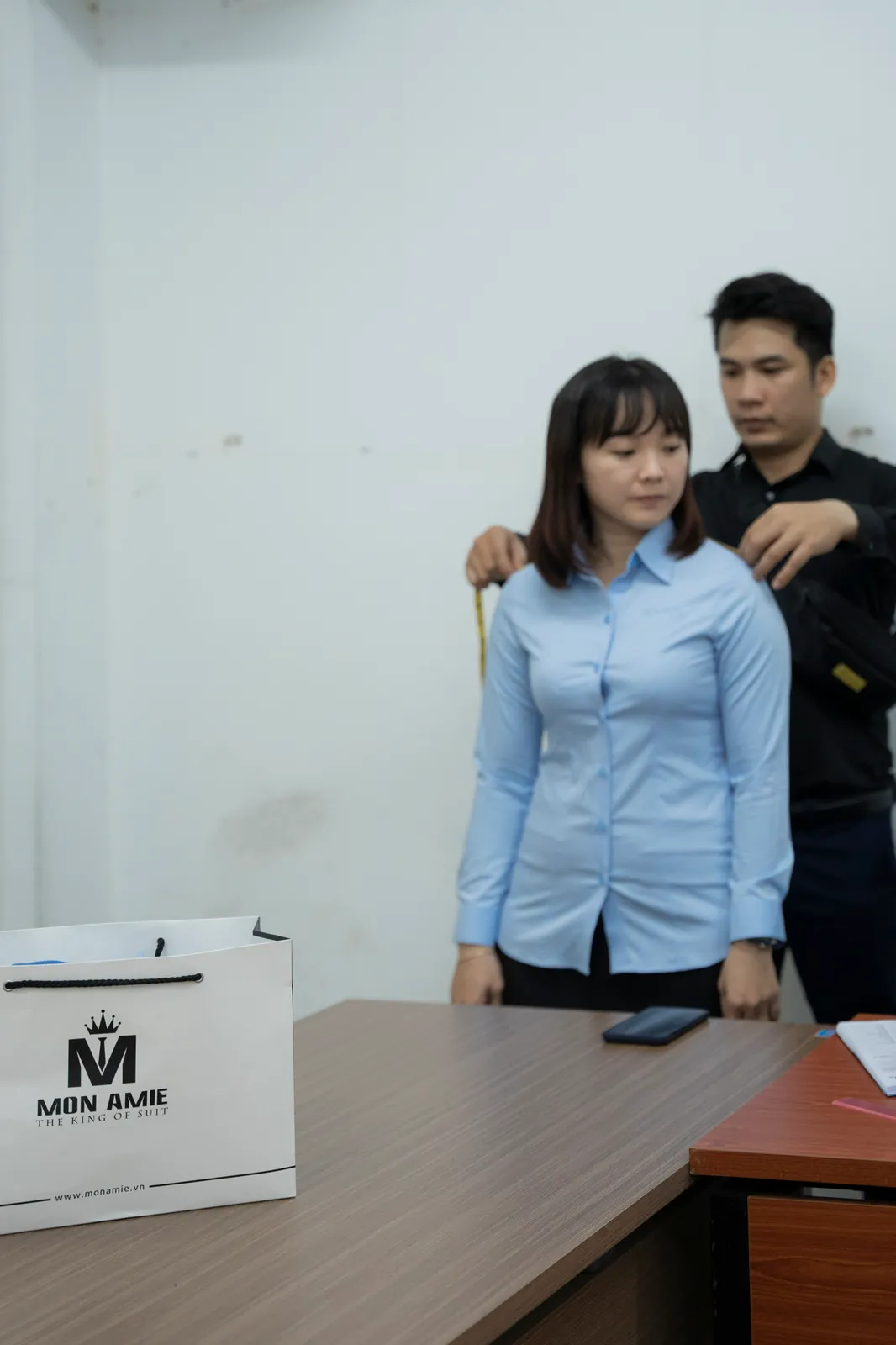
The image below belongs to a Mon Amie Uniform project with Công ty Cổ phần Cấp nước Thủ Đức.
What a surface treatment costs you
A treated cloth can look better on a swatch than in daily use, so weigh these points:
- Breathability: the more sealed the coating, the more likely it is to feel stuffy; someone wearing it all day in heat will notice.
- Washing and pressing: each cloth has its own instructions, and washing incorrectly or pressing on high heat can weaken the finish. Write the instructions down and pass them to whoever launders the uniforms.
- Durability: a finish is usually judged by number of washes, not by time; ask the cloth maker or Mon Amie when viewing samples.
- Feel on the skin: some treatments make the cloth stiffer or give it a slightly different sheen.
Above all, a nano-finish or waterproof uniform does not replace specialist protective equipment where work involves chemicals or hazardous liquids. That protection follows its own safety rules.
Testing a swatch before you decide
When Mon Amie Uniform shows real swatches at the design stage, you can run a simple check:
- Watch how water sits: if allowed, put a few drops on a corner of the swatch and see whether they bead or soak in.
- Ask about washing and pressing, and record the answer for whoever launders the uniforms.
- Ask about durability of the finish after repeated washing.
- Handle the cloth and judge breathability against other options in our fabric library.
- View the colour in natural light, because a finish can slightly change how the surface looks.
When you do not need a treated fabric
Office uniforms usually value breathability and low creasing more than water resistance, so not every team needs a finish. Apply it only to teams with real incidents, and let the rest wear breathable, easy-wash cloth. This also helps control cost, since real prices depend on fabric, style and quantity.
If one of your teams needs this feature, raise it at the survey; Mon Amie advises from the fabrics currently available, and whether a particular cloth meets a specific need is answered during consultation. You can find style ideas in our design library, then send your details through the quote page or call 0888.111.118 (the same number on Zalo).
Frequently asked questions
Is nano-finish fabric completely waterproof?
Usually not. A nano finish generally helps water bead and light stains stay on the surface, but it does not turn a shirt into a raincoat. Performance depends on the fibre, the finish and the number of washes.
Is waterproof fabric hot to wear?
It can be, especially with a sealed coating or membrane. For teams working outdoors all day in the sun, consider a tightly woven cloth or a lighter finish to balance water protection and breathability.
Does the nano finish wear off with washing?
It can fade gradually with repeated washing and with how the garment is laundered. Ask for the washing and pressing instructions for each cloth when viewing samples, and share them with the person who launders the uniforms.
Which teams should use treated fabric?
Teams that often face spills, rain or stains, such as service, technical, delivery or outdoor operations staff. Others usually do better with breathable, low-crease, easy-wash cloth.