A poplin shirt is woven in a plain weave from fine yarn with a smooth, flat face, so it tends to feel lighter and cooler than heavier cloths such as oxford or twill. That is why poplin is often chosen for hot weather. Real coolness still depends on the fibre content and thickness, so feel and test the actual fabric before choosing.
Why poplin works when it is hot
Imagine a sales executive leaving the car park at eight in the morning, walking a few minutes in the sun and stepping into the lift. Her shirt needs to be thin enough not to trap heat, flat enough to look tidy the moment she reaches the office, and durable enough for regular washing. Poplin usually meets those needs through three traits:
- Plain weave, fine yarn: a flat, light surface.
- Moderate thinness: generally airier than thick cloth, depending on how fine the yarn is.
- Easy to press flat: creases respond well to ironing at the right heat.
If the fibre mix on a quote is unclear, ask for the composition before ordering, because it matters more than the name of the fabric.
Three kinds of poplin
"Poplin" describes the weave; the fibre mix decides most of what the shirt feels like. The table lists three common groups. All remarks are indicative, since they depend on the fibre and finish.
| Poplin type | Feel | Strength | Watch out for |
|---|---|---|---|
| Pure cotton | Soft, airy, absorbent | Comfortable on skin | Tends to crease more; may shrink slightly |
| Cotton-polyester | Smooth, holds shape | Low-crease, easy to launder | Breathability depends on the blend |
| Poplin with spandex | Light stretch | Easier to reach and bend | Needs a sensible proportion so the shirt keeps its shape |
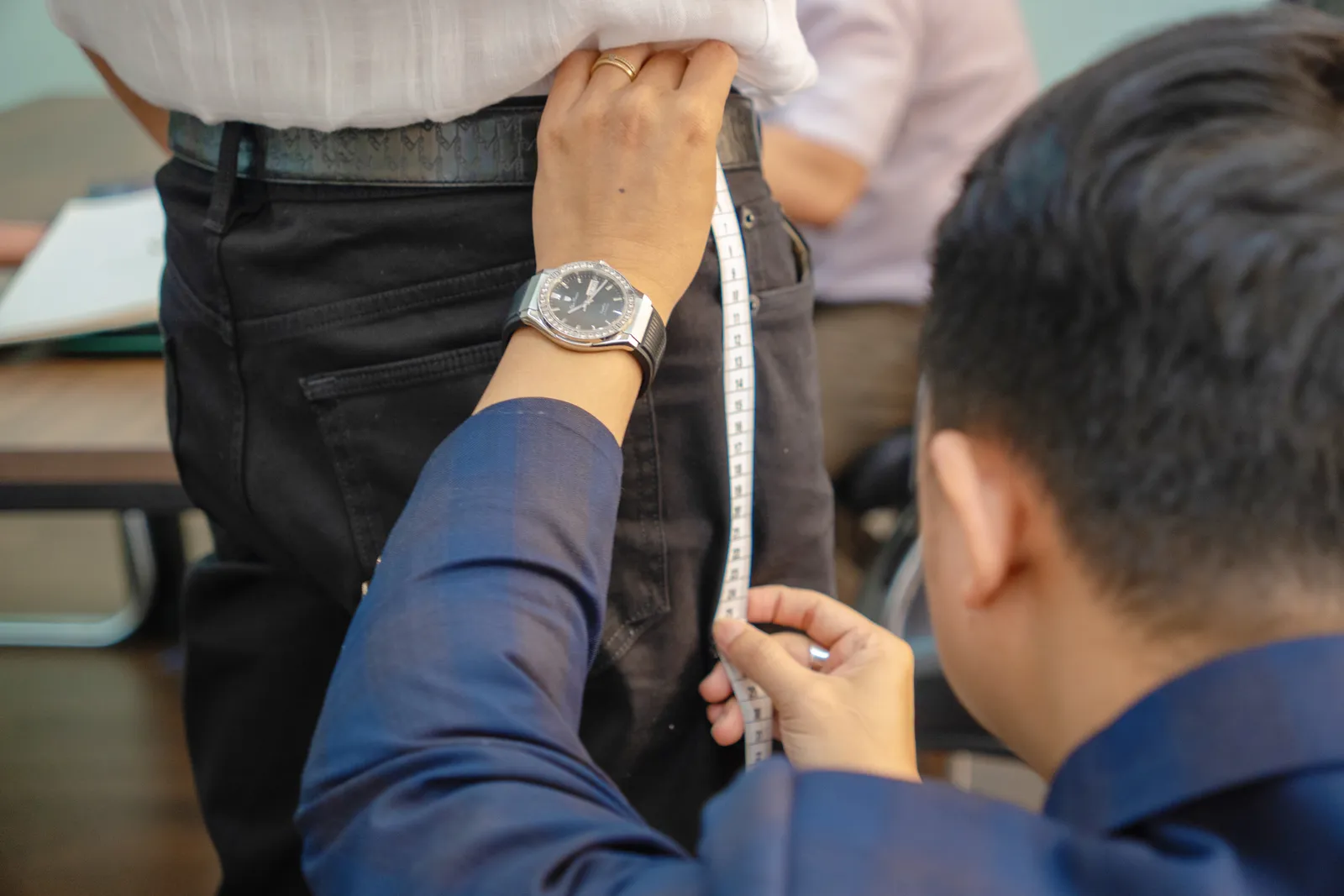
The photo below shows one of Mon Amie Uniform's projects.
Four common mistakes
- Choosing white that is too thin. White or pale thin poplin can show underwear. Test a sample against light and consider a medium weight or a soft tone rather than stark white.
- Ironing too hot. High heat can make cloth shiny or damage blended fibres. Check the fibre label to pick a setting.
- Choosing a close fit. Poplin does not stretch much, unless it has spandex, so a close shirt can pull across shoulders, underarms and the chest buttons when you raise an arm.
- Ignoring the collar. Thin cloth needs enough collar interlining to stand and not collapse after a few washes.
Washing and pressing
Care depends on the label, but some habits usually help a thin shirt last:
- Wash gently, avoid hard wringing and do not soak for long.
- Dry on a hanger and smooth the collar, placket and cuffs first.
- Press while slightly damp, collar and placket first, then the body.
- Avoid high-heat tumble drying, which can shrink the cloth or set creases that are hard to press out.
From one shirt to a whole team
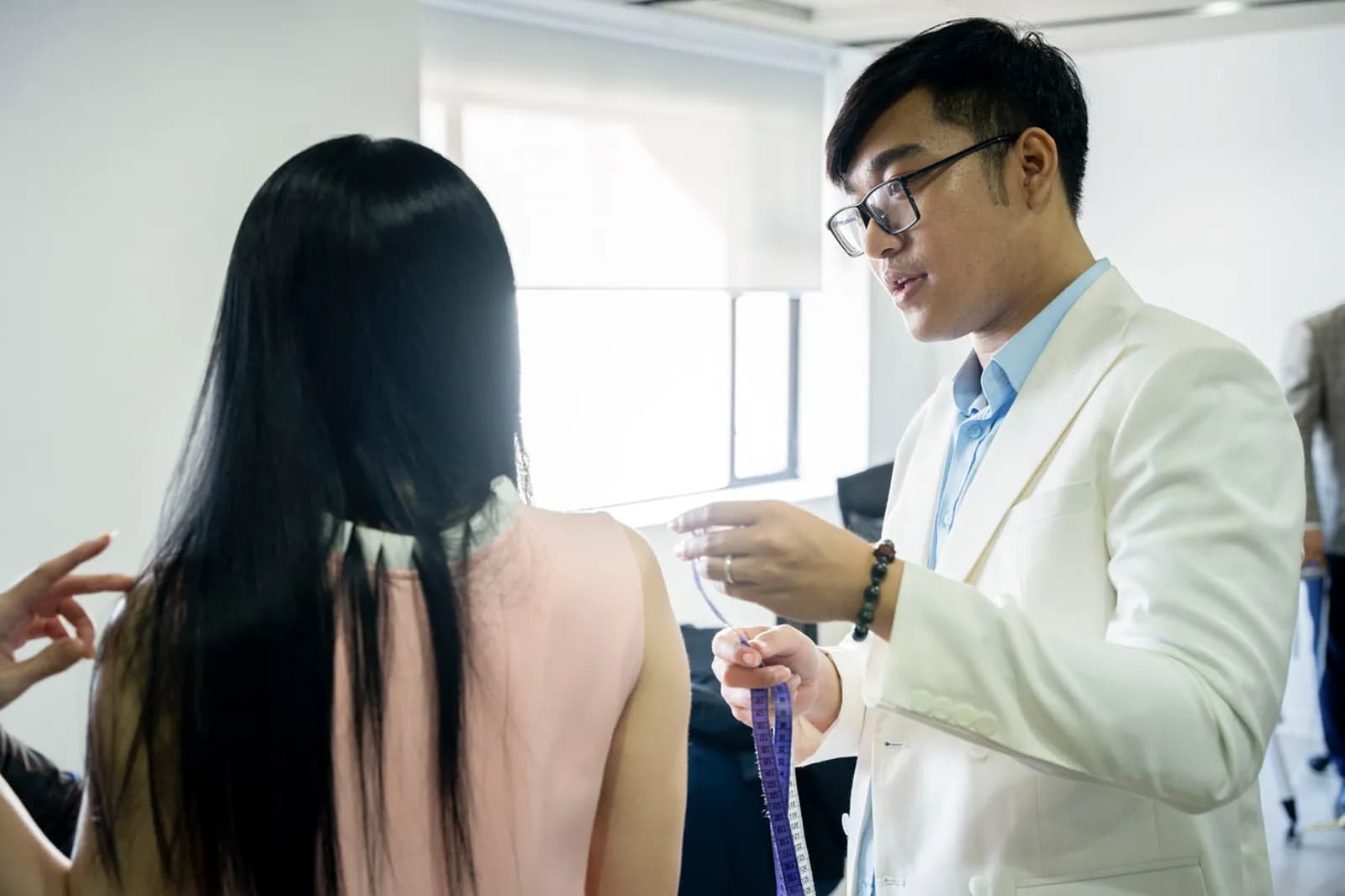
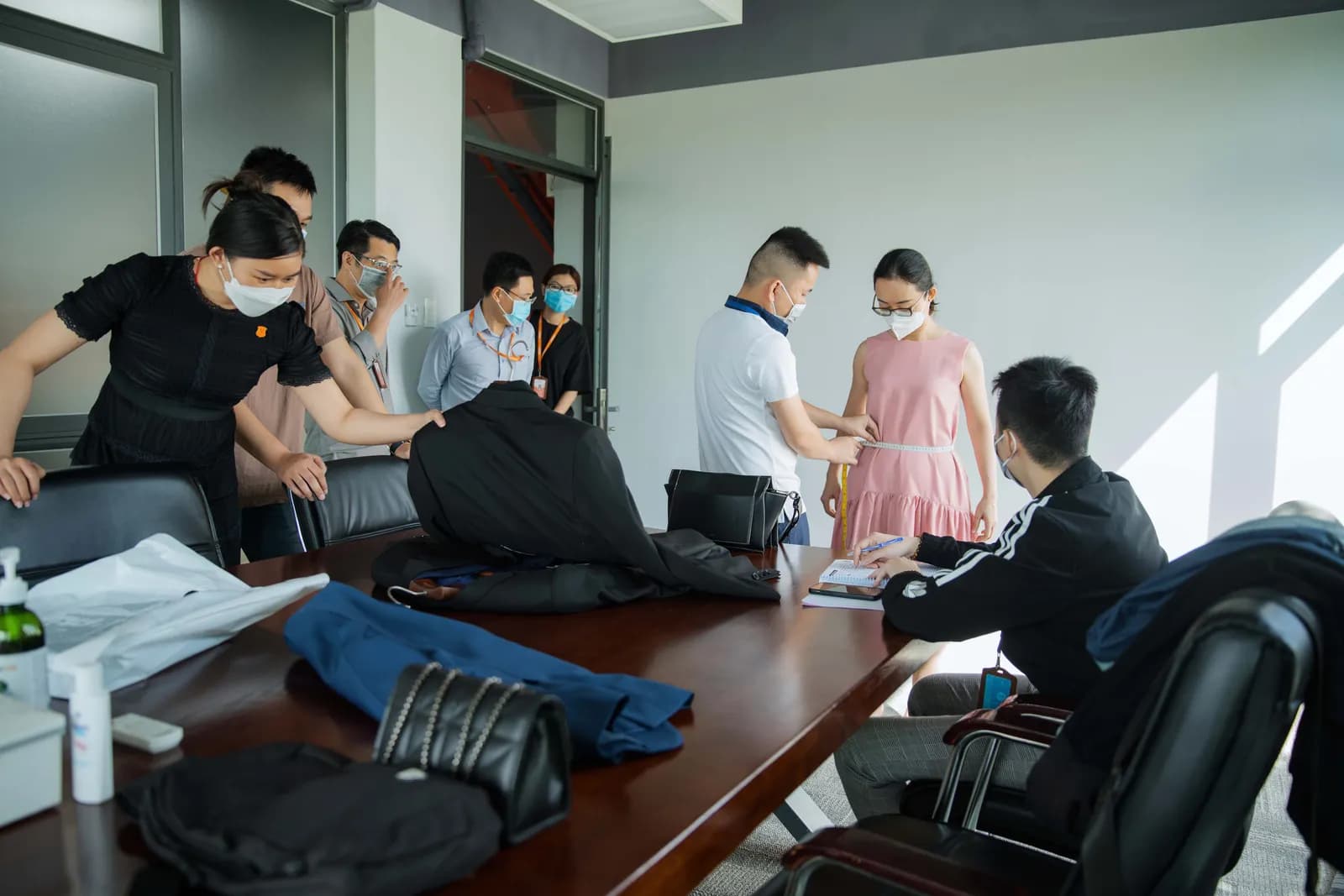
For a whole team, the challenge is not only cloth but making everyone fit equally well. Mon Amie follows a six-step process: an on-site survey, three options in your brand colours with real swatches, an approved sample, individual measuring at your office through our on-site tailoring service, production in our workshop and delivery. Measurements are stored under employee IDs; new staff are measured individually and made to the approved pattern, and people already measured do not need to be measured again.
Mon Amie publishes starting prices by category: men's shirts from 600,000 VND and women's shirts from 480,000 VND, each with a minimum of 20. Real prices depend on fabric, style and quantity. Allow 4–6 weeks after sample approval for measuring, making and delivery. You can request a quotation on our quote page or call 0888.111.118 (the same number on Zalo).
Frequently asked questions
Do poplin shirts crease easily?
Pure cotton poplin usually creases more than a polyester blend, because cotton fibres hold folds. The actual amount depends on thickness and finishing, so sit in the sample and crush the cloth in your hand when you review it.
How is poplin different from kate?
Poplin refers to the weave, while kate is commonly used for a cotton-polyester fabric. In practice the two names can overlap depending on the fabric seller. The reliable way to tell is to check the fibre content and thickness on a real swatch.
Is a poplin shirt suitable for a full working day?
Usually, because the cloth is thin and flat. If staff sit in air-conditioning all day, a polyester blend will look tidier; for people who are often out in the sun, a high-cotton poplin breathes better. Mon Amie shows real swatches at the design stage for comparison.
Will a white poplin shirt show underwear?
It can, if the cloth is thin and the shirt is close-fitting. A medium-weight poplin, or a soft tone instead of stark white, usually gives more coverage. Because production starts only after your company signs off the sample, your team can try it on and check.