Oil and gas uniform budgets: costing each employee
Oil and gas uniform pricing has no single figure. Budget for engineers and officers in three layers, using Mon Amie's starting prices as the first reference.
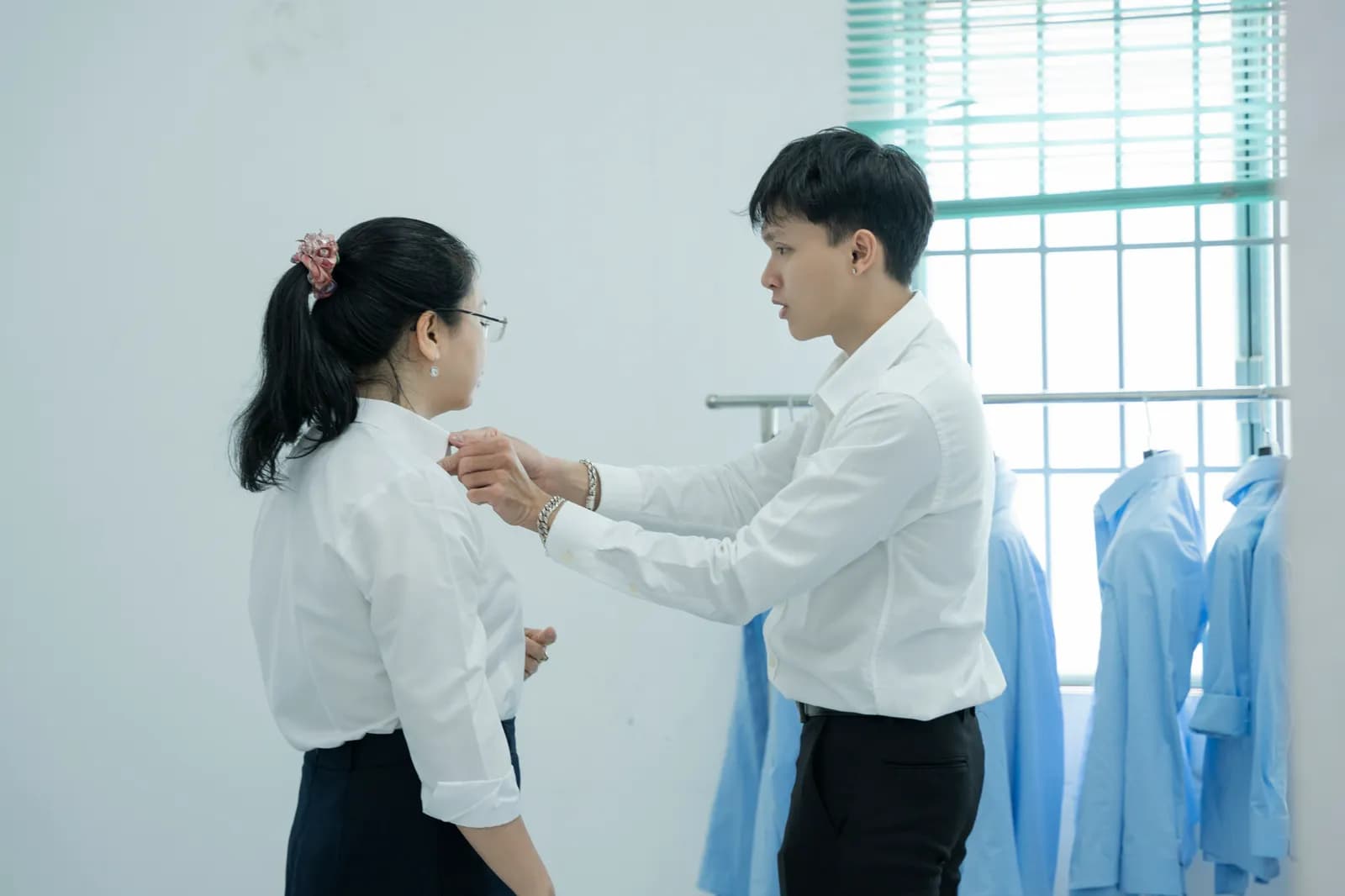
There is no single figure for what oil and gas uniforms cost per employee, because an engineer or officer usually dresses for several settings in one week. The practical method is to budget in three layers: an everyday base layer, a representative layer for meetings and partners, and an accessories layer. Each layer is tied to the starting price of its category and then replaced by a real quotation after the survey.
Two settings, one wearer
Follow an engineer through a day: a technical meeting at the office in the morning, a visit to an operating site in the afternoon, and perhaps a dinner with partners in the evening. At the site, protective equipment required by your own safety rules is a separate matter; the uniform discussed here covers office, meeting and guest-facing wear. Give the two their own budget lines so nothing is counted twice or missed. Mon Amie discusses the scope of products for each group during the survey.
The three layers
Splitting by layer avoids the common error of multiplying one blended price by headcount:
- Base layer, worn daily: men's or women's shirts, trousers or skirts, plus polos or T-shirts for lower-key days. This is the largest layer by quantity and is laundered most.
- Representative layer, for meetings and partners: men's or women's suits and waistcoats. Fewer people fall in this layer and wear it less often, but it demands a sharper fit.
- Accessories layer: ties, scarves and other items in the organisation's identity colours.
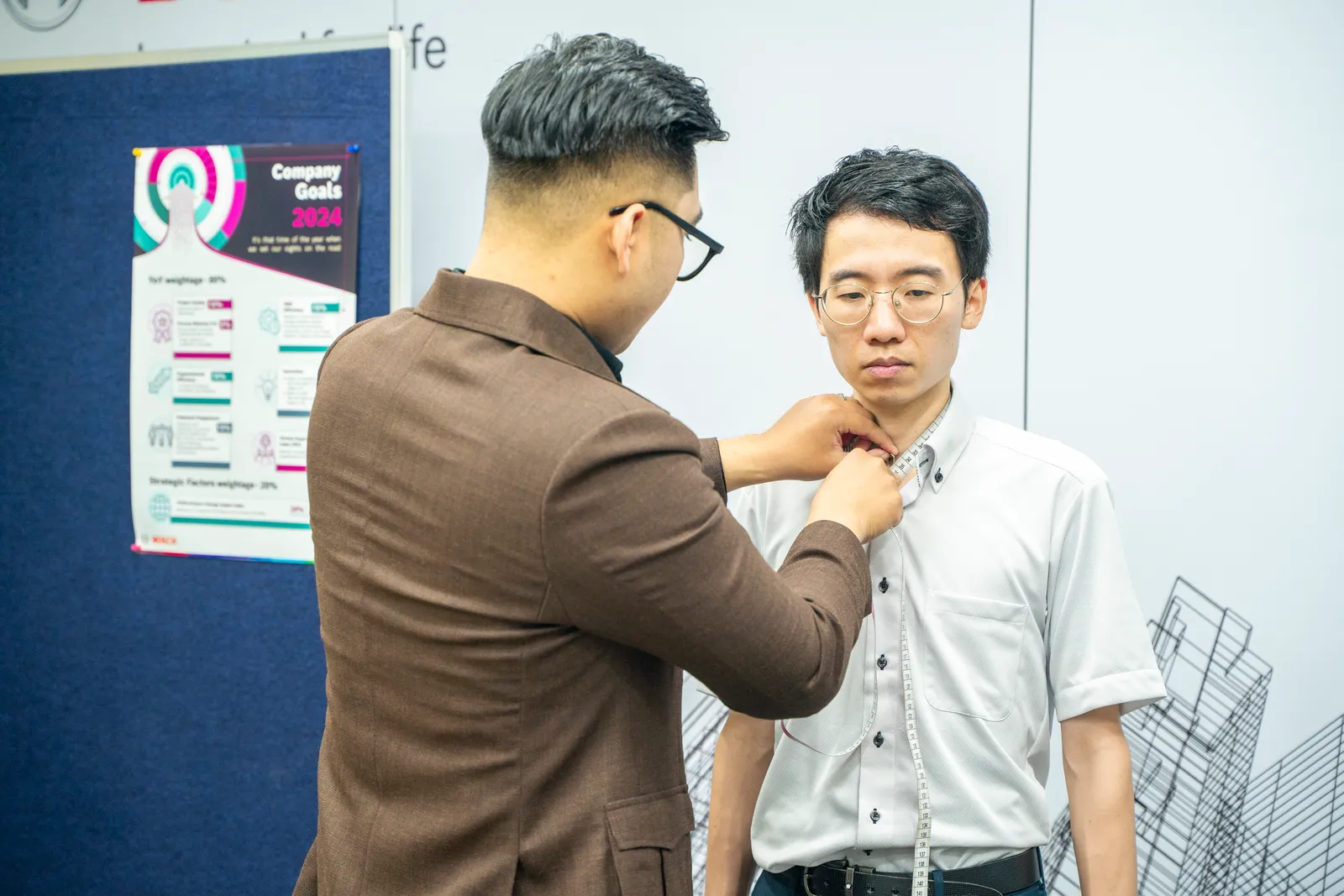
One of Mon Amie Uniform's uniform projects is pictured below.
Starting prices: which lines to check first
Mon Amie publishes starting prices by category. Each line below is the price for that category alone; it is not a set price and should not be added up. Real prices depend on fabric, style and quantity.
| Layer | Category | From | Minimum quantity |
|---|---|---|---|
| Base | Men's shirts | 600,000 VND | 20 |
| Base | Women's shirts | 480,000 VND | 20 |
| Base | Trousers and skirts | 600,000 VND | 20 |
| Base | T-shirts and polos | 150,000 VND | 30 |
| Representative | Men's suits | 3,000,000 VND | 5 |
| Representative | Women's suits | 1,500,000 VND | 5 |
| Representative | Waistcoats | 600,000 VND | 5 |
| Accessories | Ties, scarves, etc. | 150,000 VND | 20 |
From headcount to pieces: the questions to ask
Before putting money against anything, answer four questions for each layer and take those answers to the quotation:
- How many people fall in this layer, by unit or location?
- How many pieces does each person need to have a spare while the other is being washed?
- How many days a week are they worn, and is there a planned replacement or top-up cycle?
- What must the fabric withstand: air-conditioned offices, plenty of movement, or regular time outdoors?
On the fourth question, Ho Chi Minh City's hot, humid weather leads many buyers to consider lighter, airy, low-crease cloth. Those qualities are often claimed for blended fabrics but depend on the fibre and finishing, so view real swatches in our fabric library.
Several units, several locations: batching and top-ups
An oil and gas organisation often has several member units and working locations. A few points affect the budget:
- Measuring schedule: Mon Amie measures on site on your schedule, including outside office hours, so measuring can be done unit by unit or location by location. Travel costs, if any, depend on the contract and Mon Amie quotes them specifically during consultation.
- First order and top-ups: the first order includes sample approval and measuring every wearer. After that, measurements are stored under employee IDs, so anyone already measured is not measured again. New staff are measured individually and made to the approved pattern. Each order is priced on its own quotation.
- Minimum quantities: each category has its own minimum, so combining the needs of several units into one order is usually easier to plan.
For a first figure to put into your plan, use the budget estimate page; head-office teams can also look at office and corporate uniforms. Once you have headcount for each layer, send a request through the quote page or call 0888.111.118, and Mon Amie will survey and send a proposal with a price range.
Frequently asked questions
Does the uniform budget include protective equipment?
Keep them separate. Protective equipment required by each unit's safety rules is a different matter from office, meeting and guest-facing uniforms. Two separate lines avoid double-counting or gaps.
Do engineers need suits?
It depends on the role. Suits usually go to officers who attend meetings and meet partners often, while most technical staff wear shirts, trousers and polos. You decide which layer needs suits, and Mon Amie quotes on the real quantities.
How are small top-up orders for a few new officers priced?
New officers are measured individually and made to the approved pattern, priced on the quotation for that order. Each category has a minimum quantity, for example shirts from 20 and suits from 5, so combining needs into one order helps; Mon Amie explains how minimums apply during consultation.
Where should we start when building the budget?
With headcount in each layer and the number of pieces each person needs. Then use the starting price of each category as a reference, record your assumptions, and replace them with a real quotation after the survey.