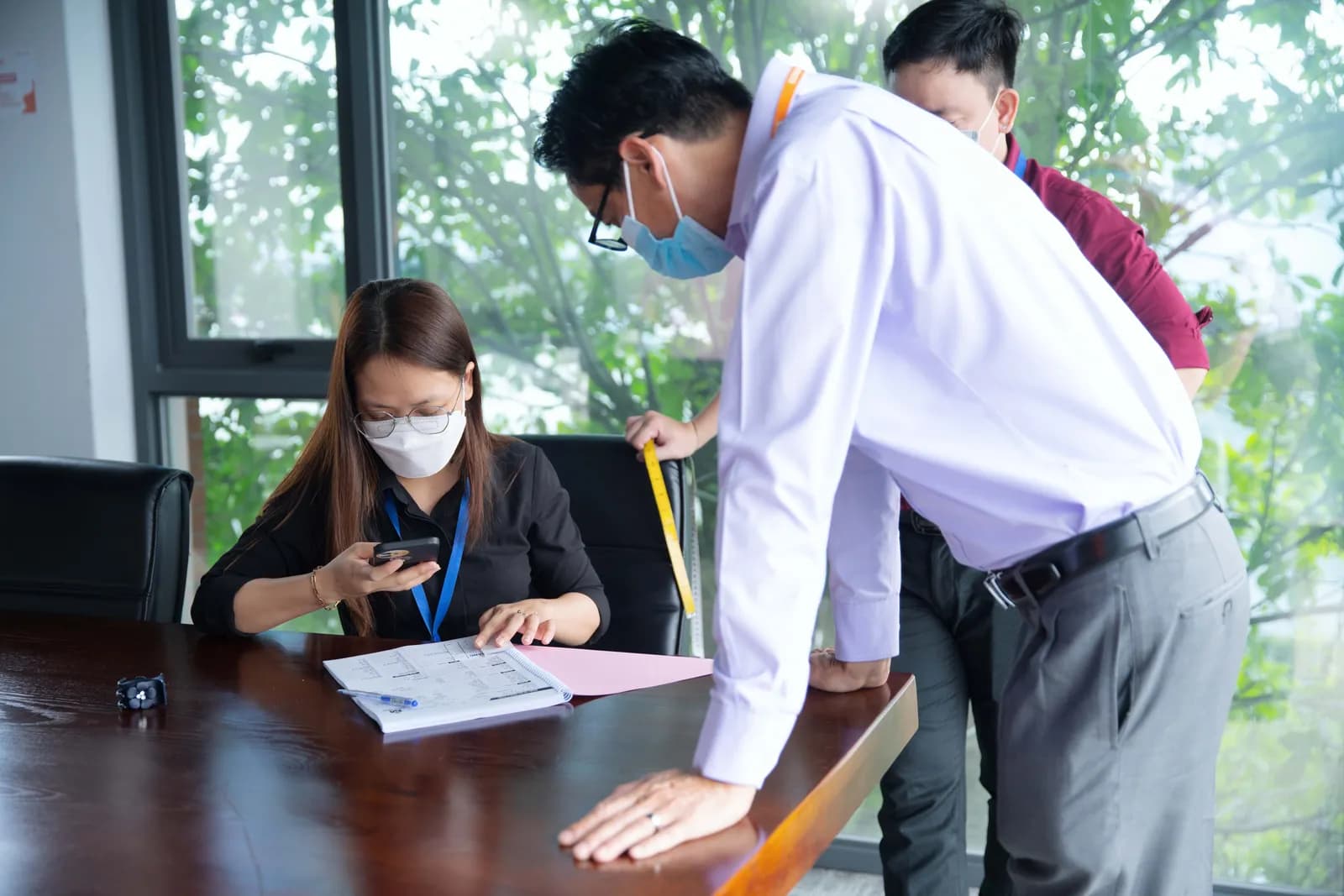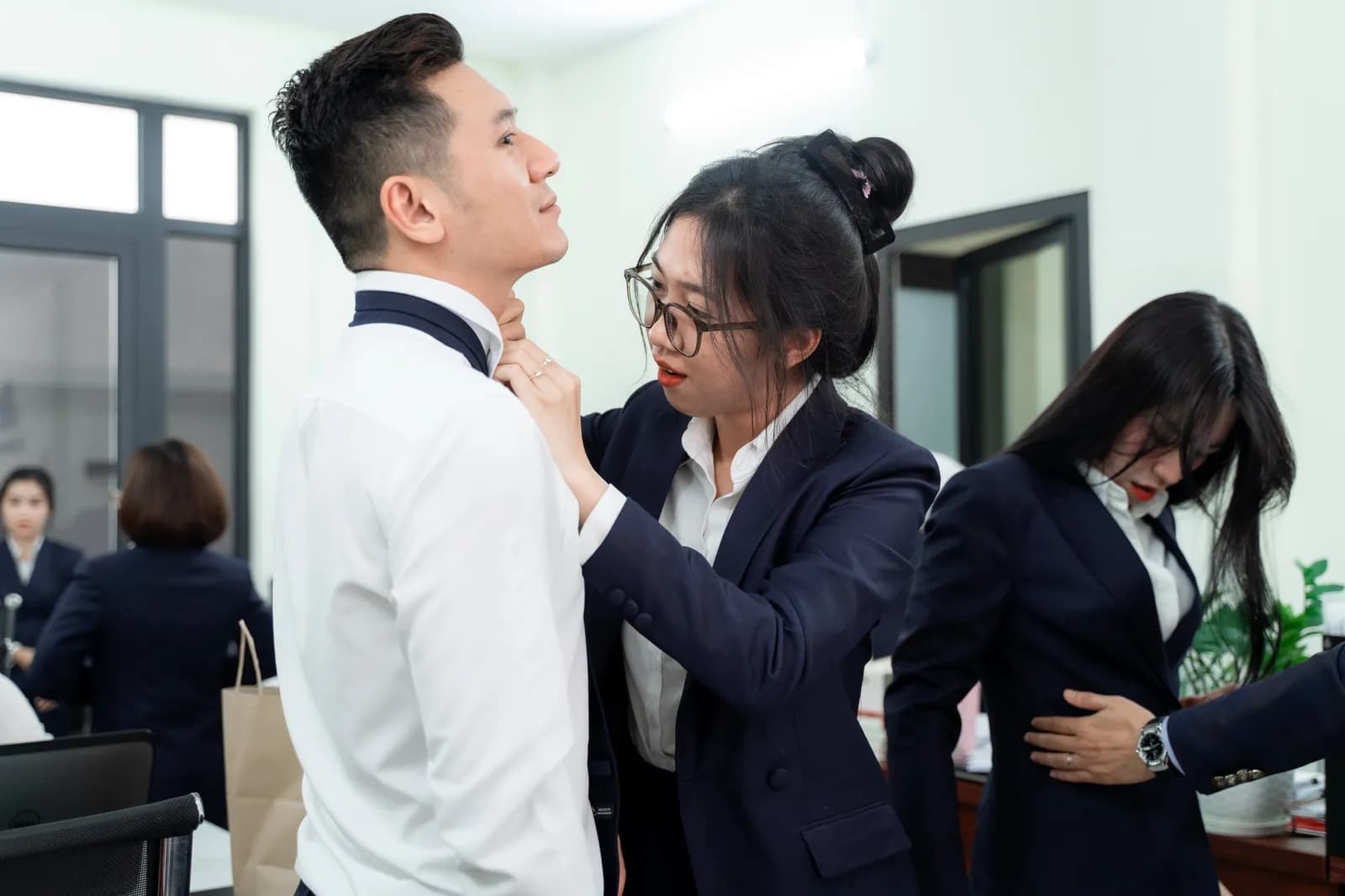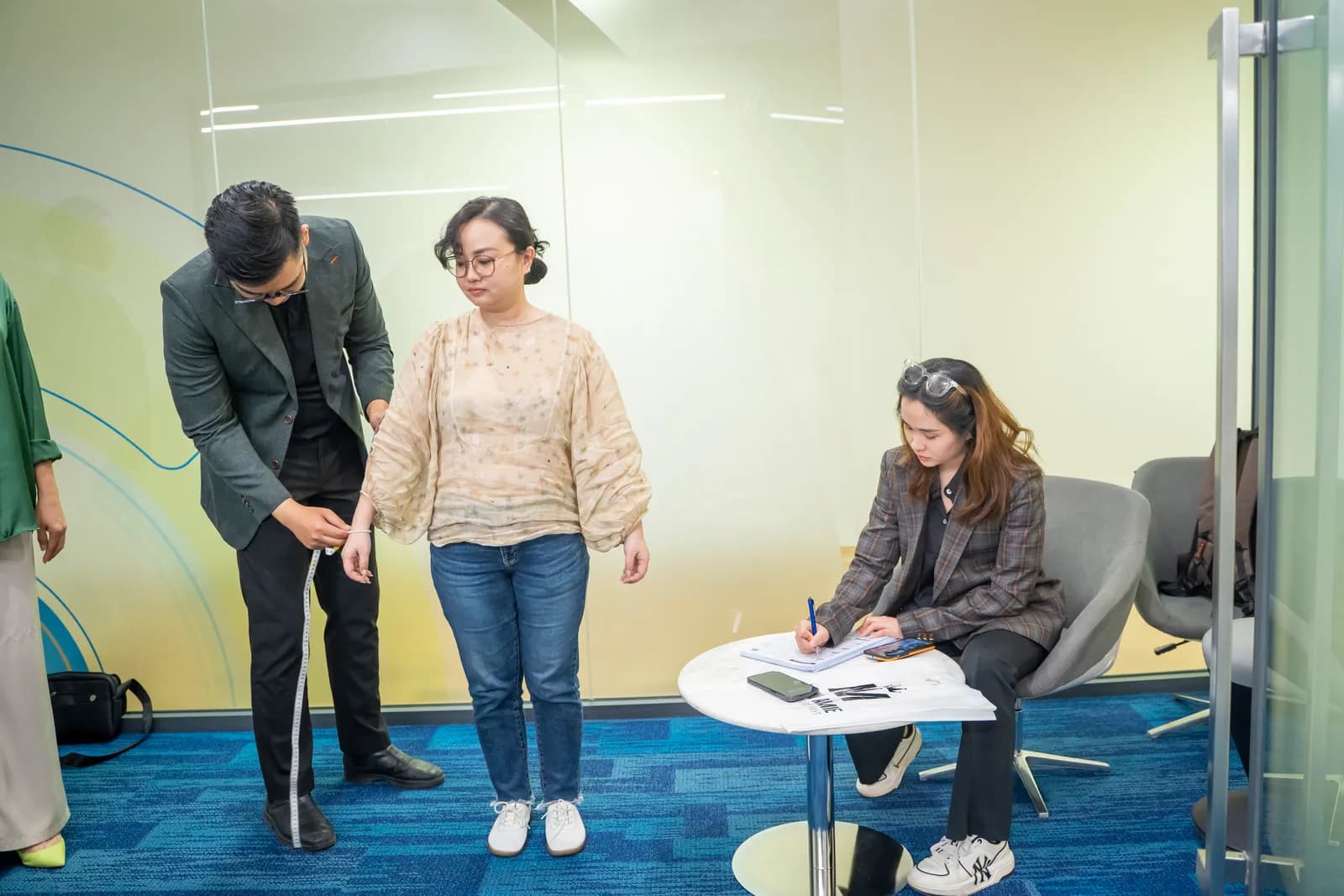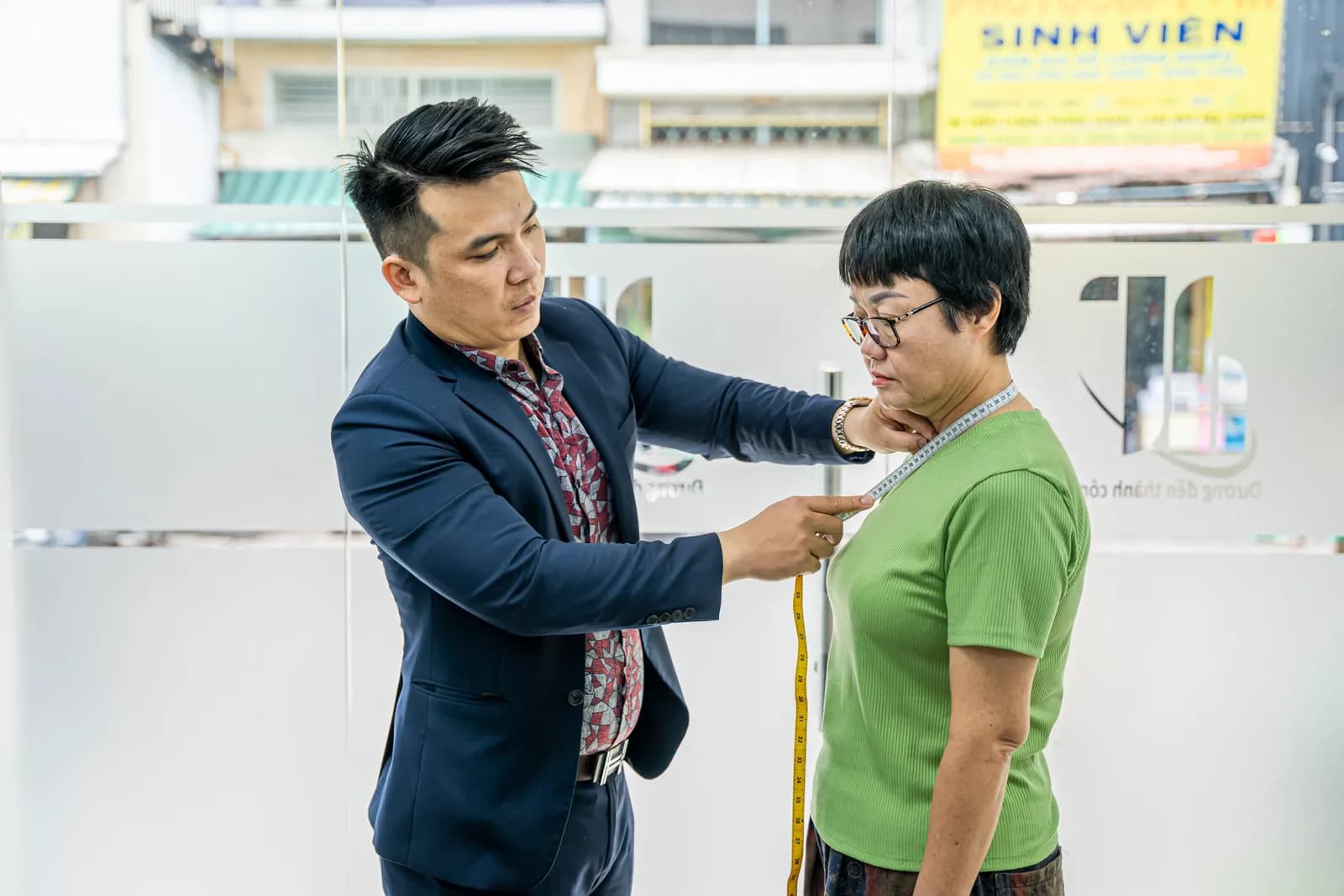
Before approving a fabric swatch, try six small things: scrunch it, view it in different light, stretch it, check how much it shows through, wash it and iron it. Each test takes minutes, yet together they show how a palm-sized piece on your desk will behave once it becomes a shirt worn all day.
Why a small swatch can mislead
Picture an admin team handed three palm-sized swatches. On the desk all three look flat, soft and nicely coloured. But a small piece has no seams, has not been pulled by an elbow, has not been squashed by someone sitting down, and has not met sweat after a long afternoon. It shows colour and feel; how the cloth behaves over time stays hidden. That is why testing beats looking and touching alone.
Six tests on a swatch
- Scrunch and release. Squeeze the cloth in your fist for about ten seconds, then open your hand. Does it spring flat or keep the creases? Cloth that creases deeply here will crease at the elbows and waist when its wearer sits.
- View it in two kinds of light. Hold it near a window, then under office lights. Some shades shift noticeably when the light changes, especially grey, beige and navy.
- Stretch in both directions. Pull gently along the length and the width, then let go. Does stretch cloth return to shape or sag? Does non-stretch cloth suit a fitted cut?
- Check show-through. Place a hand or a printed page behind the cloth. White and pale shades need enough weight not to reveal what is underneath in bright light.
- Wash it. Mark a 10 cm square on the swatch, wash it the way staff will wash it (by hand or machine), dry it, then re-measure and compare the colour with an unwashed part. Look for shrinkage, fading or surface pilling. If you want to wash-test a Mon Amie Uniform swatch, raise it during consultation.
- Iron it. Use medium heat with a pressing cloth. Polyester blends can turn shiny or distort under high heat; with cotton, see whether it flattens easily.
What to look for in each fabric
| Fabric | What to look at closely | Tests to run first |
|---|---|---|
| Cotton | Creasing, shrinkage after washing | 1 and 5 |
| Cotton-polyester blend | Surface pilling, breathability when worn | 1, 5 and 6 |
| Polyester-viscose with spandex | Recovery after stretching, ironing heat | 3 and 6 |
| Cotton piqué | Whether the collar stretches, surface pilling | 3 and 5 |
Properties such as breathable, low-crease or quick-drying are commonly claimed for these fabric families, but real behaviour depends on the fibre and finish, which makes the result of the six tests on a real swatch more reliable than the description.
This is one of Mon Amie Uniform's uniform projects.
Test the sample garment, not only the swatch
The swatch is the qualifying round. The deciding round is the finished sample garment, because only with seams, collar and sleeves can you see how the cloth works on a body. In Mon Amie Uniform's process, fabric selection is followed by an approved sample, and production starts only after your company signs it off.
When the sample arrives, do three things:
- Ask several people in different roles to wear it for a full session, not just try it in front of a mirror.
- Note the uncomfortable spots: collar, underarms, elbows, waist.
- Wash one sample garment the way it will be washed every day, then check colour, shape and seams.
From tests to an order
Mon Amie Uniform's survey and consultation take place at your company, real swatches are presented at the design stage, and each employee is then measured individually at your office through our on-site tailoring. The full sequence is set out in our six-step process, and measuring, making and delivery take 4–6 weeks after sample approval. New staff order from the approved sample and are measured individually. If you would like to test swatches for an upcoming uniform, send a request through our quote page or call 0888.111.118 (the same number on Zalo).
Frequently asked questions
Do I need to wash-test a swatch before approving it?
You should, because washing is when shrinkage, colour loss and surface pilling show most clearly. Wash it the way staff will wash it every day, then compare with an unwashed part. Mon Amie Uniform will discuss suitable care during consultation.
Why does a swatch look different outdoors than in the office?
Fabric colour reflects light, and each light source has its own tint, so one piece of cloth looks different under each. It is most obvious with neutral shades such as grey, beige and navy. View the swatch in both settings before you decide.
Is a small swatch enough to judge drape and creasing?
Not quite. A swatch tells you about colour, weight and feel, but drape and the way cloth creases only appear on the sample garment. That is why an approved sample follows the swatch stage.
Is polyester blend hotter than cotton?
It is often considered less breathable than cotton when sweating heavily, but the result depends on the fibre, the weave and the blend. The reliable approach is to wear the sample for a session in the real working environment.