How uniforms shape the customer experience at every touchpoint
How uniforms help the customer experience: customers spot staff, sense a polished business, and staff stay comfortable serving. A look at each touchpoint.
A uniform helps the customer experience in three specific ways: customers can tell at once who works there and whom to ask, they sense how carefully the place is run, and staff in well-fitted, comfortable clothing hold their composure through a shift. It does not replace training or service procedure, but it arrives before the employee has said hello.
A customer's journey through five touchpoints
Follow one customer walking into a bank lobby, a clinic or a restaurant. At each step the uniform contributes something small but observable:
| Touchpoint | What the uniform contributes | Tailoring detail to watch |
|---|---|---|
| Walking in, looking for someone to ask | Staff are recognised at a glance | Clear colour and logo; name badge in a fixed position |
| Conversation | A neat, professional impression | Collars that sit flat, tidy sleeves |
| Waiting | The team looks like one organisation | Same colour, same cut, old and new pieces matching |
| Signing, paying | Natural hand movement | Sleeves that do not snag; pockets that are usable |
| Leaving | The lasting overall impression | Garments that hold shape after a full day |
Three effects worth observing rather than guessing
Mon Amie does not quote general satisfaction figures because every business differs. What a company can do is observe before and after a change of uniform:
- Recognition: do customers still ask the wrong person, or stand around looking for staff?
- Consistency: does a photo of the team at the counter look like one brand, or like individuals?
- Staff feedback: do they complain of heat, tightness or snagging? An employee who is uncomfortable finds it hard to keep smiling.
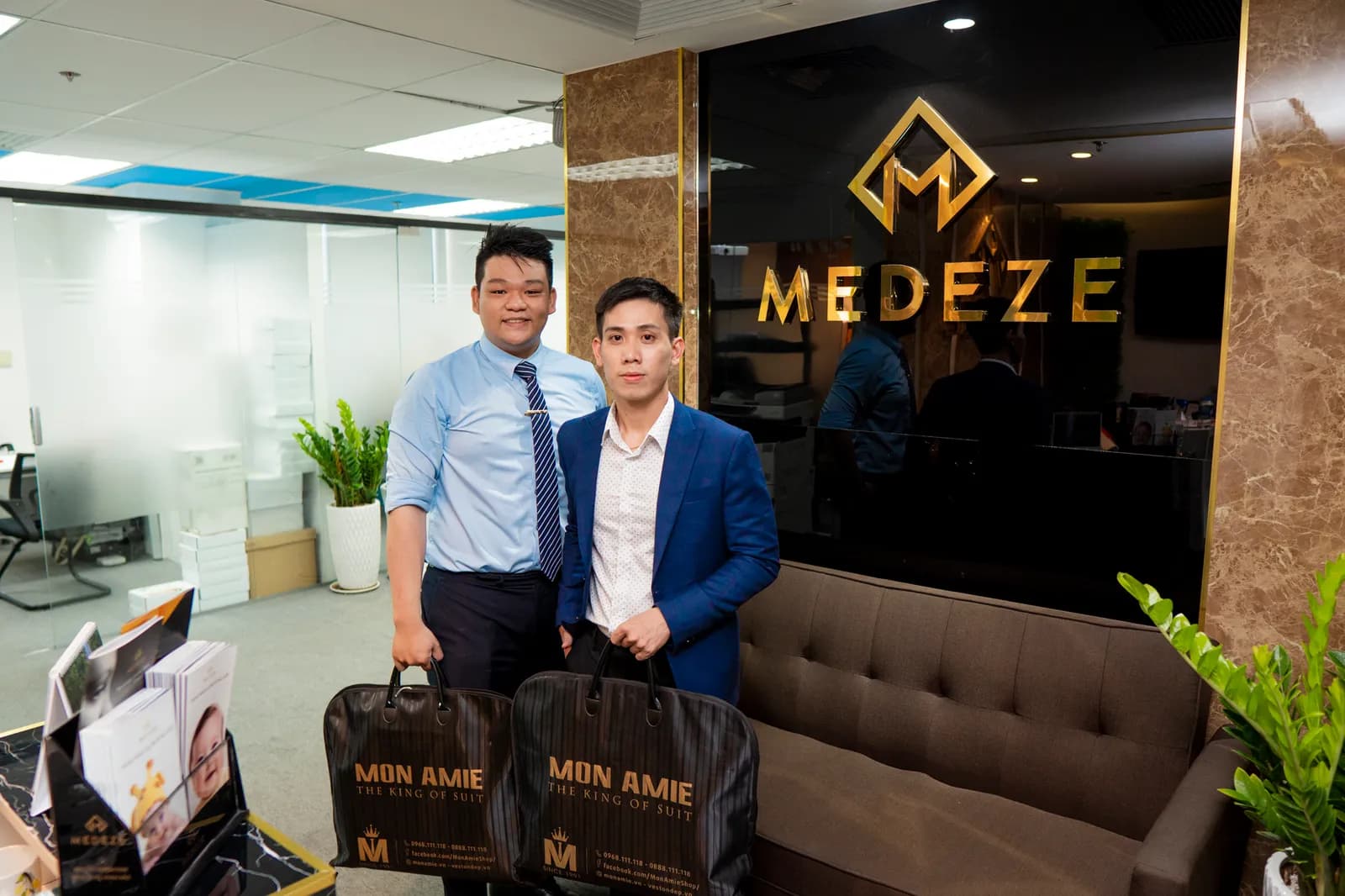
In the photo below, Mon Amie Uniform is working on a uniform project with Hùng Hậu.
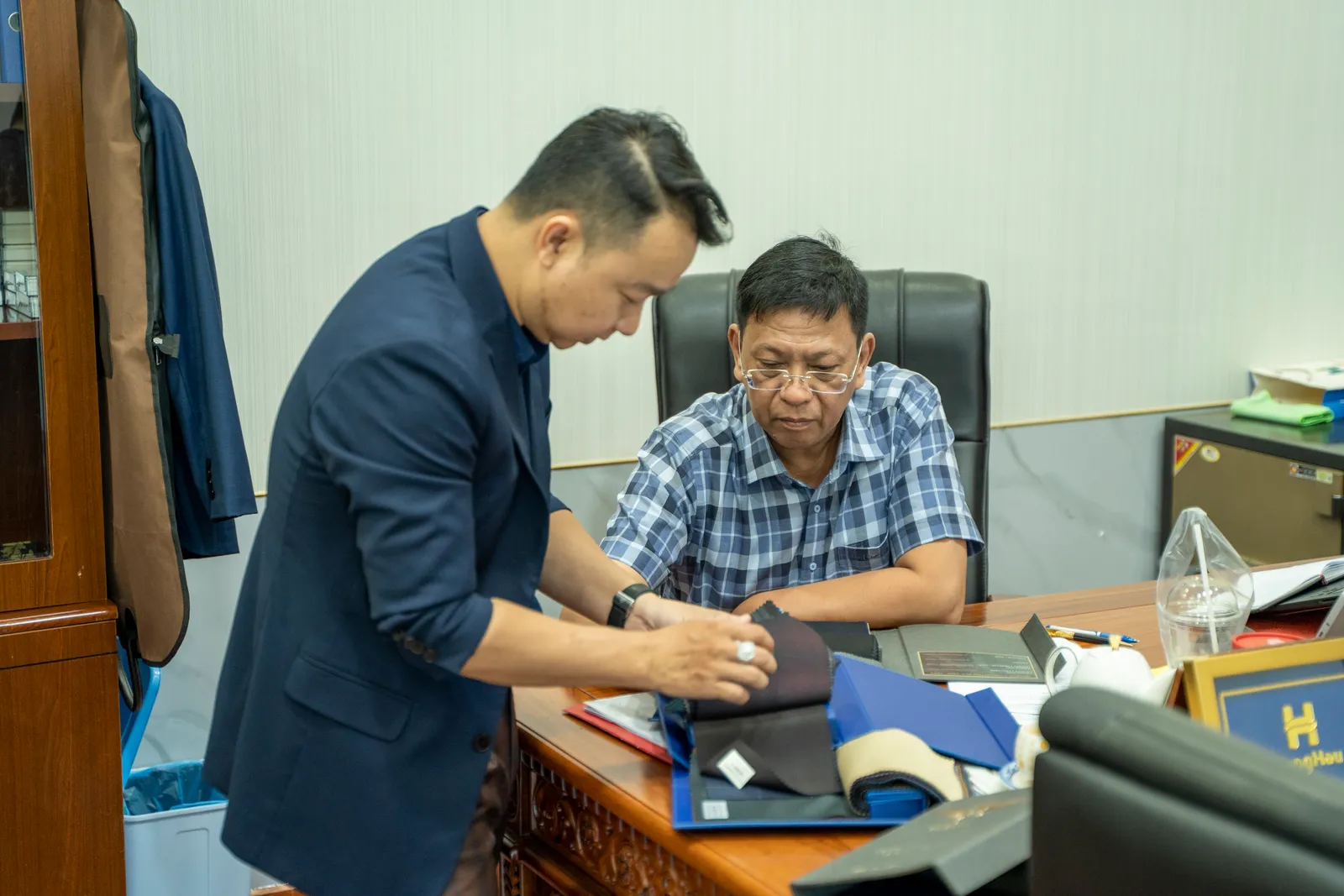
Behind the counter: comfortable staff serve differently
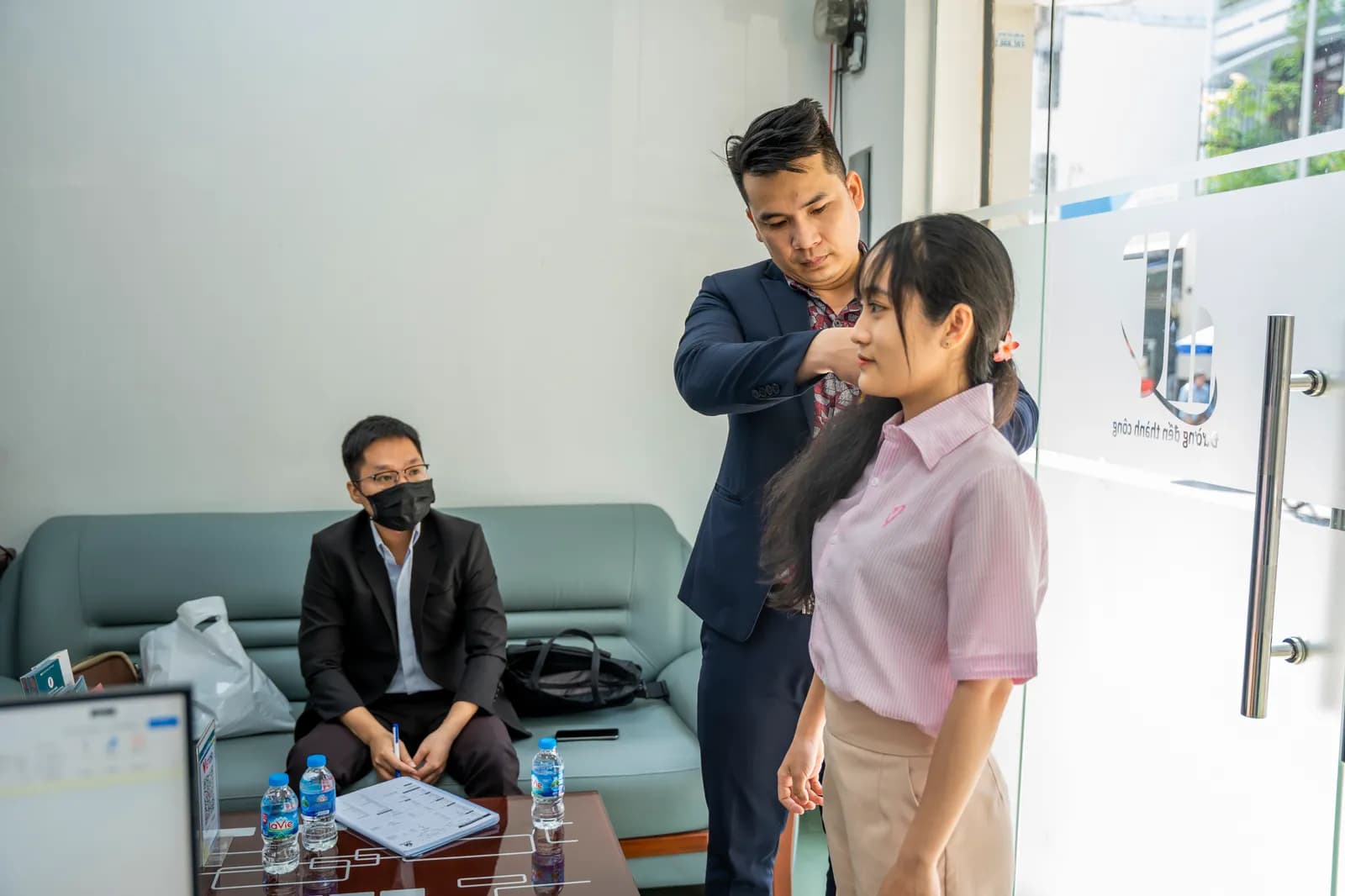
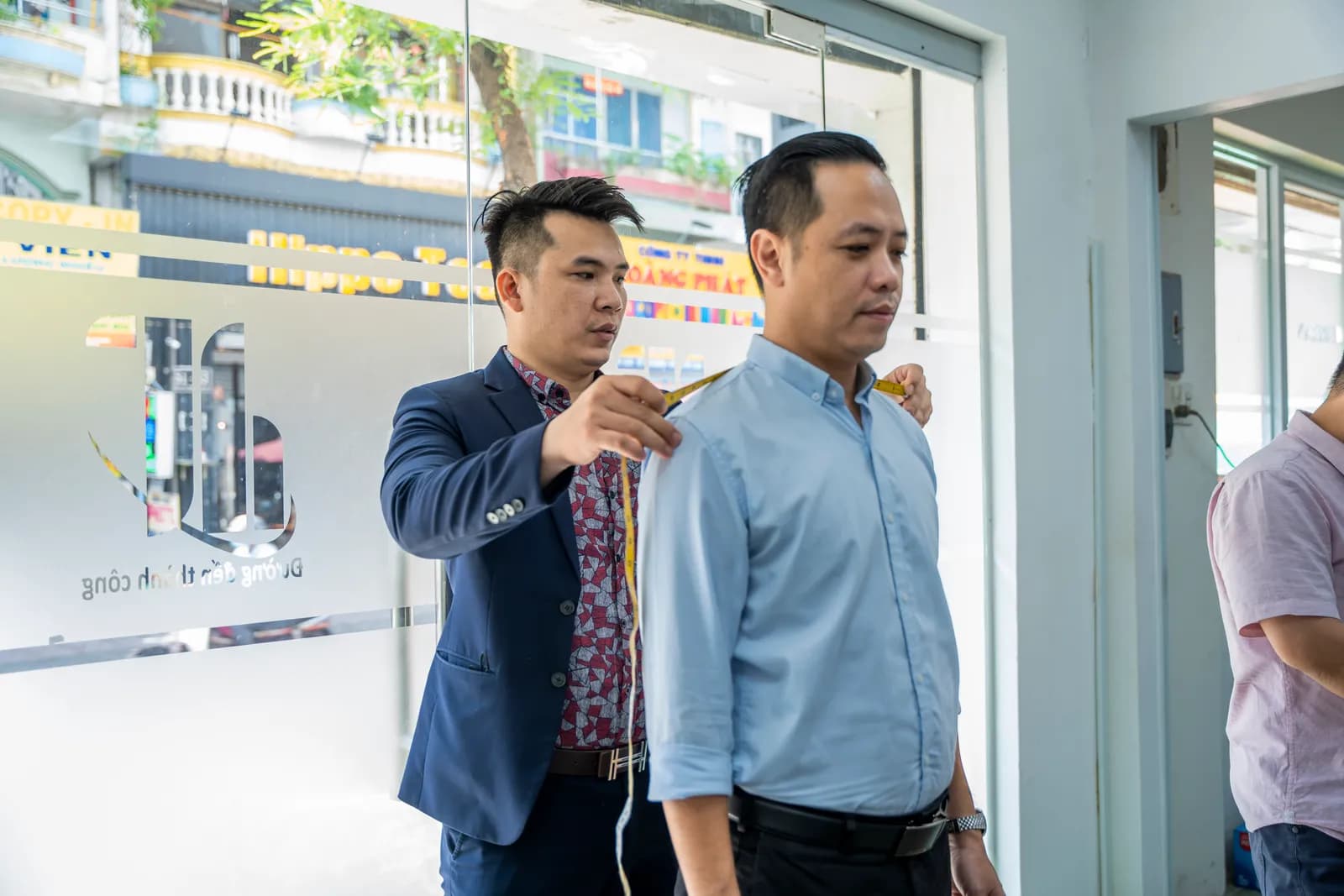
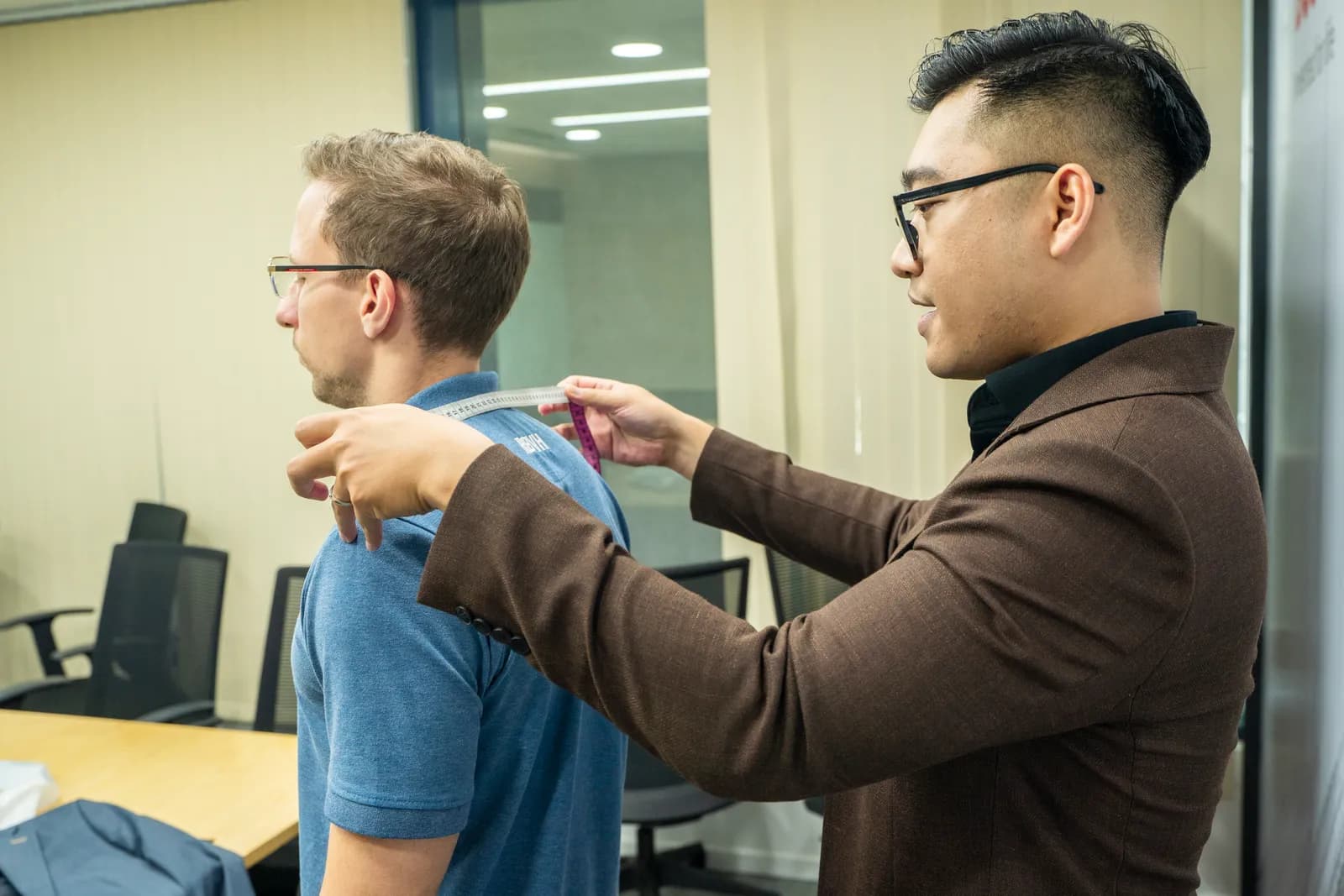
Customers rarely notice whether a shirt fits, but they do notice an employee who keeps tugging at it, rolling up sleeves or wiping perspiration. Two factors decide comfort: measurements and fabric. Mon Amie measures each employee at your office, so shoulders, arms and body fit the person rather than a generic size. On fabric, your team can handle real swatches at the design stage, or look first in our fabric library. Roles that stand a lot and face customers constantly need breathable, low-crease fabric that recovers its shape. Claims such as breathability or crease resistance should be checked against real swatches, since results depend on the fibre and finish.
Mistakes that make a uniform work against you
- Poor fit: tight shoulders, overlong sleeves, uneven trouser length. Customers see it before the employee speaks.
- New and old pieces that do not match: later hires in a different shade or cut. New employees are measured individually and made to the approved pattern, so they match the team.
- Logos and badges in different places: the team then looks careless.
- Colours that fade and fabrics that pill after a few washes: wash-test a sample before signing it off.
- Too many layers and accessories: they weigh staff down.
For food and hospitality teams the uniform is also tied closely to the brand image.
Start from your own touchpoints
Every business has a different customer journey, so Mon Amie begins with a survey and consultation at your premises, ending in a proposal with a price range. At the survey, describe the customer's path: where they enter, whom they ask, where they wait, and at which counter they sign or pay. That shows which staff need clear identification and which need freedom of movement. Next come three design options in your brand colours; our design library is a good source of ideas. When you need a quotation, send your requirements through our quote page or call the hotline on 0888.111.118.
Frequently asked questions
Do uniforms make customers more satisfied?
A uniform helps customers recognise staff and perceive a polished business, which supports satisfaction, but it cannot replace attitude and service procedure. Mon Amie quotes no general figures; a business should watch customer feedback before and after a change.
How should we choose a colour so customers can find staff easily?
Choose a colour that contrasts with the space and with what customers typically wear, favouring your brand colour. Mon Amie presents three options in your brand colours so you can compare before approving.
Is a name badge necessary on a uniform?
A badge lets customers use a name and feel individually served. What matters is a fixed, visible position that does not sit on a seam where it would pucker the garment; the position should be settled together with the logo when you approve the sample.
Will staff who join later match the existing team?
They can be added to the approved pattern. New employees are measured individually, measurements are stored under employee IDs for later orders, and alterations are covered by the free 3-year warranty at every showroom.