Uniforms for steel and heavy industry companies: lessons learned
Uniforms for steel and heavy industry companies should be durable, easy to launder and kept separate from safety gear. Tips on fabric, colour and sizing.
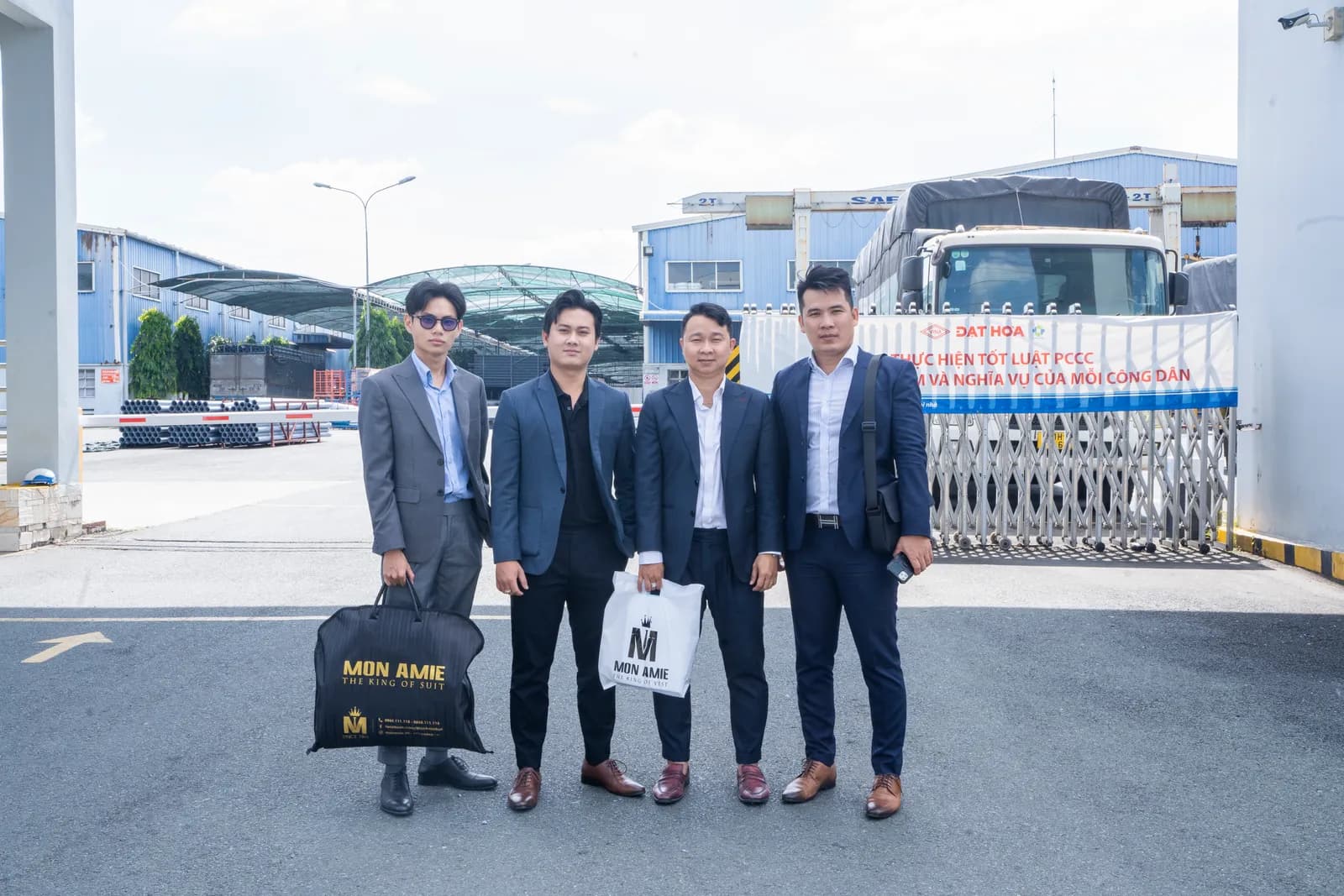
Uniforms for steel and heavy industry companies need to do three things: stay durable through frequent washing, stay comfortable in hot, dusty conditions, and make each group of wearers easy to tell apart. A uniform does not replace personal protective equipment; the plant's safety function sets those requirements. This article draws on how Mon Amie delivers uniforms for more than 500 companies a year and applies it to heavy industry.
Uniforms and protective gear: keep them separate from the start
A familiar situation: HR settles the uniform first, and only when the safety team issues helmets, boots, gloves and high-visibility vests does anyone notice the two clash. A high collar is pressed by a helmet strap, the logo sits exactly where a strap crosses, sleeves are too loose for work near machinery. Assessing safety is a job for the specialists; the uniform must be designed to work alongside what they have specified.
So bring your current list of protective equipment to the first survey. That is step one of Mon Amie's process, which ends with a proposal and price range, so these constraints are built in from the outset.
Each group has its own needs
A steel or heavy engineering company usually has several groups working in very different conditions:
| Group | Environment | Suggested style | Fabric and colour |
|---|---|---|---|
| Office and sales | Air-conditioned, meeting clients | Shirts, trousers or skirts; jackets for managers | Low-crease cloth, brand colour |
| Engineers and site supervisors | Moving between office and production area | Polo or short-sleeved shirt, trousers | Breathable cloth, mid or deep tone |
| Operations and maintenance | Heat, dust, oil | Industry uniform: work shirt and trousers | Medium-weight, hard-wearing, deep tone |
| Security and warehouse | Outdoors, on the move | Industry uniform or polo | Breathable, easy to wash |
Splitting groups also helps manage cost, because each group draws on a different category and price level.
Fabric, colour and stitching for dust, heat and heavy washing
- Fabric: cotton-polyester blends of medium weight are often used for workwear because they hold up to frequent washing, though the real comfort and durability depend on the blend and weave. Very thin cloth wears out quickly; very heavy cloth runs hot.
- Colour: deep or mid tones usually hide dust and oil better than light ones, but absorb more heat outdoors. Choose by where each group actually works.
- Stitching: stress points such as shoulders, underarms and the seat of trousers deserve a close look on the sample.
- Washing: test the sample using your actual laundry method, whether at home or centralised, then check colour and logo afterwards.
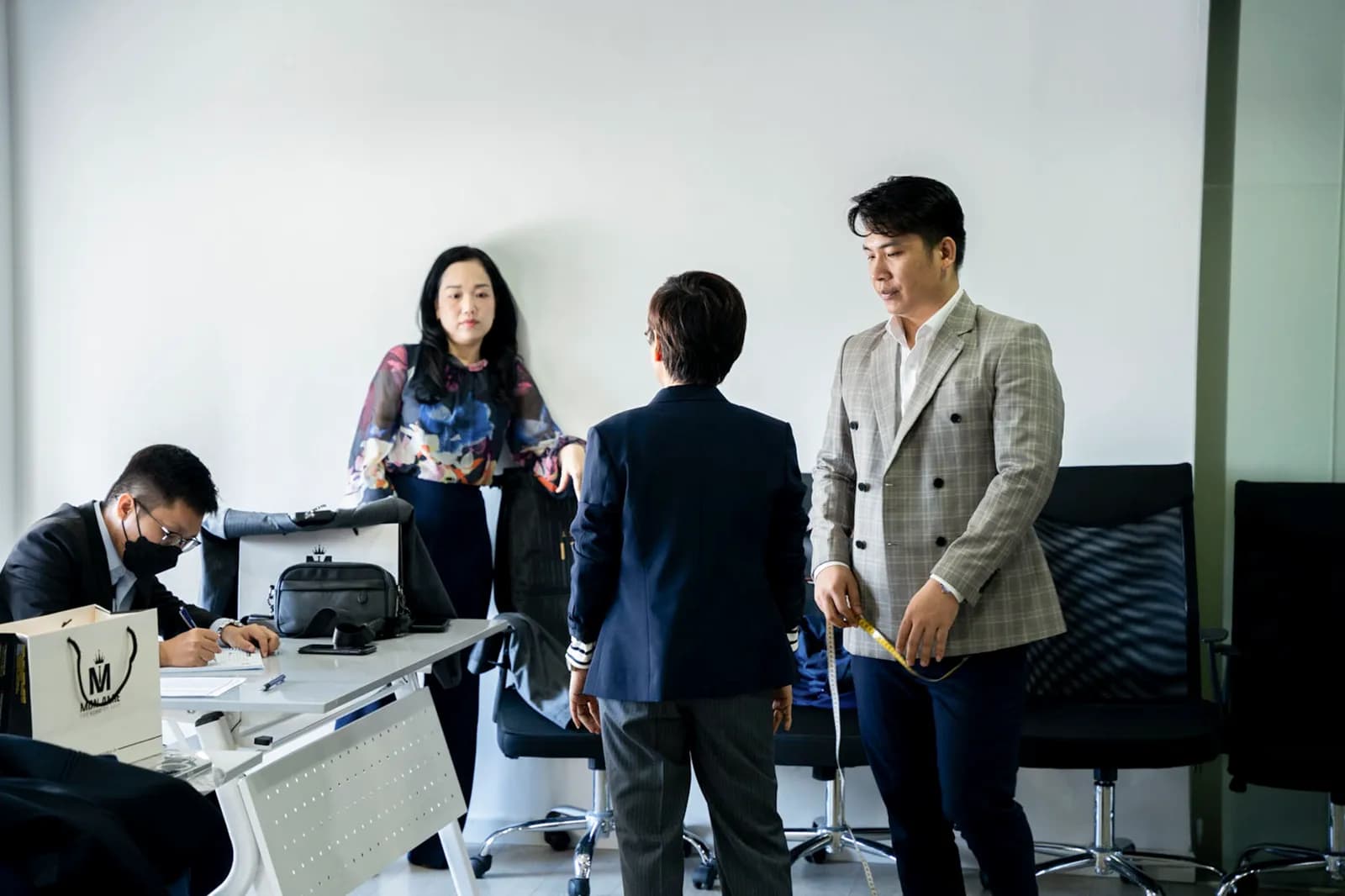
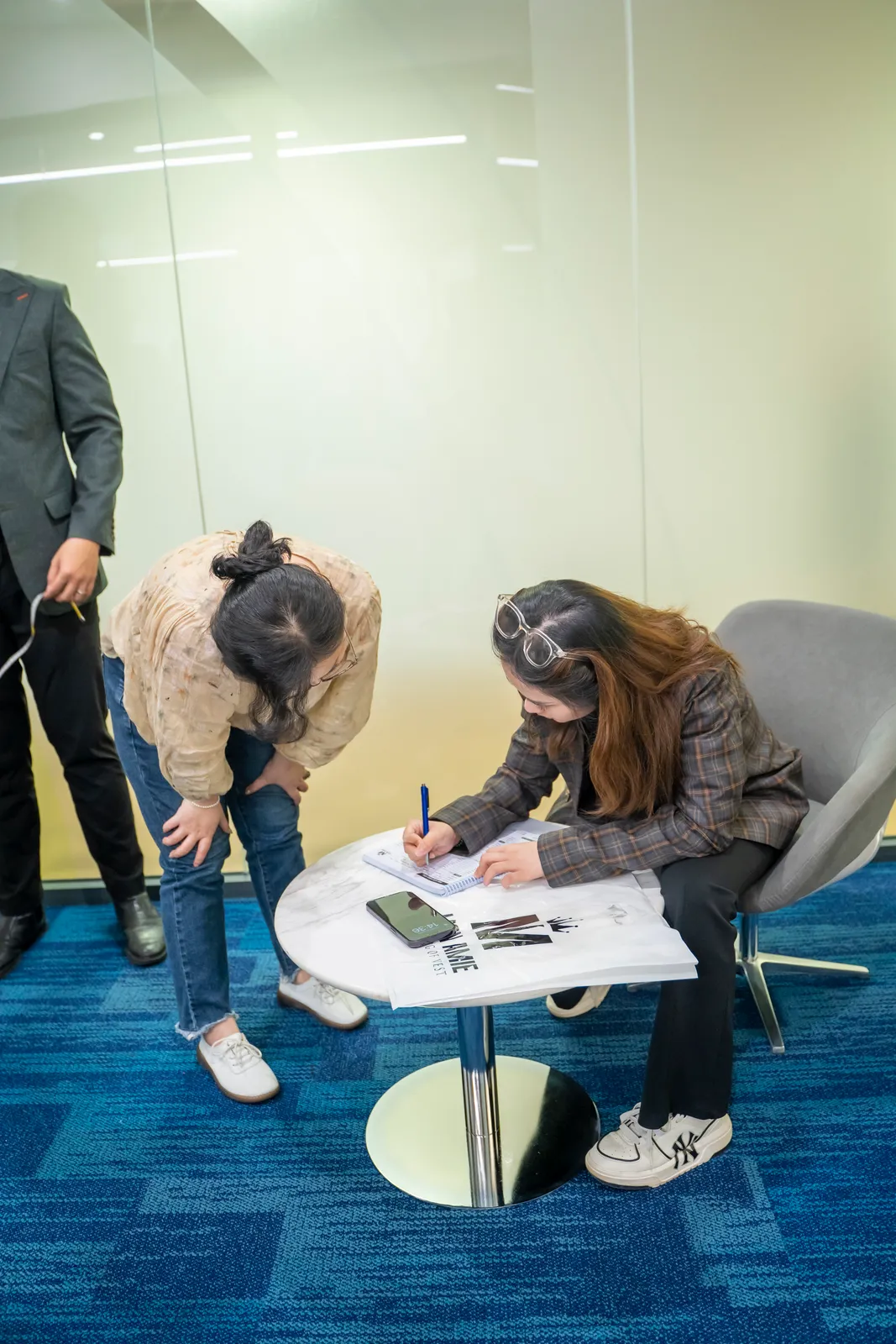
The photo below captures a working session on a Mon Amie Uniform project with Chứng khoán ACBS.
Measuring on site for plants that run shifts
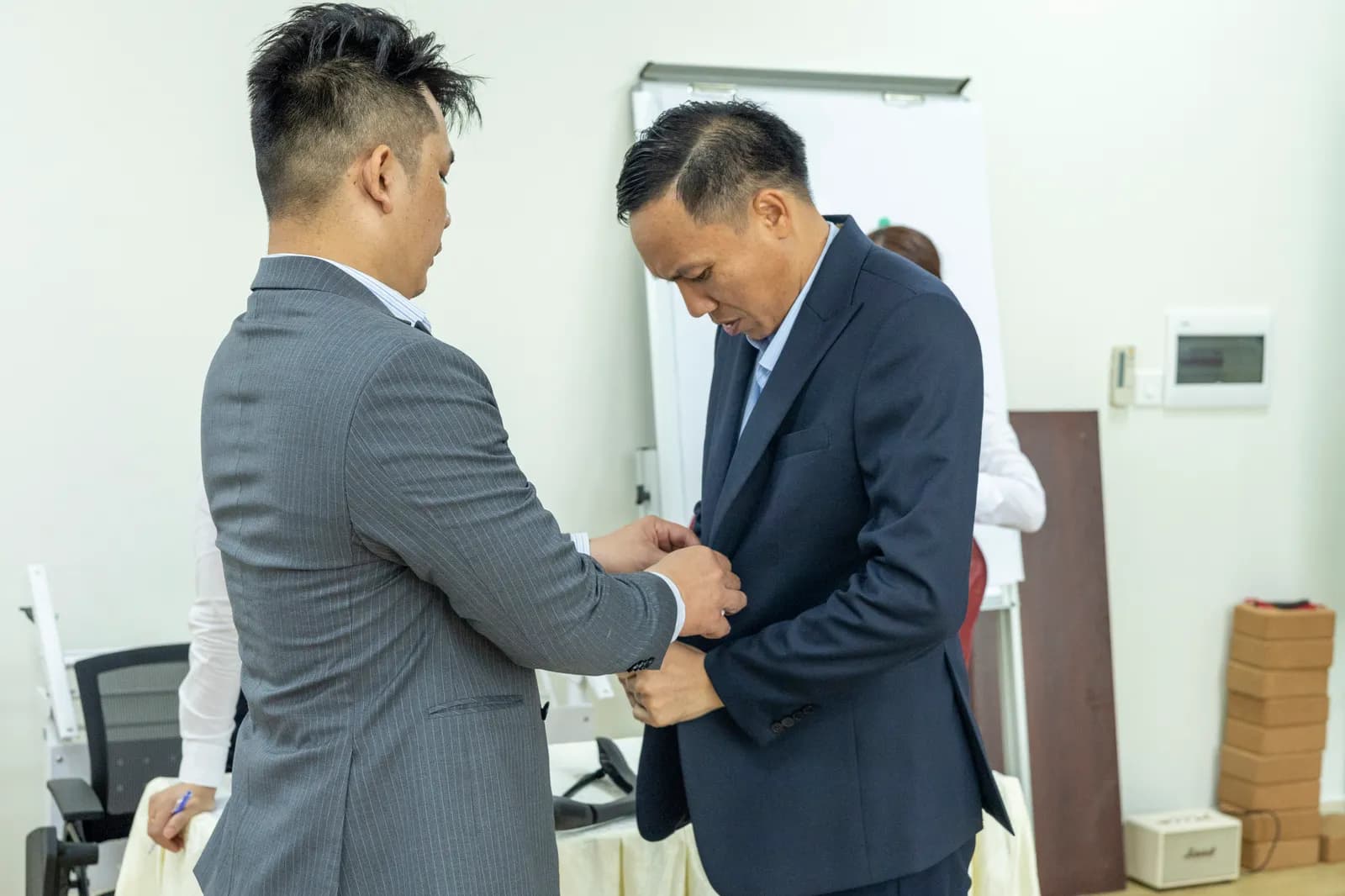
A plant that runs several shifts cannot release every worker at once. Mon Amie's mobile measuring team measures at your premises on your schedule, including outside office hours, so sessions can be arranged around shifts; details are agreed during consultation, and our on-site tailoring page explains more. Measurements are stored under employee IDs, and workers who join later are measured individually and made to the approved pattern.
Production takes place in our 1,000 m² workshop on 3/2 Street with more than 80 skilled tailors. Quality is checked at three stages (cutting, assembly, finishing), progress is reported weekly, and the whole process takes 4–6 weeks after sample approval. At delivery, garments are tried on and adjusted on site, followed by a free alteration warranty for 3 years at every showroom.
Starting prices and next steps
Mon Amie publishes starting prices by category. For the groups above, the relevant lines are industry uniforms from 300,000 VND (minimum 20), T-shirts and polos from 150,000 VND (minimum 30) and men's shirts from 600,000 VND (minimum 20). These are starting prices for each category; real prices depend on fabric, style and quantity. You can request a quotation on our quote page or call 0888.111.118 (the same number on Zalo).
Frequently asked questions
Can a work uniform replace protective equipment?
It should not be treated as a replacement. Protective equipment follows the plant's safety rules, set by your company, while the uniform is the shared layer that has to work alongside it. Bring your equipment list to the survey so the design takes it into account.
Should uniforms be light or dark in a dusty, oily plant?
Deep or mid tones usually hide dust and oil better, though they absorb more heat outdoors. Mon Amie presents three options in your brand colours with real swatches so you can compare them and test-wash before approving.
When are shift workers measured?
The mobile measuring team measures on your schedule, including outside office hours, so sessions can be arranged by shift. Specific timing is agreed during consultation.
How do we order for workers hired later?
Each new worker is measured individually and made to the approved pattern, so the team stays matched. People already measured are not measured again for later orders, since their figures are kept under employee IDs.